


Victorian Sconce Mirror
These reflective candle holders combine light and glass, bringing period illumination and decorative depth to any interior.
Victorian Sconce Mirror
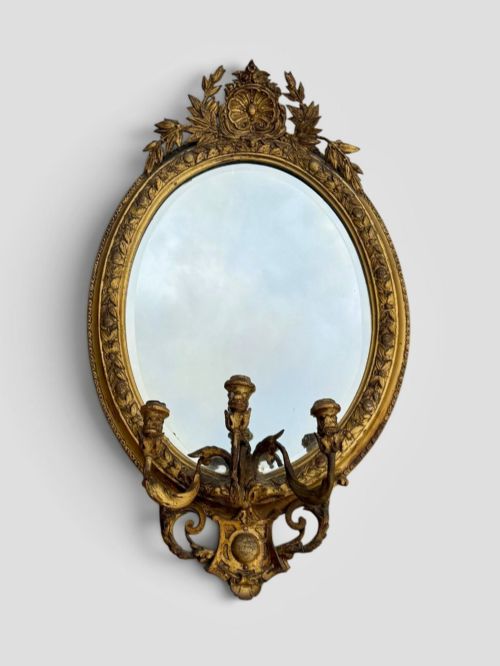
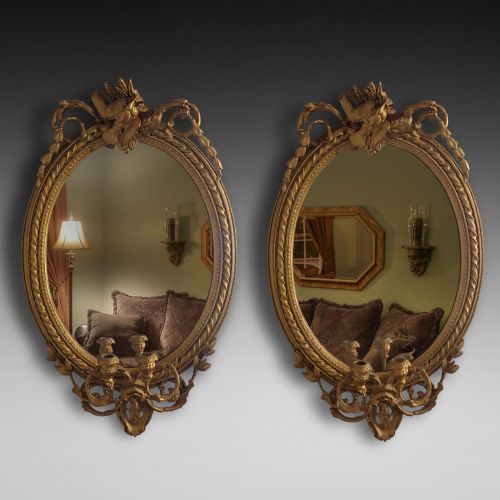
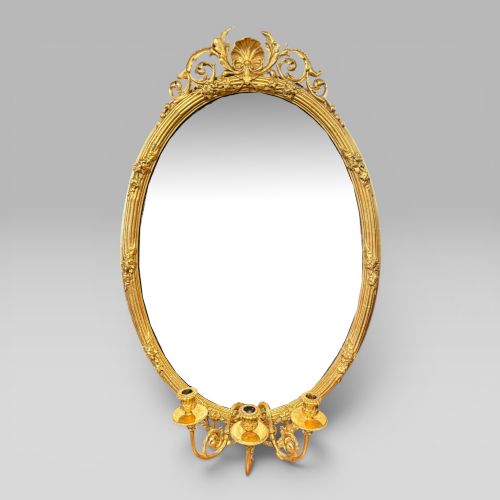
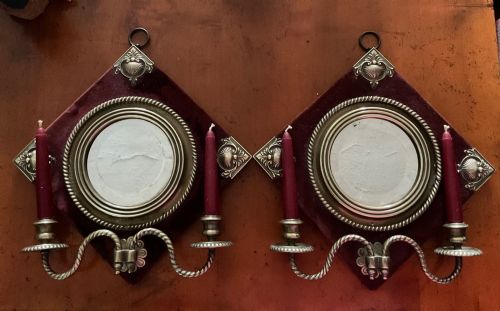
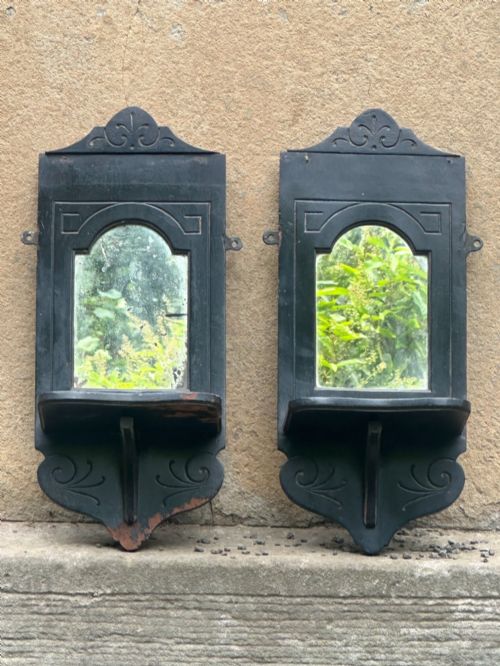
A victorian sconce mirror combines a reflective glass plate with integrated candle holders, designed to multiply the flickering light of a room through reflection. The most common iteration met on this page is the girandole, frequently formed as a pair and finished with elaborate giltwood, gesso, or cast brass frames.
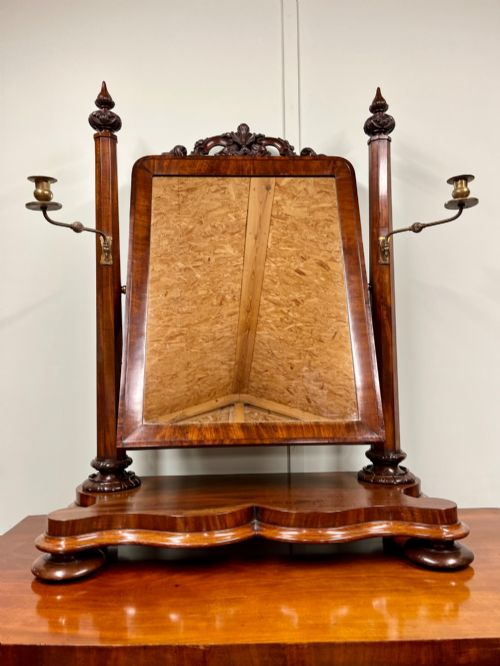
The objects span wall-mounted fixtures, pier mirrors, and dressing pieces incorporating candle arms, drawing on diverse stylistic revivals. Makers of the period embraced Rococo Revival, Chinoiserie, Aesthetic Movement, and Chippendale Revival designs, resulting in forms that range from heavily carved gesso foliage to polished brass work.
Materials and construction
Makers utilised softwoods and pine as a base for intricate gesso mouldings, applying liquid gold leaf or gilt paint to create reflective, ornate surfaces. Cast brass, bronze, and copper were equally prominent, forming durable metal frames and articulated candle arms designed to swivel or project from the wall.
Cabinetmakers worked with dense timbers such as mahogany, satinbirch, and burr walnut for dressing and toilet variants, incorporating original mirror glass and bevelled edges. Structural fittings relied on traditional joinery, heavy backboards, and secure bronze brackets to support the combined weight of timber and glass.
Judging quality and craftsmanship
The distinction between standard production and exceptional work rests on the crispness of the gesso carving and the depth of the gilding. Superior examples display hand-modelled ornamentation where details remain sharp and well-defined, whereas lesser pieces show softened relief and flat, uniform metallic paint.
Originality of the components dictates the standing of a piece, particularly regarding the survival of matching candle arms, backplates, and genuine period mirror glass. Pieces retaining their original brass sconces and untouched gilding hold greater integrity than those assembled from mixed or later replacement parts.
Cottier and Co
The Victorian Sconce Mirror Glossary
- Girandole
- A branched wall-mounted candle holder featuring an integrated mirror plate. The reflective surface is intended to amplify the ambient light cast by the candles.
- Gesso
- A plaster-like mixture applied to wood frames and carved or moulded into relief decoration before gilding. It provides the textured base for intricate Victorian ornamentation.
- Pier mirror
- A tall, narrow wall mirror traditionally hung on the solid section of wall between two windows. They often incorporate lower brackets or candle sconces.
- Aesthetic Movement
- A late nineteenth-century design ethos prioritising visual beauty over narrative or moral function. Pieces from this period frequently display clean lines and mixed metals.
- Bevelled glass
- Mirror glass with an angled, polished perimeter edge. This technique catches light and adds depth to the overall appearance of the frame.
Victorian Sconce Mirror: Frequently Asked Questions
What is a girandole mirror?
A girandole is a decorative wall mirror that incorporates one or more candle branches extending from the frame. The polished glass surface reflects and multiplies the candlelight.
These pieces were typically hung in reception rooms to maximise evening illumination before the widespread adoption of electric lighting.
How do I hang a heavy wall mirror?
Hanging requires locating solid wall anchors or direct masonry fixings capable of supporting the combined weight of timber, metal, and glass. Heavy brass brackets and robust wire secured to the original backboards provide stability.
Professional installation is recommended for large giltwood and gesso pieces to ensure the weight is distributed safely across the wall structure.
Can I burn real candles in the sconces?
While the brass and metal arms were built to hold lit candles, modern use requires caution to protect surrounding antique frames from dripping wax and heat damage. Dripless candles and careful placement prevent accidental scorching of original gilt surfaces.
Many owners choose to use unlit candles purely for decorative authenticity rather than active illumination.