

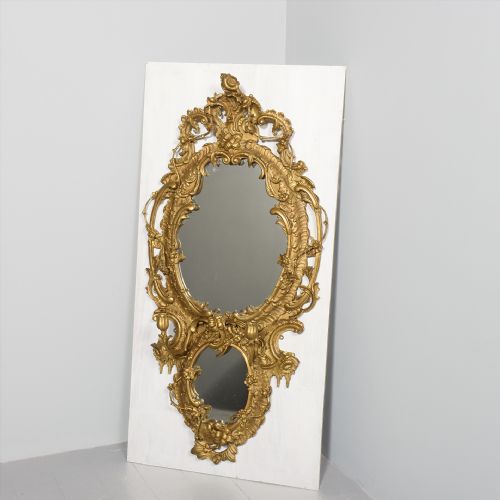

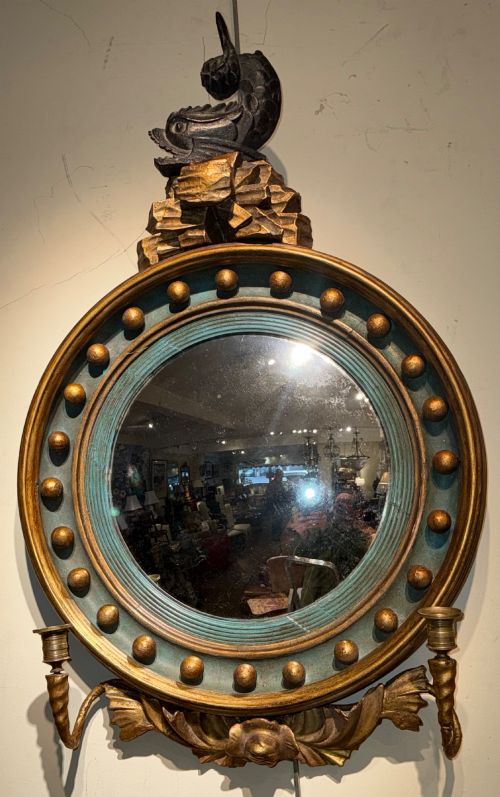
Carved Giltwood Girandole
A carved giltwood girandole brings candlelight and reflection together, framing the room in bright gold.
Carved Giltwood Girandole
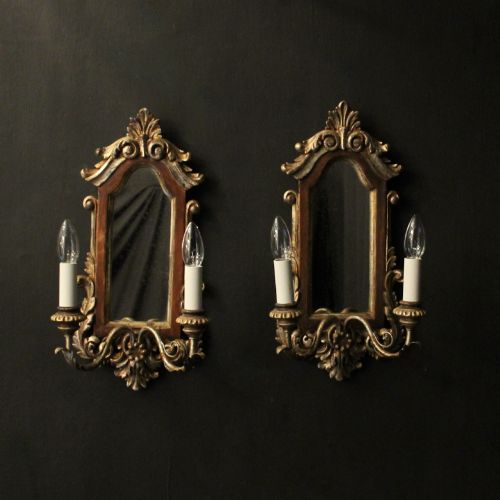
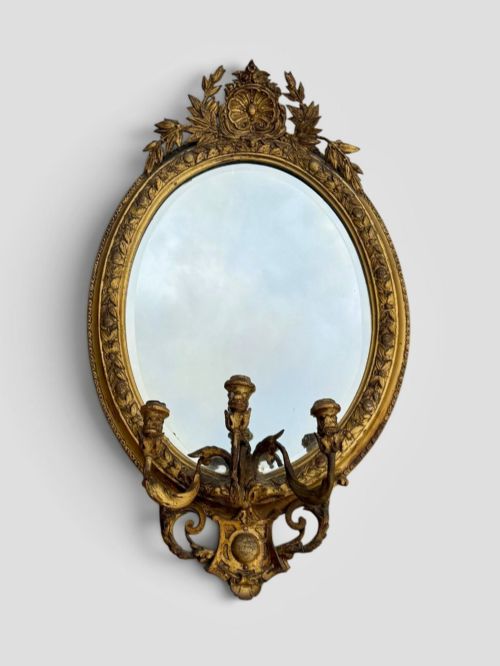
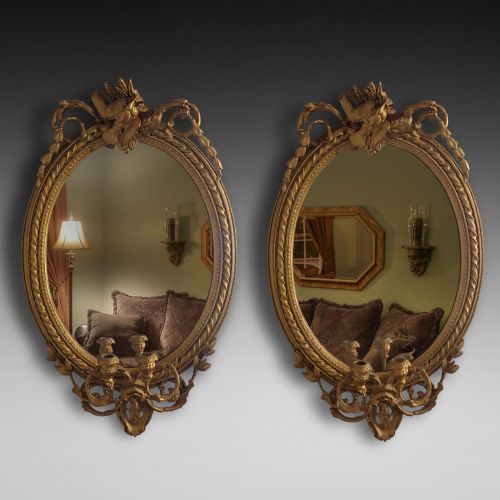
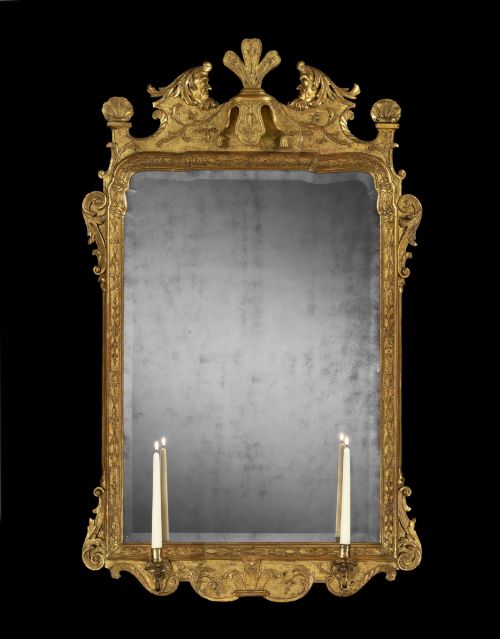
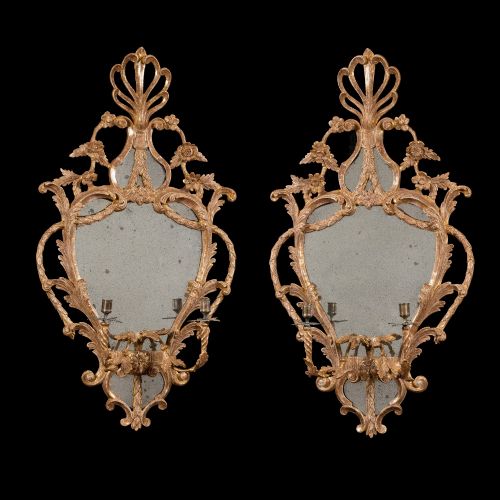
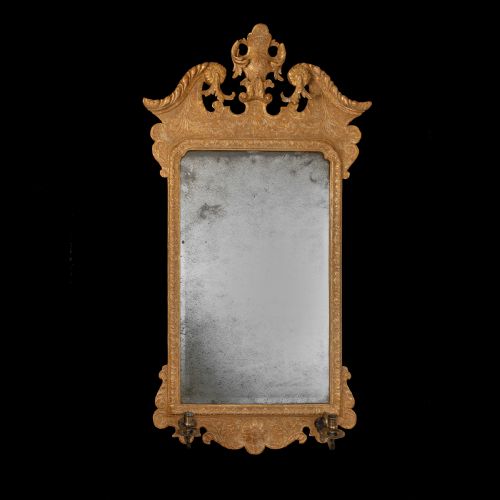
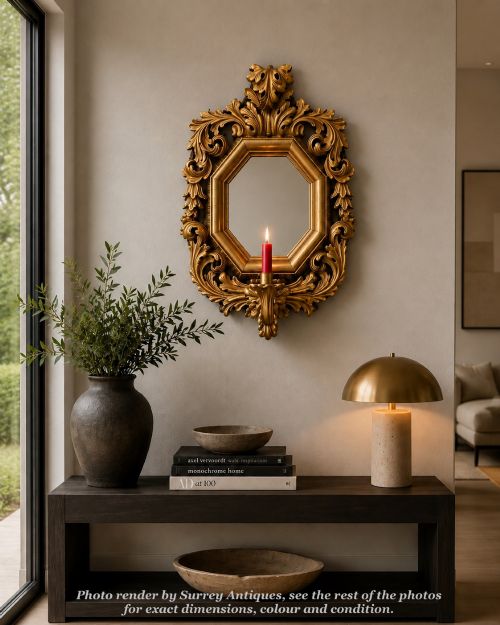
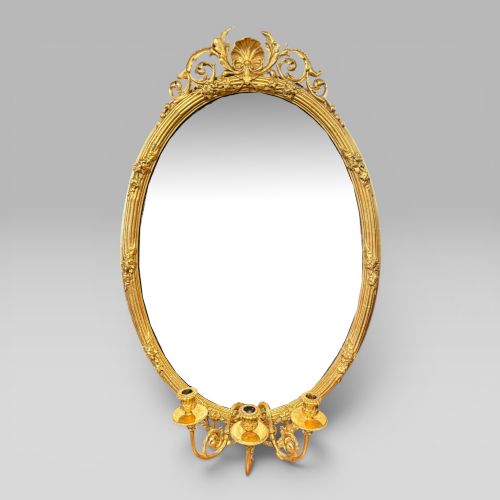
A carved giltwood girandole combines a looking glass with candle arms, serving both to light and to brighten an interior. Buyers search for these pieces to introduce focal depth and reflective warmth into a reception room or hall.
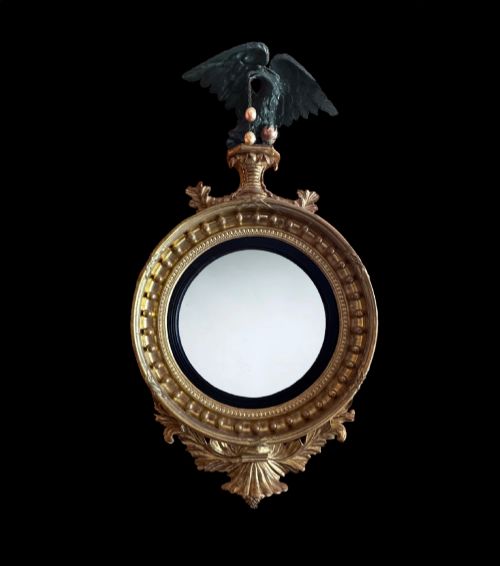
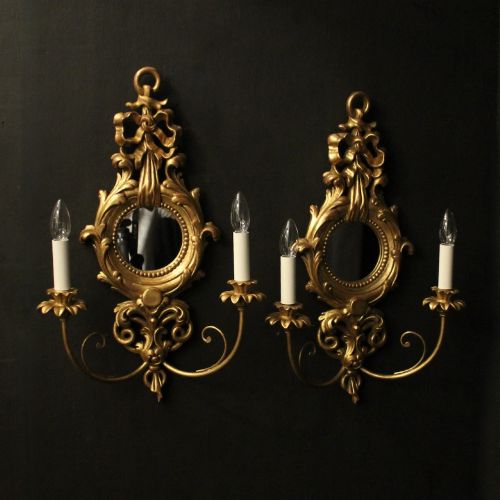
The selection here draws heavily from the Regency period and the nineteenth century, alongside eighteenth-century George periods and later twentieth-century interpretations. Wall mirrors, convex plates and twin-arm sconces dominate the forms available.
Materials and construction
Makers shaped these frames from timber, applying layers of gesso to build up the intricate relief before laying fine gold leaf over the surface. Ebonised details, brass fittings and rope-twist carvings often accent the primary giltwood structure.
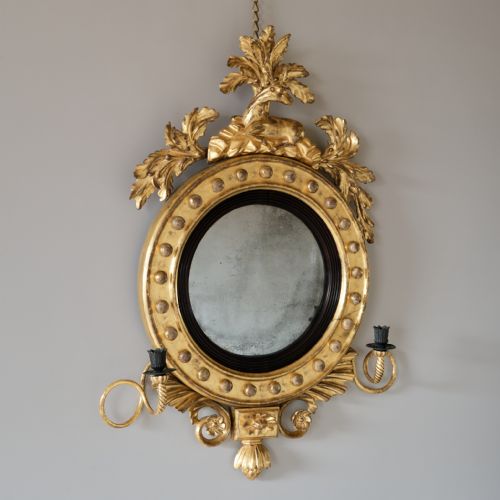
Mirror glass sits centrally within the rebate, sometimes taking a convex form that bends the reflection across the room. Metal candle branches attach securely to the lower frame to support the weight of burning tapers.
Materials recorded across the inventory include giltwood, gesso, brass, ebonised wood, and convex mirror glass.
Distinctions in execution
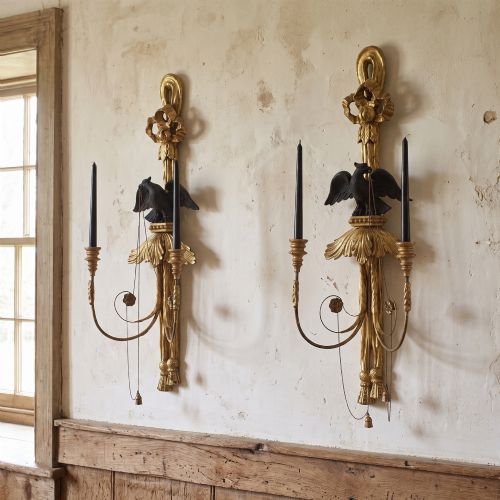
The depth and clarity of the hand-carved ornament distinguish finer examples from simpler work, particularly in the rendering of foliage, eagles or scrolling rococo motifs. Crisp edges in the gesso underlayer allow the gold leaf to catch the light sharply rather than appearing soft or muddy.
The integrity of the original mercury or mirror glass plate, together with the correct pairing of the candle arms to the frame, marks the difference between a cohesive antique and a heavily altered piece.
Benjamin Goodison
The Carved Giltwood Girandole Glossary
- Girandole
- A wall mirror featuring attached sconces designed to hold candles. The branching arms multiply the candlelight within the room.
- Giltwood
- Timber coated with gold leaf applied over a prepared gesso ground. This finish provides a brilliant metallic sheen that endures for centuries.
- Convex mirror
- A circular glass plate curved outward to capture a wide, fish-eye reflection of the interior. These pieces were particularly popular during the Regency era.
- Gesso
- A mixture of chalk and binder applied to wood surfaces and carved before gilding. It allows for sharp, sculptural relief work.
- Pier mirror
- A tall glass designed to hang on the wall space between windows. They often incorporate girandole arms at the base.
Carved Giltwood Girandole: Frequently Asked Questions
How do I date a convex mirror?
Dating a convex mirror involves examining the construction of the timber frame, the style of the crest ornament, and the characteristics of the glass plate. Regency examples often feature ebonised slip rings and eagle crests.
Later nineteenth-century and twentieth-century versions replicate these earlier styles but typically show different backing boards, fixings, and gilding techniques.
Where should I hang a girandole?
These mirrors suit principal reception rooms, dining spaces, or entrance halls where they can catch and reflect natural daylight. Placing them opposite a window maximises the distribution of light across the room.
Secure wall fixings are essential because the combined weight of the timber frame, gesso, and glass is substantial.
What maintenance do these mirrors need?
Maintaining a giltwood frame requires gentle dusting with a soft, dry brush to protect the delicate gold leaf surface. Moisture and chemical cleaning sprays should be kept away from both the gilding and the mirror plate.
Candle arms should be checked periodically to ensure the sockets remain stable and free from wax accumulation.