
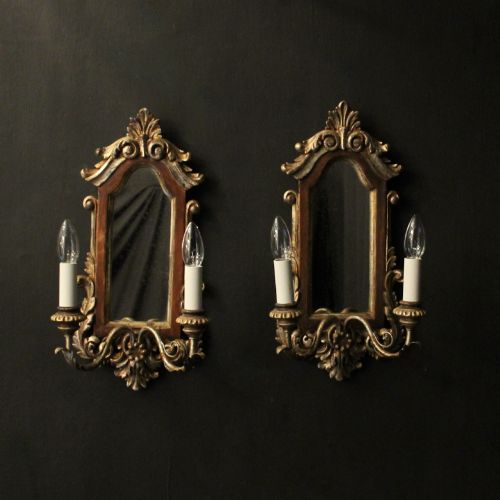
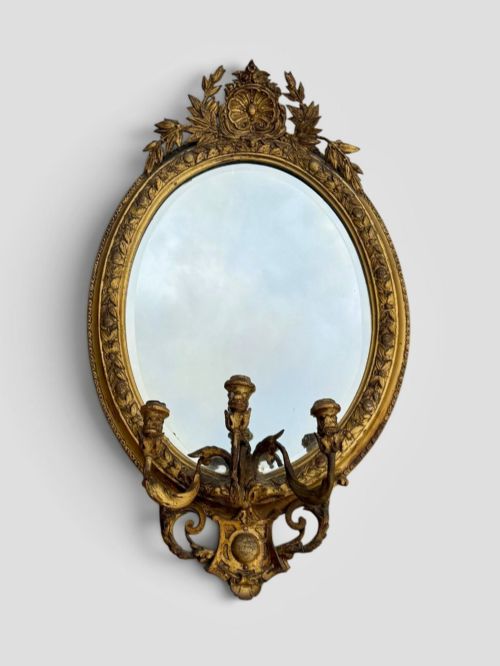
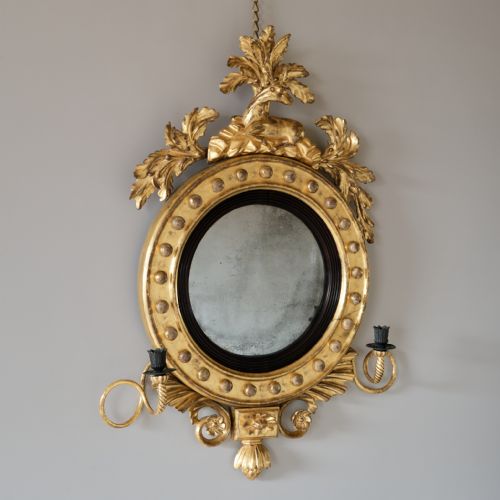
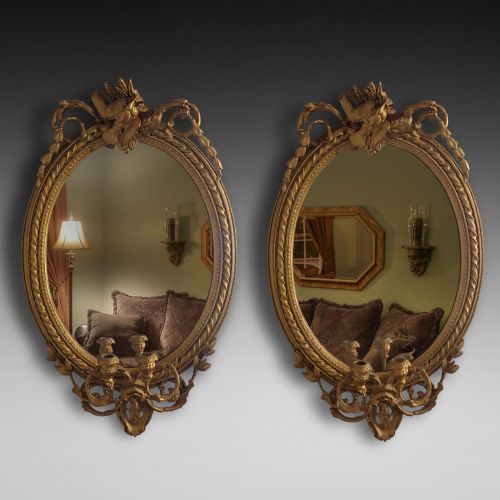
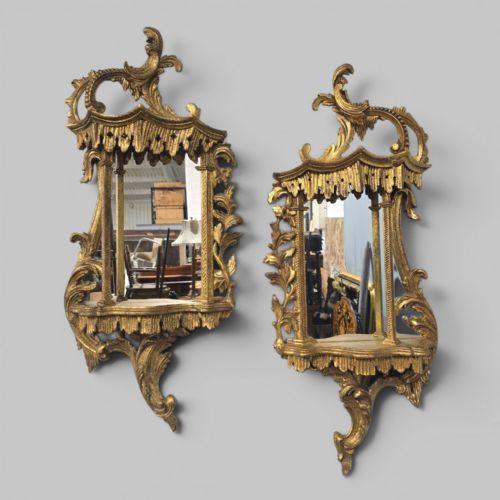

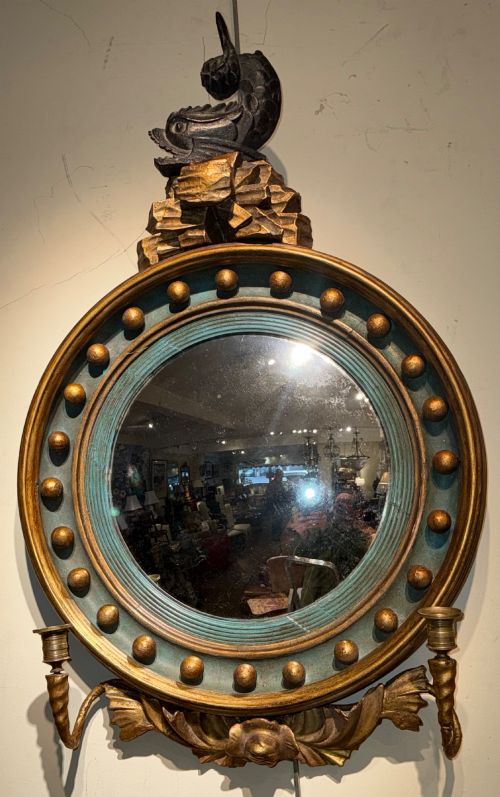

Giltwood Wall Sconce Mirror
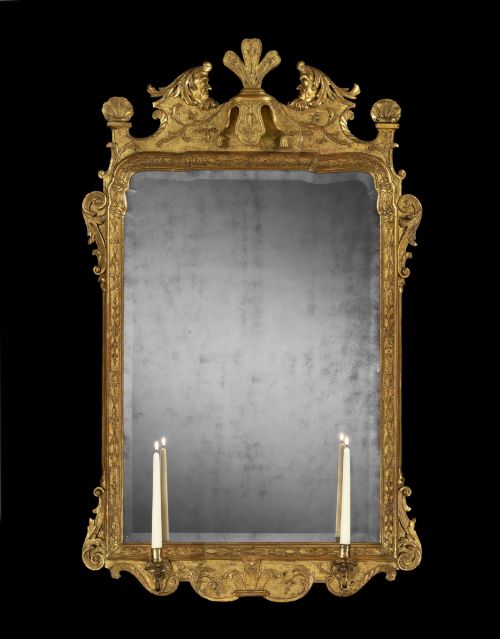
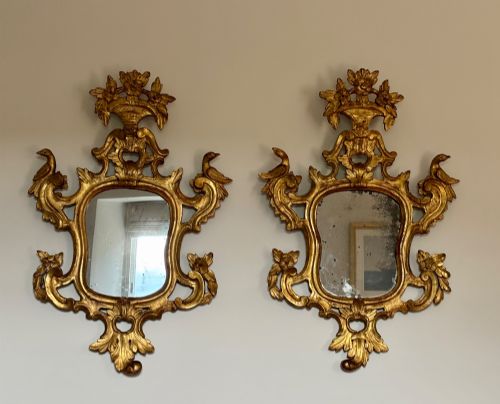
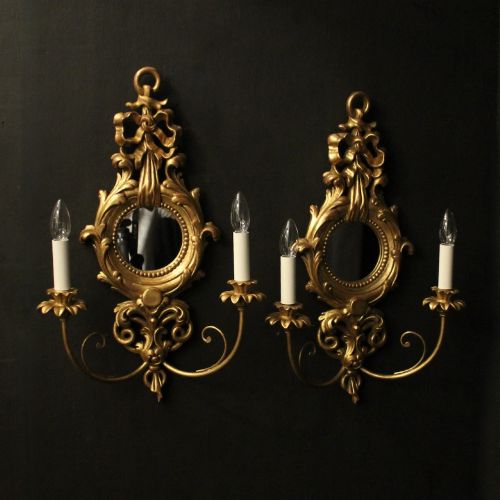
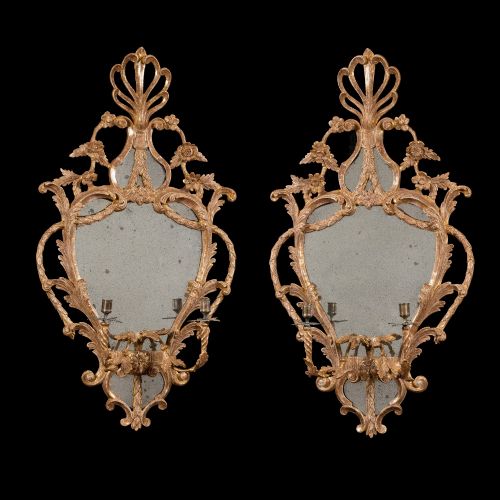
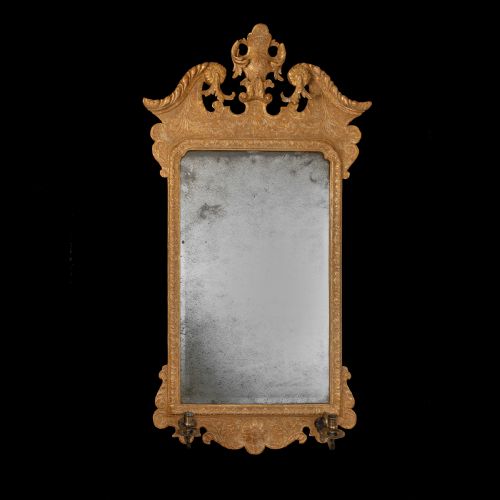
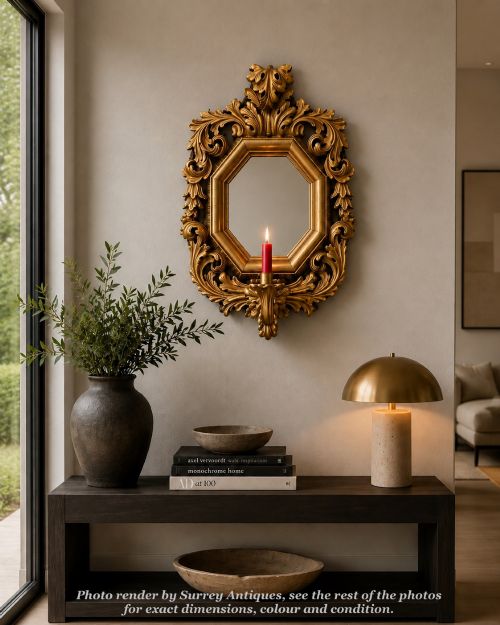
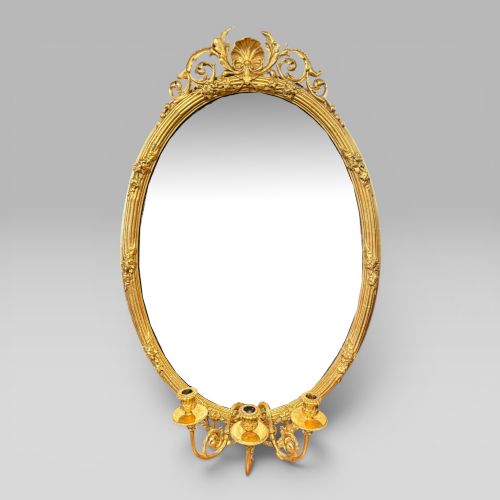
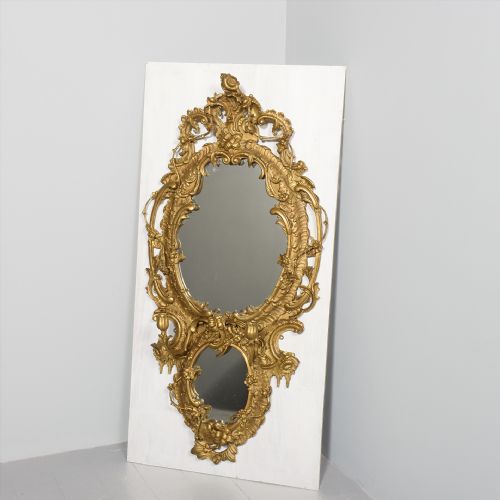
These giltwood wall sconce mirror pieces combine carved timber and reflective glass with integrated candle arms to light a room.
Giltwood Wall Sconce Mirror
A giltwood wall sconce mirror combines reflective glass with candle arms or brackets mounted on a wooden frame, serving as both a light source and a wall ornament. These items appear in forms such as girandoles, convex circular glasses, pier mirrors, and overmantel pieces.
The selection ranges from early Georgian and George II examples through Regency convex plates to Victorian revivals and later 1930s Florentine or French pairs. Buyers frequently encounter matched pairs designed to hang symmetrically on either side of a fireplace or window.
Origin points span English workshops, French chateaux, and Italian centres, each bringing distinct regional carving traditions to the gilt surface. The inclusion of shelves, brackets, or twin arms distinguishes these designs from standard flat wall glasses.
How They Were Made
Carvers shaped frames from timber such as pine or hardwood, applying layers of gesso to build up the intricate scrollwork, foliage, and mouldings. This plaster-like ground was smoothed and incised before gilding to ensure sharp detail in high-relief areas.
Craftsmen applied thin sheets of gold leaf over a bole base, burnishing portions to a high sheen while leaving other sections matte for textural contrast. Ebonised wood details or polychrome accents occasionally appear alongside the primary gold finish.
Mirror glass was set into the rabbet from the rear, often comprising heavy convex plates or divided sections held by wooden pins and backing boards. Sconce arms were securely joined to the main frame to support the weight of candles.
Convex mirrors were once called eye of the bank glasses because shopkeepers used their wide-angle view to monitor customers.
What Varies in Quality
The depth and crispness of the hand-carved detail separate standard production from superior work, particularly in the rendering of rococo scrolls, acanthus leaves, and figural elements. Sharp undercutting in the wood and gesso layers indicates a more skilled hand than soft, rounded moulding.
The application and preservation of the gold leaf dictate the visual richness of the surface, with older pieces showing subtle tonal variations beneath the gilding. Original mirror plates with appropriate foxing and distortion hold greater historic integrity than modern replacements.
Structural robustness in the joinery of the sconce arms and the stability of the primary frame ensure the piece safely supports its own weight on the wall.
Benjamin Goodison
The Giltwood Wall Sconce Mirror Glossary
- Giltwood
- Wood that has been coated with gold leaf or gold paint. This finish creates a bright reflective surface that catches candle and natural light.
- Gesso
- A mixture of plaster of Paris and glue used to coat wooden frames before gilding. It provides a smooth white ground that can be deeply carved and moulded.
- Girandole
- A decorative wall mirror fitted with one or more candle sconces attached to the frame. The arms project forward to illuminate the room using reflected candlelight.
- Convex Mirror
- A circular glass formed with a rounded surface that reflects a wide, curved panoramic view of the interior. These pieces frequently feature gilded ball ornamentation around the outer rim.
- Pier Mirror
- A tall, narrow wall glass designed to hang on the wall space between windows. They often incorporate consoles or small display shelves underneath.
Giltwood Wall Sconce Mirror: Frequently Asked Questions
How do I hang a heavy giltwood wall sconce mirror safely?
These items require secure wall fixings anchored directly into structural studs or masonry rather than plaster alone. The weight of the timber frame and glass demands robust brackets suited to the hanging loops on the reverse.
Professional installation is recommended for larger girandoles and overmantel pieces to distribute the load evenly and protect the delicate gesso edges.
What is the difference between a girandole and a standard wall mirror?
A girandole specifically incorporates integrated candle arms or sconces attached to the frame for lighting purposes. Standard wall mirrors focus solely on reflection without lighting fixtures.
Many girandoles also feature convex plates or ornate shelf brackets designed to complement the projected candle holders.
How do I tell an 18th-century piece from a later revival?
Early pieces display hand-carved joinery, traditional gesso application over timber, and period-specific motifs like early rococo or George II styling. Older mirror plates often exhibit irregular thickness and natural age oxidation.
Revival pieces from the Victorian era or later decades tend to use machine-assisted techniques and standardised construction methods while imitating earlier aesthetics.