


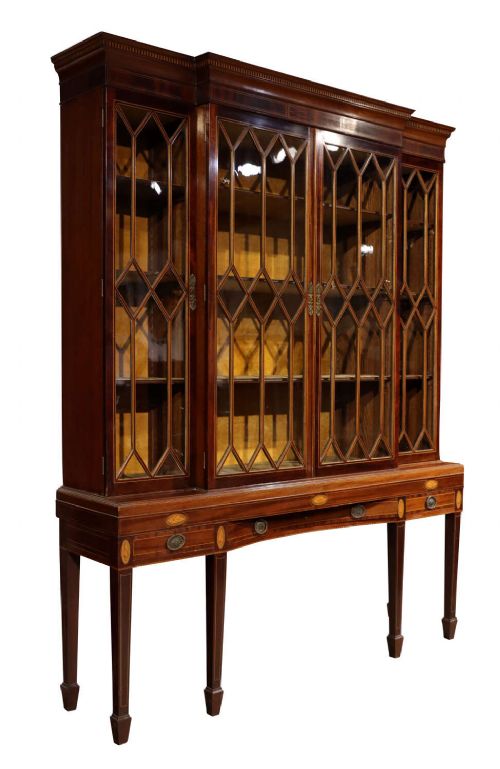


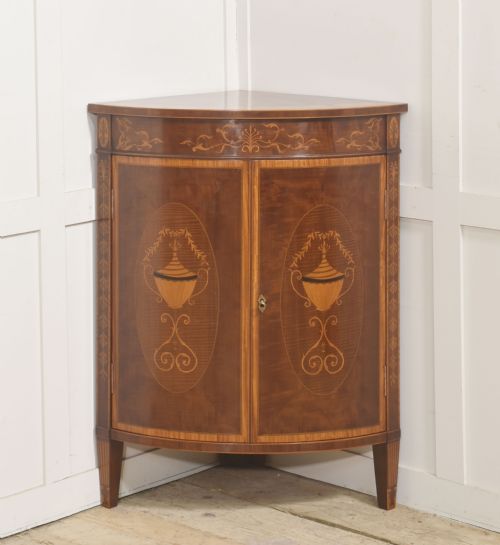


Victorian Satinwood Stand
A victorian satinwood stand brings pale timber warmth and fine marquetry into a room, offering both practical surface space and distinct period character.
Victorian Satinwood Stand
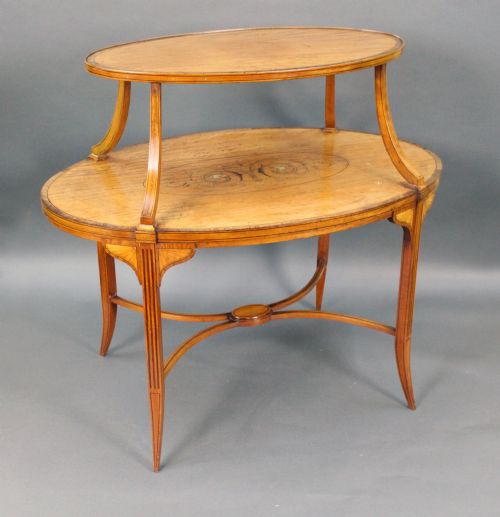
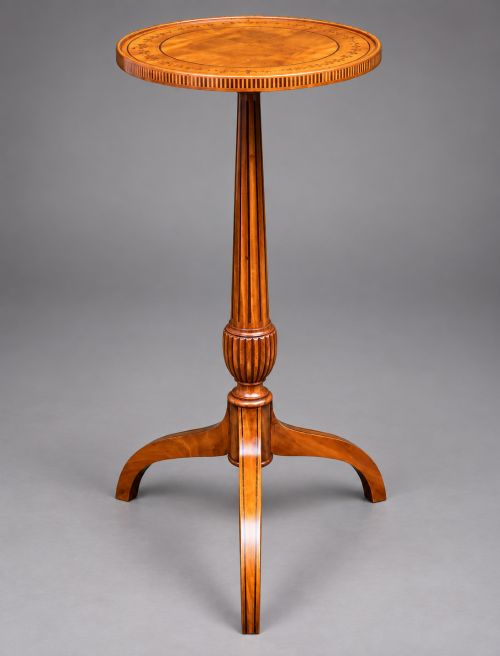
A victorian satinwood stand encompasses small occasional tables, lamp tables, plant holders, and bedside pedestals produced during the nineteenth century. These items were designed to serve functional purposes in drawing rooms and bedrooms while displaying the light, lustrous grain of exotic timbers.
The pieces appearing most frequently take the form of occasional tables, washstands, and jardiniere stands dating from the eighteen-eighties and eighteen-nineties. Many examples incorporate Sheraton Revival influences, reflected in slender tapered legs and delicate floral hand-painting.
Makers utilised satinwood both as a primary solid timber and as a fine veneer applied over firmer foundational woods like mahogany. The resulting items range from simple utilitarian washstands with marble tops to elaborately inlaid display tables and revolving book stands.
How they were made
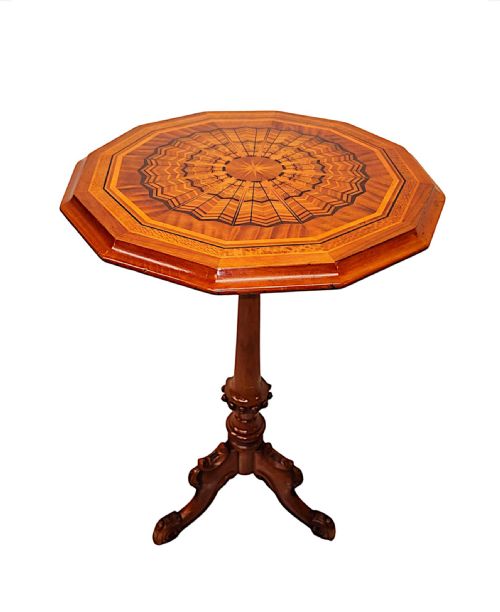
Cabinetmakers constructed these pieces using dense tropical timbers, applying satinwood veneers to carcasses of mahogany, satin birch, or pine. Crossbanding in rosewood, tulipwood, or ebony often frames the primary panels, creating sharp tonal contrast.
Decoration relied heavily on marquetry and hand-painted floral motifs rather than deep carved relief. Brass mounts, glass panels, and occasionally marble inserts completed items intended for formal reception rooms.
Victorian Satinwood Stand Retail Price Guide 2026
Typical asking prices for victorian satinwood stand among the pieces listed under this phrase on Sellingantiques today, from the lower quarter to the upper quarter. They describe what is for sale here now, not the wider market.
Periods represented span from the 1870s through the Edwardian era, with strong representation from the 1880s and 1890s.
What varies in quality
The standard of a piece depends primarily on the crispness of its marquetry and the precision of its crossbanding. Workshop execution dictates whether inlaid borders sit flush with the satinwood ground or show gaps from shrinkage over time.
Secondary wood selection and the depth of the hand-applied polish separate standard production items from workshop pieces bearing attribution to noted makers. Superior examples retain intact painted decoration and stable, unwarped timber tops.
Gillows·Edwards & Roberts·Rupert Favell
The Victorian Satinwood Stand Glossary
- Satinwood
- A lustrous, yellow-gold tropical timber native to Ceylon and India, prized for its reflective grain and smooth texture.
- Marquetry
- The art of forming decorative patterns by fitting together small pieces of wood veneer of different colours and grains.
- Crossbanding
- A narrow strip of veneer laid perpendicular to the grain of the main panel, creating a formal border effect.
- Jardiniere
- A decorative stand or container specifically designed to hold potted plants within an interior room.
- Sheraton Revival
- A late nineteenth-century design style drawing on the light proportions, satinwood, and classical inlay associated with eighteenth-century maker George Sheraton.
Victorian Satinwood Stand: Frequently Asked Questions
How do I care for satinwood?
Keep these items away from direct sunlight and heat sources to prevent the light timber from darkening or the veneer from lifting. Regular dusting with a dry cloth maintains the polished surface without moisture damage.
Apply a traditional beeswax polish sparingly only when the timber appears dry, buffing gently along the grain. Avoid modern liquid silicones that can penetrate past degraded varnish layers.
Where were stands used?
Satinwood tables and plant stands were placed in nineteenth-century drawing rooms to hold lamps, decorative porcelain, or floral arrangements. Their reflective surfaces brightened darker Victorian interior corners.
Smaller pedestals also functioned as bedside night lockers or washstand supports in principal bedrooms, often paired with marble tops to resist water.
What is Sheraton Revival?
This design movement emerged in the late nineteenth century, reviving the lighter forms, tapered legs, and refined geometry of the seventeen-eighties and nineties. Makers utilised satinwood extensively to achieve the pale, luminous palette characteristic of the style.
Pieces often feature delicate hand-painted swags, floral urns, and contrasting ebony stringing rather than heavy Victorian carving.
Are marble tops original?
Many washstands and lamp tables incorporated white or grey marble inserts to provide a durable, waterproof surface for jugs, basins, or damp flower pots. These stone slabs were fitted during initial construction.
Examining the rebate beneath the timber frame reveals whether the marble sits in its original bed or represents a later replacement.