

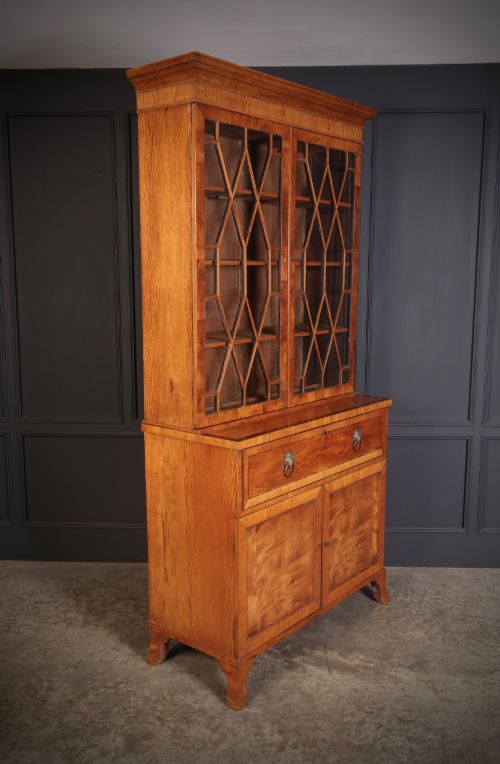
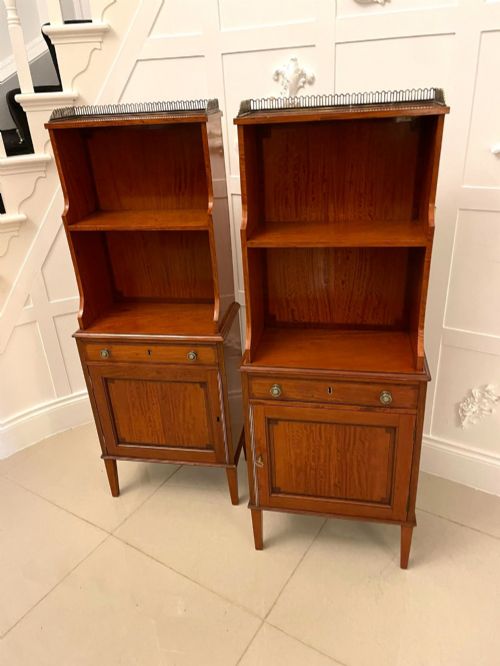
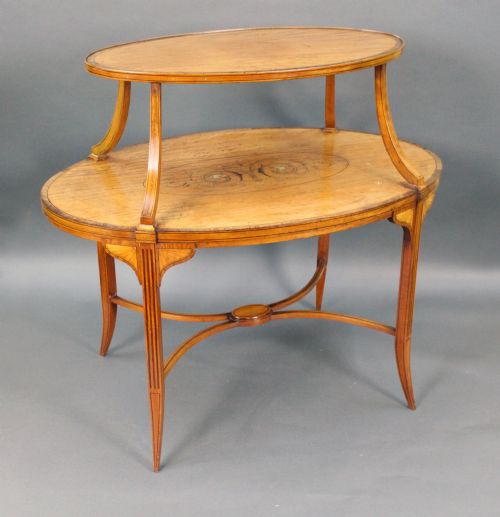
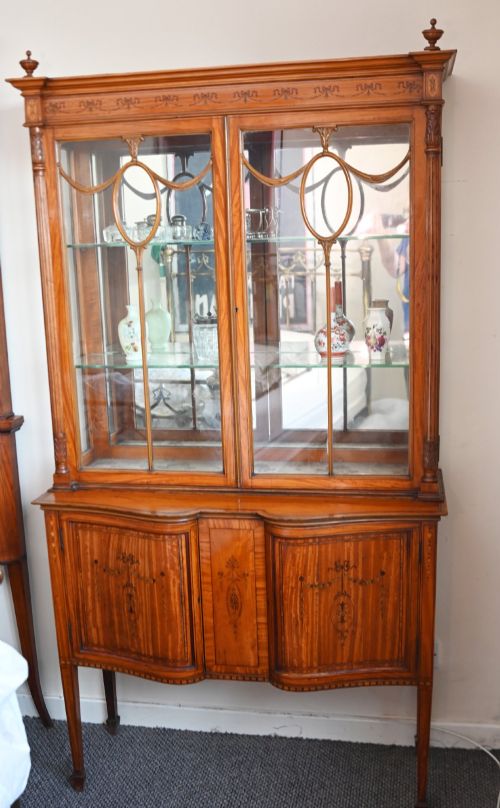
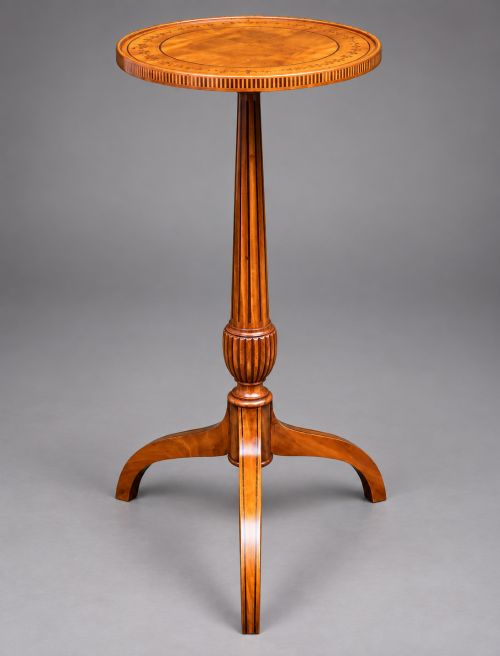
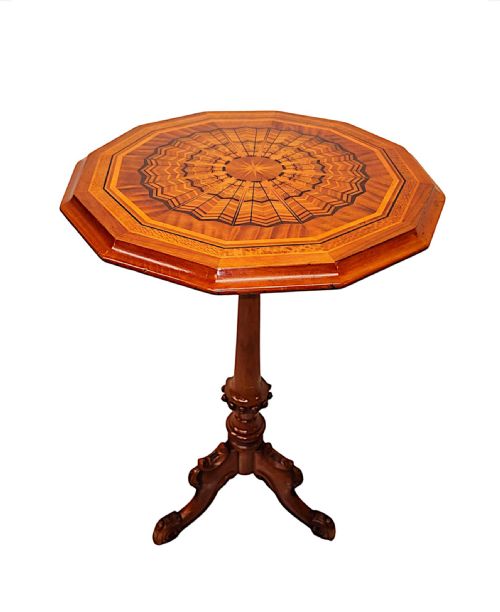
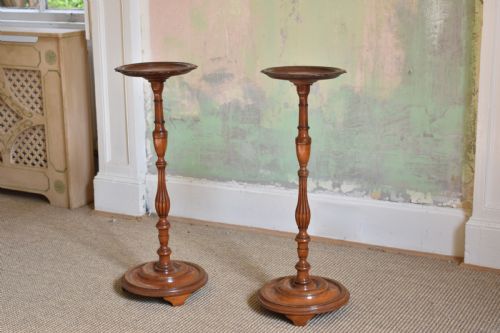

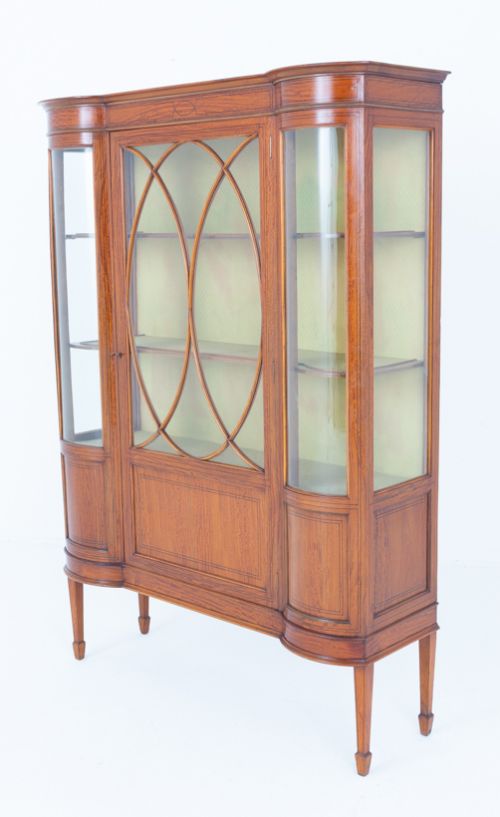
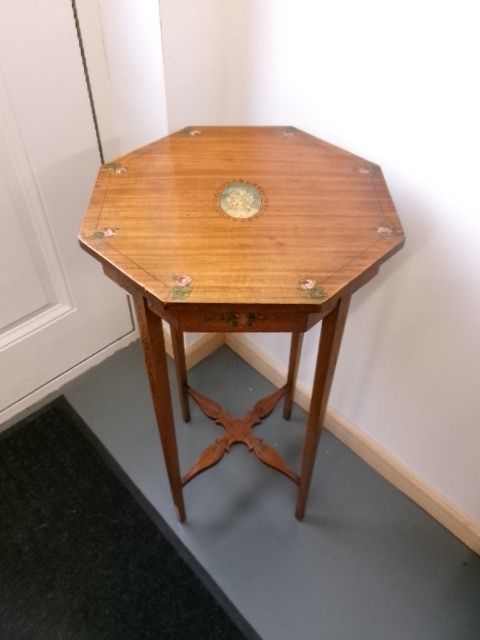


Golden Satinwood Stand
A golden satinwood stand offers a pale, highly figured surface that brings light into a room, spanning periods from the eighteenth century to the Edwardian era.
Golden Satinwood Stand
A golden satinwood stand combines decorative timber with practical forms such as occasional tables, kettlestands, and lamp tables, appearing across Georgian, Victorian, and Edwardian periods.
Buyers seeking a golden satinwood stand encounter pieces executed in Sheraton Revival and Regency styles, alongside simpler late nineteenth-century iterations.
The category encompasses small supports for lamps or wine, as well as distinct tables and plant holders constructed with light tropical hardwoods.
Materials and construction
Pieces rely on satinwood veneers and solid timbers, often combined with contrasting woods like rosewood, ebony, and oak to frame the grain.
Many examples feature hand-painted floral or neoclassical motifs, alongside marquetry, parquetry inlay, and occasional ormolu mounts.
Structural elements integrate brass fittings and glass panels, particularly on display cabinets and tray supports.
Golden Satinwood Stand Retail Price Guide 2026
Typical asking prices for golden satinwood stand among the pieces listed under this phrase on Sellingantiques today, from the lower quarter to the upper quarter. They describe what is for sale here now, not the wider market.
Cabinetmakers occasionally hid documents inside secret compartments of specimen chests, leaving hidden archives for future generations to uncover.
Judging quality
Quality rests upon the intensity of the timber's chatoyancy and the precision of the marquetry or painted decoration rather than mere age.
Superior examples display crisp cabinetwork with tight joints and harmonious grain selection across secondary woods like satin birch.
Gillows·Mappin & Webb
The Golden Satinwood Stand Glossary
- Satinwood
- A dense, lustrous tropical timber known for its golden sheen and distinctive light-catching grain. It was heavily utilised in elite British cabinetmaking from the eighteenth century onwards.
- Marquetry
- The art of applying small pieces of veneer to form decorative patterns and pictures on a carcase. It requires immense skill to align differing grain directions.
- Parquetry
- Geometric mosaic woodwork used for tabletops and tray surfaces. It relies on precise angles and contrasting timber tones.
- Sheraton Revival
- A late nineteenth-century design movement inspired by the neoclassical furniture of George Sheraton. It prioritises light proportions, satinwood, and painted details.
- Ormolu
- Gilt-bronze mounts applied as decorative accents to furniture edges and stands. High-quality examples show sharp chasing and deep gilding.
Golden Satinwood Stand: Frequently Asked Questions
How do I date a satinwood stand?
Dating relies on stylistic clues, construction methods, and the specific decorative vocabulary employed by the cabinetmaker. Georgian pieces tend to show restrained neoclassical lines, while Victorian and Edwardian examples often embrace Sheraton Revival excess or hand-painted ornamentation.
Examining the secondary woods and hardware also helps establish the era of manufacture.
Where were these stands used?
They were placed in principal entertaining rooms such as drawing rooms, boudoirs, and libraries to hold lamps, tea kettles, or decorative objects.
Their reflective surfaces and light colours were specifically chosen to brighten corners in otherwise dimly lit period interiors.
How do I care for satinwood?
Satinwood requires protection from direct sunlight, which can alter the delicate golden colour of the timber over time. Regular dusting with a dry, soft cloth is sufficient for maintenance, avoiding silicone-based polishes that build up residue.