
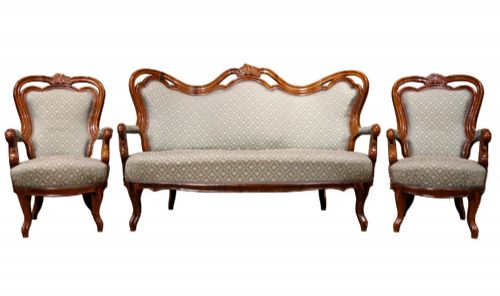


Victorian Salon Furniture
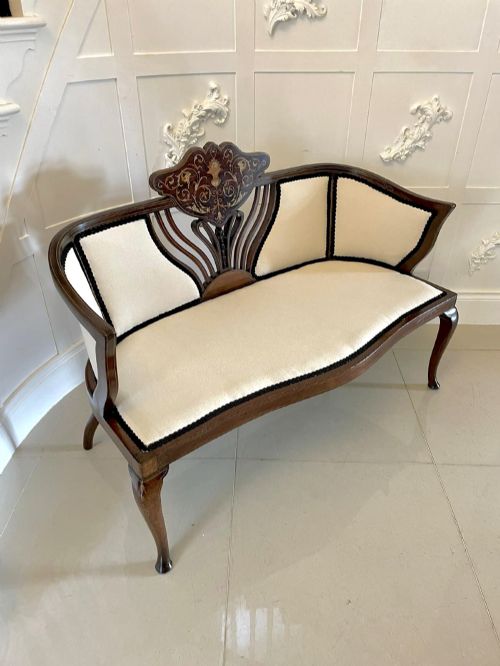
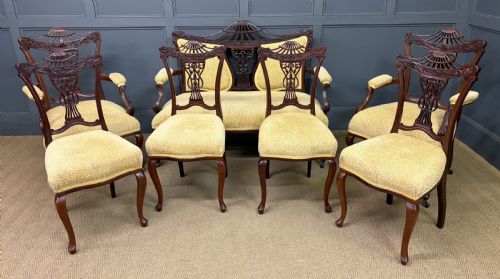
Victorian salon furniture gathers walnut and mahogany settees, carved armchairs, and matching suites designed for formal reception rooms.
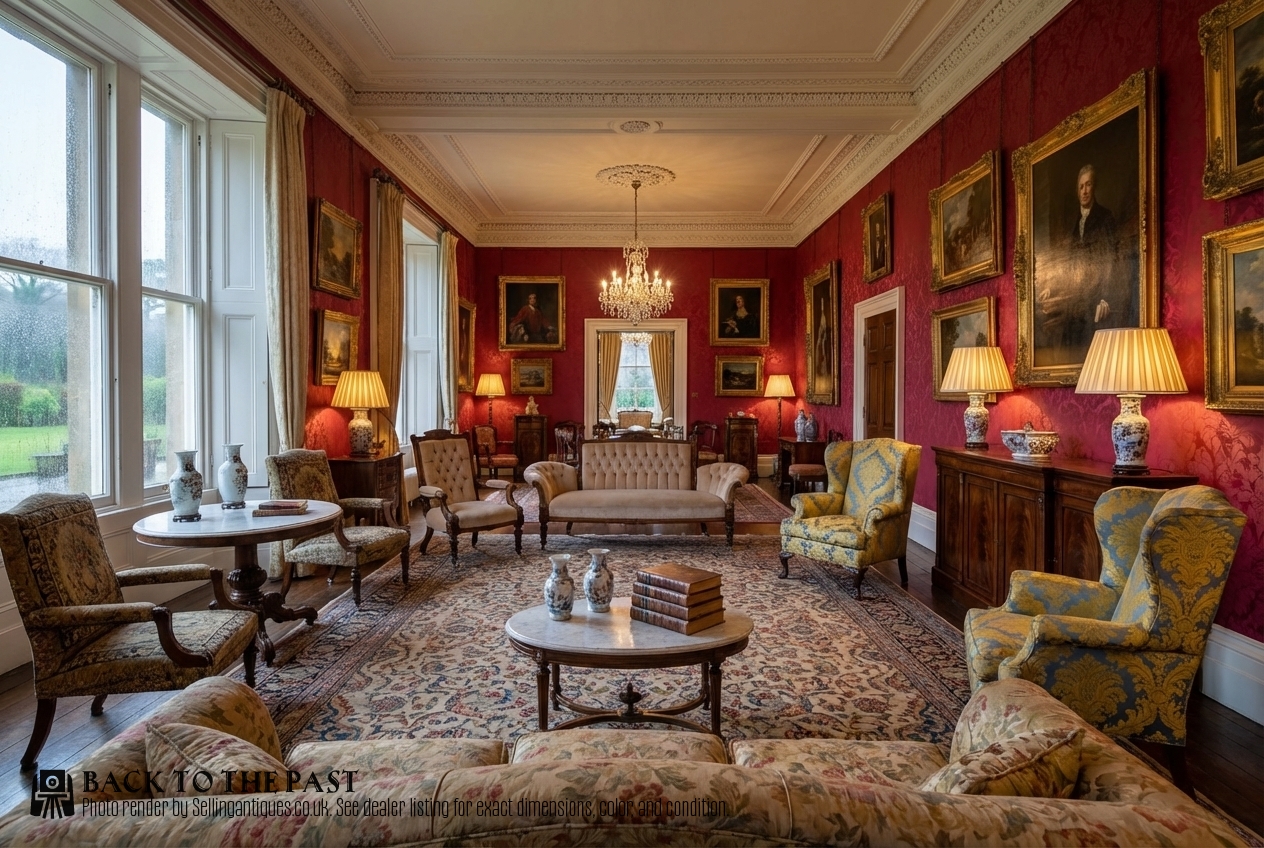
Victorian Salon Furniture
The material record shows a strong preference for walnut, mahogany, and ebonised wood, frequently paired with damask, velvet, or deep-buttoned upholstery. Forms include distinct stylistic revivals such as French Rococo, Aesthetic Movement, and Egyptian Revival alongside standard Victorian and Edwardian transitional designs.
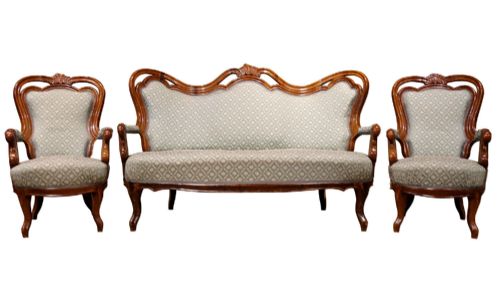
Complete salon suites unite matching settees, armchairs, and side chairs intended to furnish formal drawing rooms in a cohesive style. Individual salon chairs, cabinets, and centre tables also appear, offering options for domestic spaces requiring period character.
How they were made
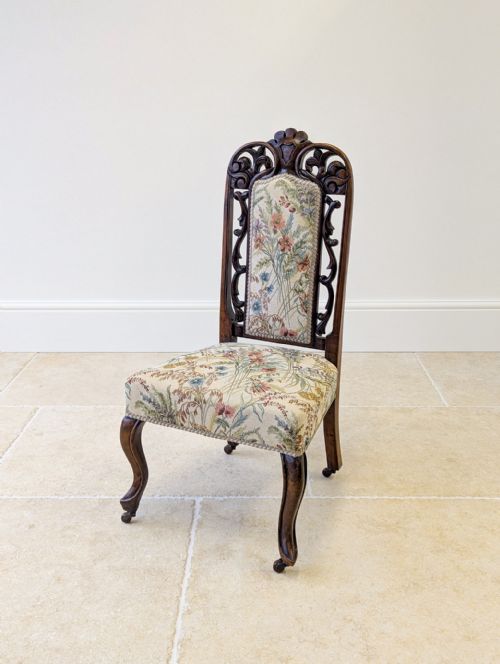
Cabinetmakers shaped dense hardwoods including walnut, mahogany, and rosewood, employing steam bending and hand carving to achieve serpentine rails and cabriole legs. Turn-of-the-century pieces occasionally utilise ebonised finishes and satinwood veneers to create contrasting dark and light surfaces.
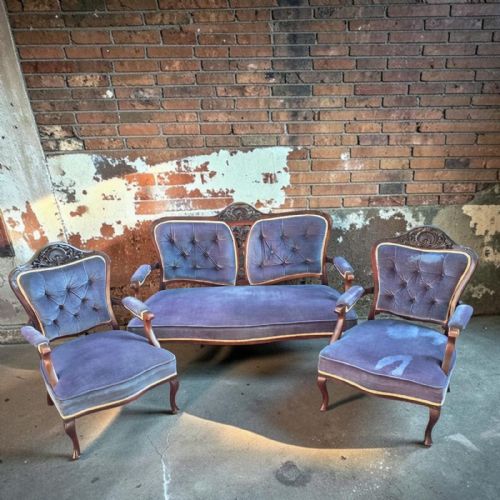
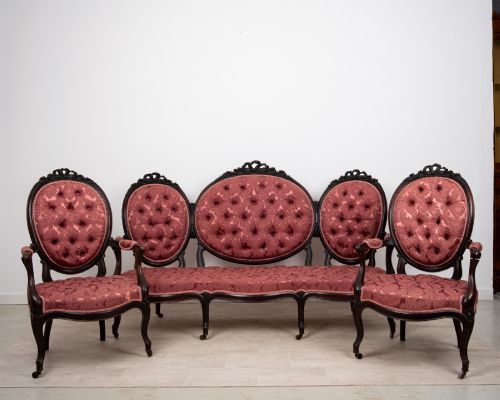
Upholstery techniques involved deep buttoning, sprung foundations, and textile coverings of damask, velvet, and patterned fabrics. Skilled artisans secured these textiles over robust internal frames using traditional webbing and stuffing methods.
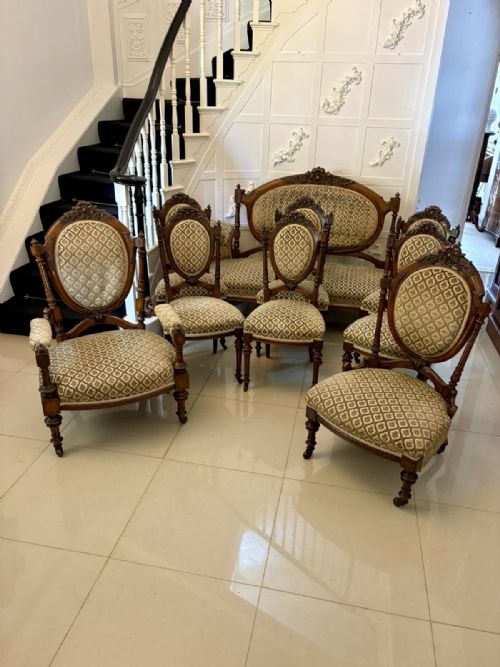
Lion paw feet anchor a heavy walnut sofa suite, ready to pounce across the drawing room floor.
What varies in quality
The degree of hand carving and the selection of timber dictate the standard of the piece, with exhibition quality items displaying intricate floral motifs and superior burr walnut veneers. Simpler production pieces rely on plainer mahogany or standard turned components.
The cohesion of matching multi-piece suites influences overall desirability, as complete sets retaining original upholstery or unified frames command greater interest than assembled groups. Cabinetwork joinery and the execution of applied inlay determine the refinement of tables and cabinets.
C. Hindley & Sons·Blyth & Sons·Morison & Co·Holland & Sons·Jas / James Shoolbred
The Victorian Salon Furniture Glossary
- Balloon-back
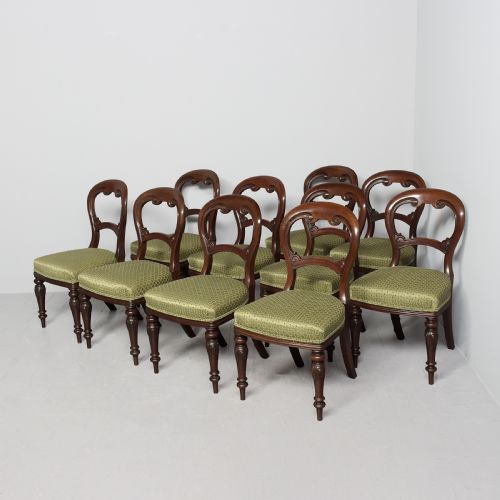
- A chair back shaped in a continuous curved oval resembling an inflated balloon. This design appears frequently on nineteenth-century dining and salon chairs.
- Cabriole leg
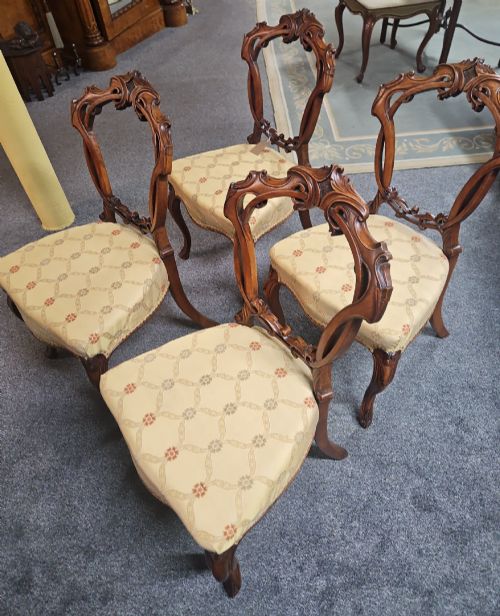
- A furniture leg that curves outward at the knee and inward at the ankle, ending in a pad or foot. It is common on Rococo Revival seating.
- Ebonised
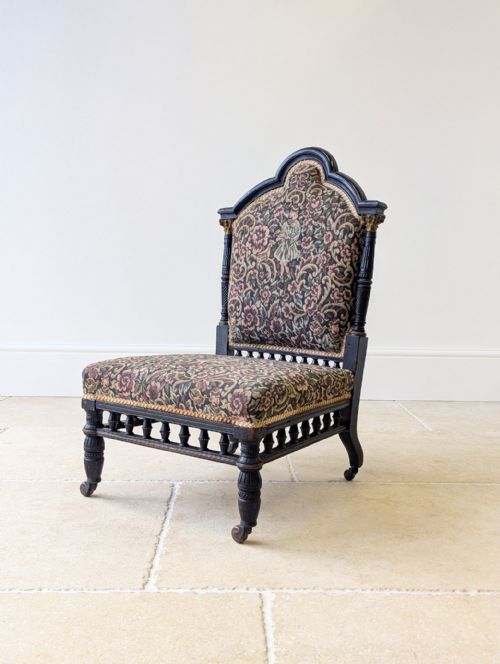
- Wood stained or painted black to imitate ebony. This finish characterises many Aesthetic Movement pieces from the eighteen-eighties.
- Deep buttoning
- An upholstery technique where buttons are pulled tight into the stuffing to form a diamond-patterned relief. This method provides structured comfort on settees and armchairs.
- Serpentine
- A furniture front or rail shaped with a central convex curve flanked by concave sections. This contour adds movement to cabinet drawers and chair seats.
Victorian Salon Furniture: Frequently Asked Questions
What is a salon suite?
A salon suite is a matched set of reception room furniture containing a settee paired with matching armchairs and side chairs. These suites ensured uniform decoration for formal Victorian drawing rooms.
Items within a suite shared identical wood types, carved motifs, and upholstery fabrics to maintain visual harmony across the entire room.
How do I identify Aesthetic Movement furniture?
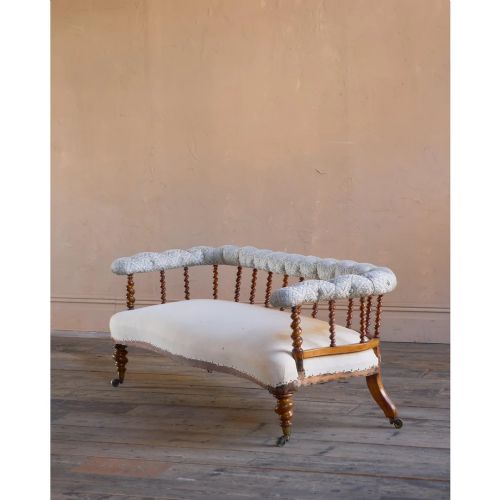
Aesthetic Movement pieces from the late nineteenth century typically feature ebonised wood frames, spindle galleries, and slender proportions. They reject heavy Victorian revival ornamentation in favour of simplified, linear designs.
These items often incorporate gilt highlights or contrasting light wood inlays to accent the dark ebonised surfaces.
Were these chairs used for dining?
While salon chairs were designed for sitting in drawing rooms during formal calls, surviving listings include distinct dining chair sets in mahogany and rosewood. Salon seating prioritised lighter comfort and decorative upholstery over heavy dining use.
Dining chairs featured sturdier frames and simpler rails suited to regular seating around a dining table.
How should I care for antique upholstery?
Antique upholstery requires gentle maintenance using low-suction vacuum attachments to remove surface dust without straining aged textiles and internal webbing. Avoiding direct sunlight preserves the colour of delicate damask and velvet fabrics.
Professional textile conservationists can address deep cleaning or structural repairs to fragile buttoning.
What wood was most popular?
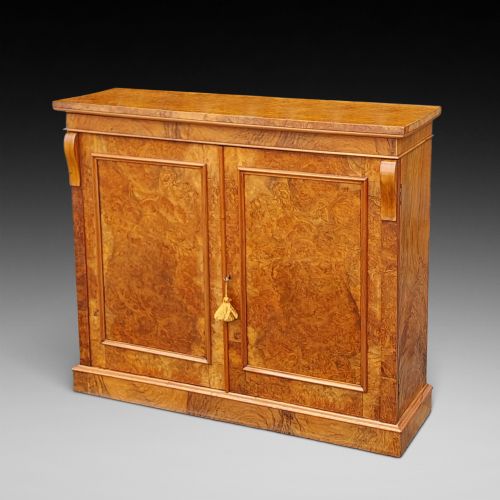
Walnut and mahogany dominated nineteenth-century cabinetmaking, with burr walnut utilised for high-status exhibition quality salon cabinets and suites. Rosewood also appeared on select mid-century balloon-back chairs.
By the late nineteenth century, ebonised hardwoods and exotic satinwood gained favour for specialised occasional furniture.