



Edwardian Salon Seating
Edwardian salon seating comprises lighter frames and inlaid woods designed for formal rooms, bridging late Victorian weight and early twentieth-century elegance.
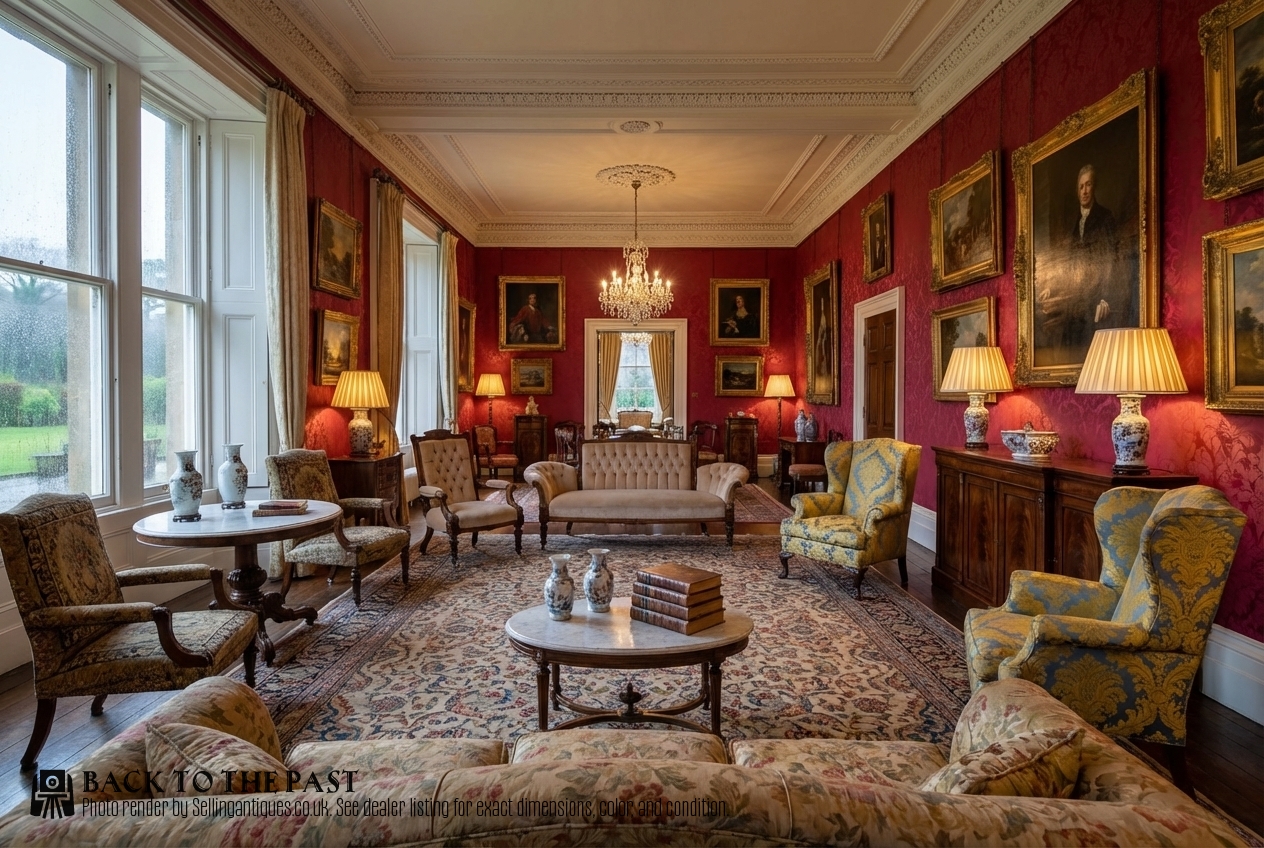
Edwardian Salon Seating
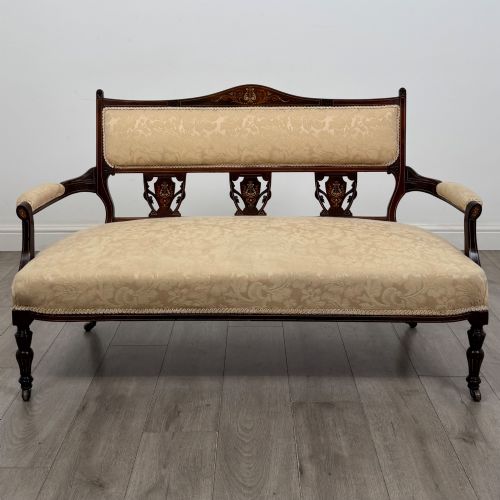
Edwardian salon seating covers a range of lighter reception furniture, from single salon and bedroom chairs to multi-piece suites and settees. The pieces commonly found here date primarily from the Edwardian period and the late Victorian era, with occasional examples stretching from the mid-nineteenth century into the 1930s.
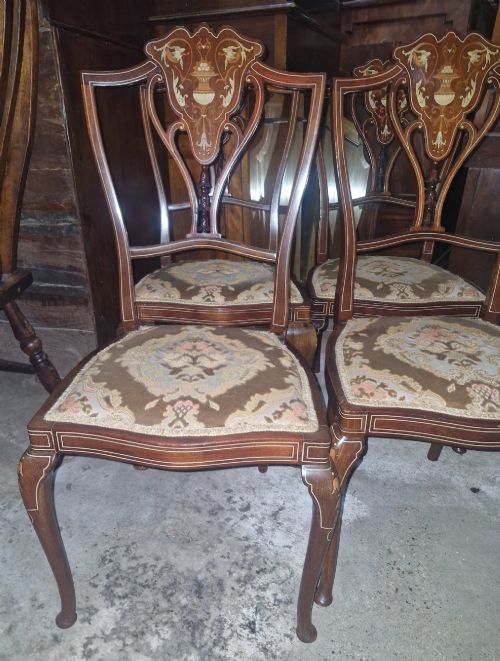
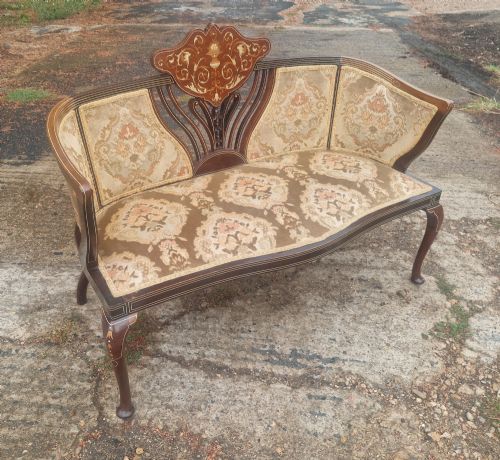
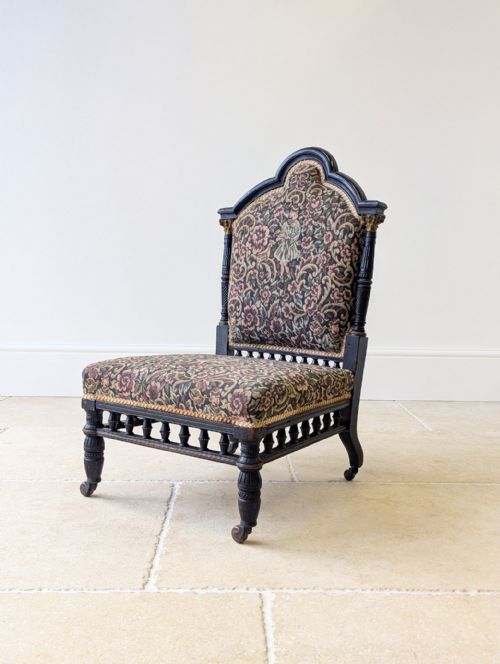
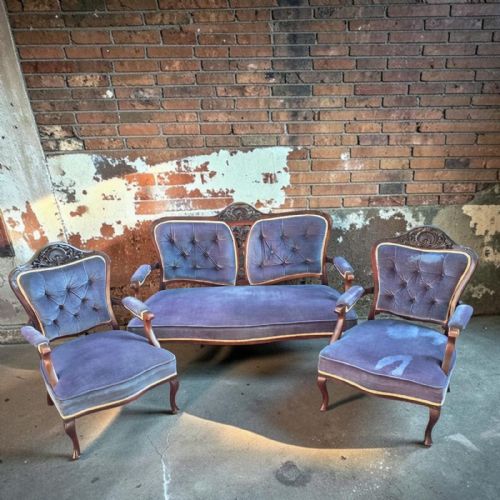
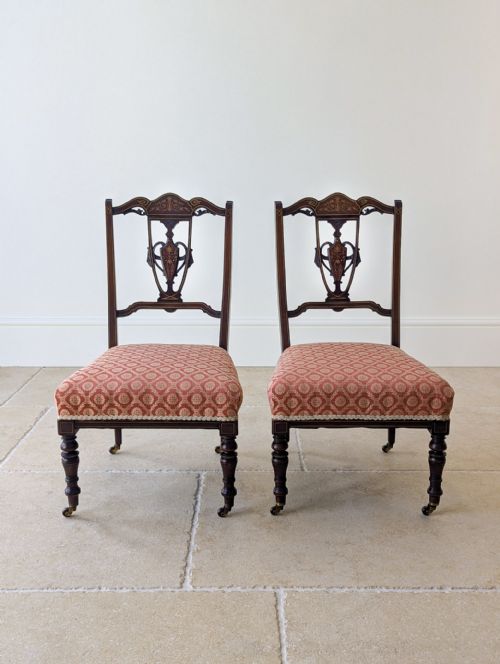
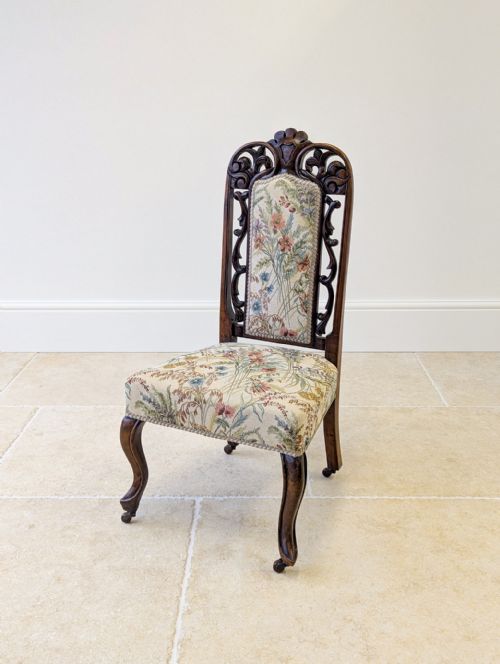
Forms include armchairs, nursing chairs, side chairs, and two-seat settees often described as end-of-bed sofas or salon settees. Mahogany and rosewood form the core of the selection, frequently paired with inlaid decoration.
Buyers encounter matching pairs, sets of four or six chairs, and larger three-piece suites combining sofas and matching armchairs. Styles span standard Edwardian and Sheraton Revival designs alongside Arts and Crafts, Art Nouveau, and occasional French provincial influences.
How they were made
Cabinetmakers utilised hardwoods such as mahogany, walnut, rosewood, and oak for structural framing, often shaping them with carved details or supporting them on slender legs. Satinwood and marquetry inlay provide decorative contrast on backrests and rails, sometimes supplemented by bone stringing.
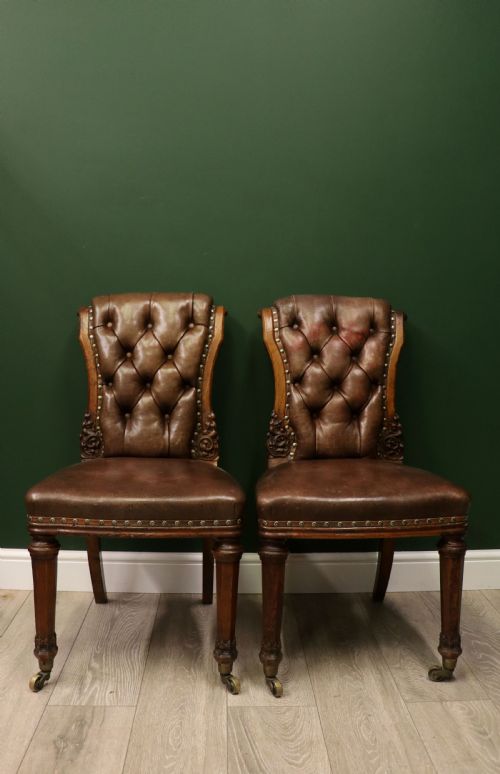
Upholstery techniques involve traditional stuffing secured over sprung or webbed bases, finished in silk, velvet, fabric, or leather. Frames frequently incorporate steam-bent components or joined timber construction designed for lighter domestic use.
One set pairs his-and-her sofa chairs designed specifically so a couple could sit side by side without crushing their formal attire.
What varies in quality
Quality rests in the crispness of the cabinetwork, the precision of the marquetry inlay, and the integrity of the underlying timber frame. Finer examples display carefully selected wood veneers, balanced proportions, and detailed carving rather than plain surfaces.
The sophistication of the stylistic execution - such as refined Sheraton Revival stringing or integrated Art Nouveau lines - differentiates standard production from superior pieces. Original upholstery materials and well-preserved frame joints also elevate a piece.
Blyth & Sons
The Edwardian Salon Seating Glossary
- Marquetry inlay
- Decorative patterns formed by fitting contrasting pieces of wood veneer into a prepared surface. This technique creates pictorial or geometric designs on chair backs and settee rails.
- Sheraton Revival
- A late nineteenth and early twentieth-century design style drawing on eighteenth-century neoclassical principles. It relies on symmetrical mahogany frames, slender tapered legs, and delicate stringing.
- Settee
- A small upholstered sofa designed to seat two or more people comfortably. These pieces often match accompanying salon chairs to form a suite.
- Salon chair
- A light, decorative chair intended for formal reception rooms rather than heavy daily lounging. They frequently feature open wooden backs and upholstered seats.
- Aesthetic Movement
- A late Victorian design style prioritising visual beauty over narrative or moral function. Pieces from this movement often employ ebonised finishes and simplified structural forms.
Edwardian Salon Seating: Frequently Asked Questions
What is edwardian salon seating?
Edwardian salon seating consists of lighter chairs, settees, and multi-piece suites made primarily around the start of the twentieth century. They were designed for formal entertaining and reception rooms rather than heavy everyday use.
These pieces typically feature timber frames of mahogany or rosewood, frequently enhanced with inlaid decoration, marquetry, or stringing. They reflect the transition from heavier Victorian furniture toward more refined, slender interior styles.
How were these chairs used?
Historically, salon seating furnished drawing rooms, boudoirs, and bedrooms where guests were received or personal correspondence took place. Different chair types served specific social functions, such as nursing chairs designed with lower seats or armless chairs accommodating wide skirts.
Settees and smaller sofas provided conversational seating along room perimeters. Because these items were built for lighter reception spaces, they remain practical for occasional sitting in modern homes today.
How do I spot Victorian versus Edwardian pieces?
Victorian seating generally exhibits heavier proportions, darker walnut or ebonised timber, and more substantial carved ornamentation. The construction tends to feel solid and robust, reflecting mid-to-late nineteenth-century tastes.
Edwardian pieces, by contrast, lean towards lighter woods like satinwood-inlaid mahogany, brighter upholstery, and more delicate, slender framing. Many items bridge the two eras, carrying design traits from both periods.
Can I mix salon chairs with modern furniture?
Placing antique salon seating into a contemporary room creates a deliberate contrast in scale and texture. Their slender legs and inlaid details add distinct decorative focal points without dominating a floor plan.
Matching pairs work well as accent seating in living spaces or bedrooms, while individual chairs suit dressing tables or hallways. Their compact dimensions make them straightforward to position in smaller modern layouts.