



Victorian Sailing Vessel
A victorian sailing vessel captures the drama of nineteenth-century maritime trade and coastal navigation through detailed oil paintings and cased dioramas.
Victorian Sailing Vessel
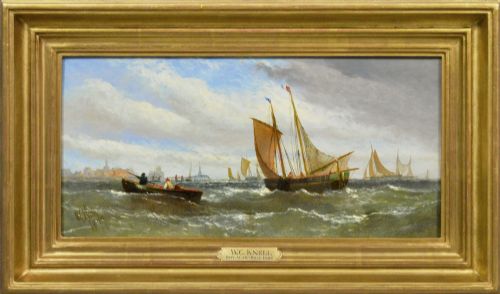
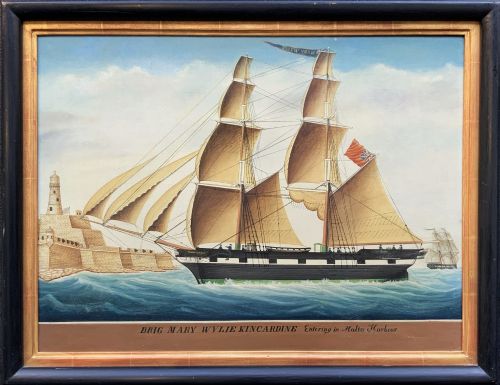
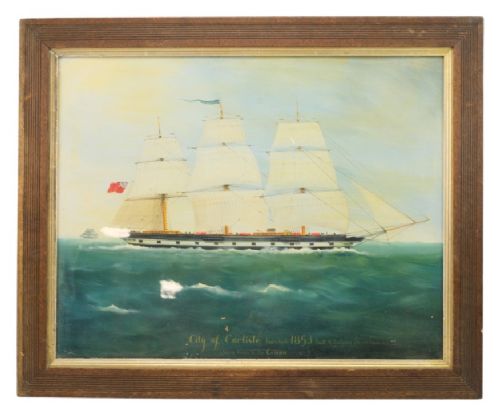
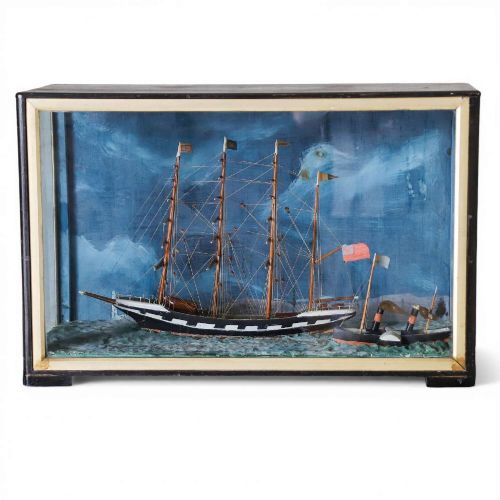
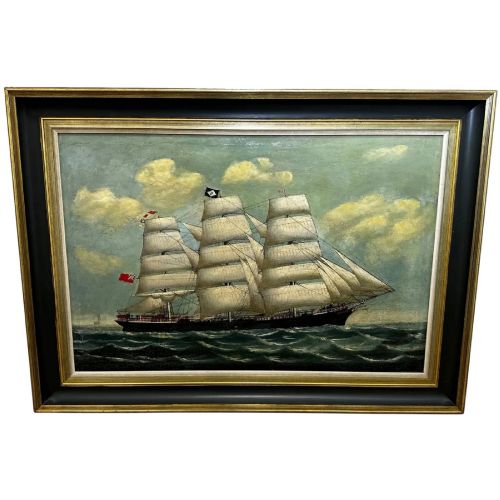
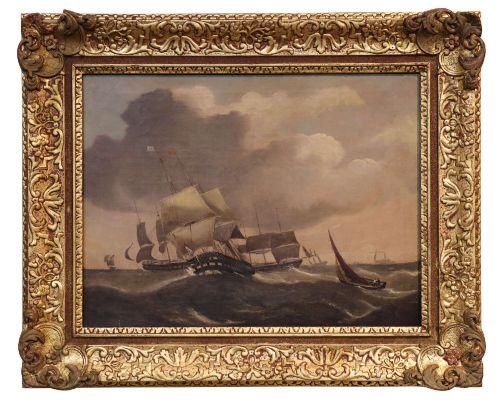
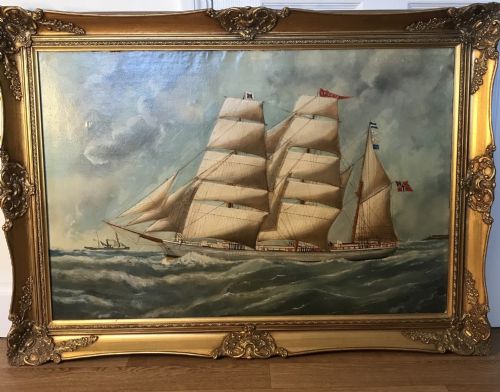
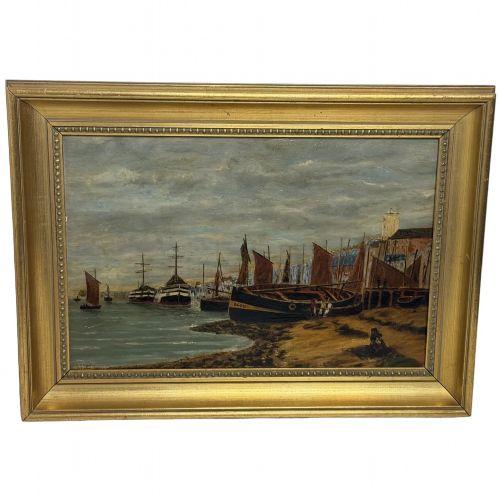
A victorian sailing vessel appears across this page primarily as an oil painting, watercolour, or three-dimensional cased diorama depicting ships at sea. These works record specific merchant vessels, clippers, and barques navigating coastal waters, heavy seas, and harbour anchorages during the nineteenth century.
Buyers encounter framed marine art ranging from naive folk traditions to accomplished academic ship portraits. The selection spans standard oil canvases, paper watercolours, and intricate shadow boxes incorporating carved wood and straw work.
Many pieces document named British and international vessels involved in historical routes, offering a direct visual record of nineteenth-century maritime expansion and seafaring life.
Materials and Construction
Painters utilised oil on canvas and watercolour on paper, frequently framing the finished works in giltwood, oak, or gold leaf to suit domestic display. These methods allowed artists to render coastal light, atmospheric skies, and turbulent water with considerable precision.
Three-dimensional representations relied on carved wood, paper, and canvas assembled into cased dioramas and shadow boxes. Makers built intricate miniature rigging and hull structures inside glazed wooden frames to protect the delicate maritime models from dust and damage.
Victorian Sailing Vessel Retail Price Guide 2026
Typical asking prices for victorian sailing vessel among the pieces listed under this phrase on Sellingantiques today, from the lower quarter to the upper quarter. They describe what is for sale here now, not the wider market.
Listings feature works from the nineteenth century executed in oil on canvas, watercolour, and mixed media wood construction.
Judging Quality in Marine Works
Quality rests upon the artist's technical grasp of rigging, hull proportion, and maritime perspective. Works by documented painters command attention for their accurate depiction of vessel architecture and water movement.
In diorama and folk art forms, the finesse of miniature construction and the preservation of delicate paper or straw elements determine the standing of the piece. Superior examples maintain intact original glazing and well-proportioned models that convey a convincing sense of motion.
John Rose Miles·Charles William Adderton·William Frederick Settle·Daniel Sherrin·Marie-Edouard Adam·Ebeneezer Colls·Joseph Heard·Thomas Bush Hardy
The Victorian Sailing Vessel Glossary
- Barque
- A sailing vessel with three or more masts having the fore and mainmasts square-rigged and the mizzenmast fore-and-aft rigged. This rig was common for nineteenth-century ocean-going trade.
- Clipper
- A very fast nineteenth-century merchant sailing ship with a sharp bow and large sail area. These vessels were built to transport perishable cargoes rapidly across global trade routes.
- Diorama
- A three-dimensional scene enclosed in a glass-fronted case, combining painted backgrounds with physical models. In maritime folk art, these portray ships navigating rough seas.
- Ship portrait
- A specialised genre of marine art focusing on an accurate, detailed representation of a specific vessel. These commissions were often ordered by ship captains or owners.
- Shadow box
- A deep, glazed picture frame containing a three-dimensional display. Maritime examples use layered materials to create depth in marine scenes.
Victorian Sailing Vessel: Frequently Asked Questions
How do I identify a marine oil painting?
Marine oil paintings feature canvas supports depicting coastal scenes, ship portraits, or vessels in heavy seas. Brushwork and surface texture distinguish them from later reproductions and paper prints.
Examination of the frame, canvas stretcher, and artist signatures often helps confirm nineteenth-century origins.
Where were these maritime artworks made?
These works originated primarily in British coastal ports, maritime hubs, and naval towns during the nineteenth century. Local artists and folk makers recorded the vessels operating in nearby waters and international trade routes.
Many pieces document specific harbours such as North Shields, Lyme Bay, and the Isle of Wight.
How should I display a cased diorama?
Cased dioramas require stable indoor environments away from direct sunlight and excessive humidity. The original glass housing protects the delicate internal paper and wooden elements from atmospheric wear.
Wall mounting or placement on sturdy shelving ensures the deep wooden frames remain properly supported.