

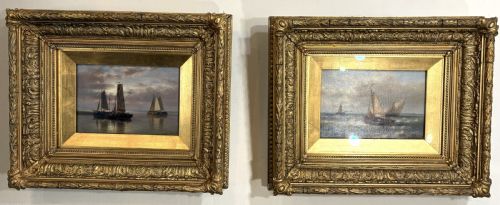


Victorian Sailing Ship Art
Victorian sailing ship art captures the drama of maritime trade and naval power through period paintings and cased dioramas.
Victorian Sailing Ship Art
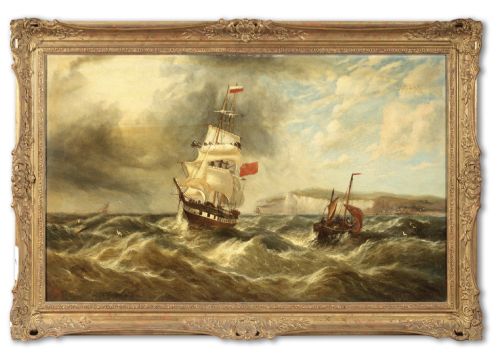
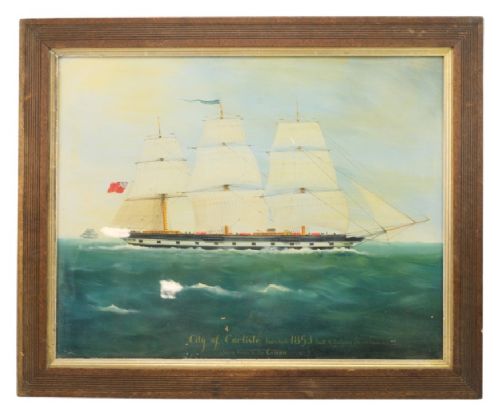
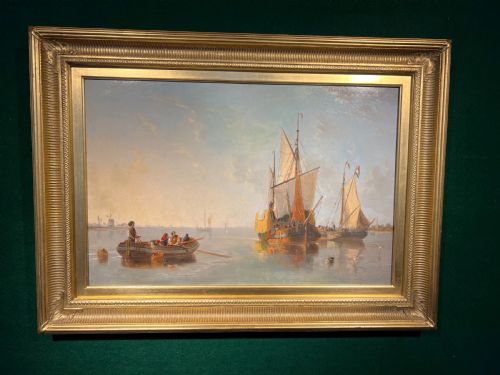
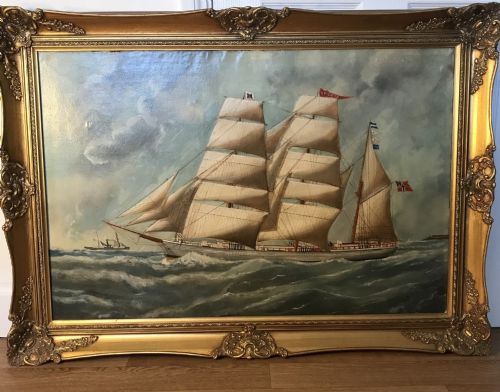
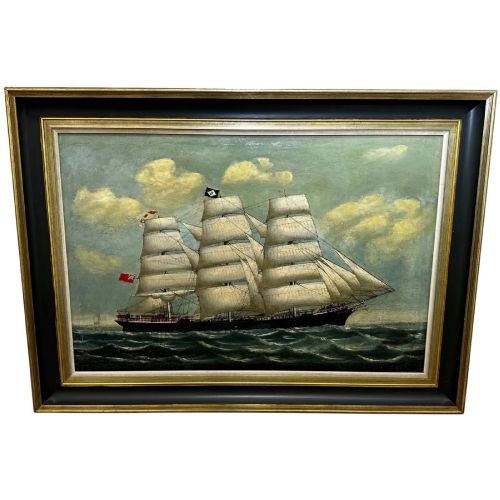
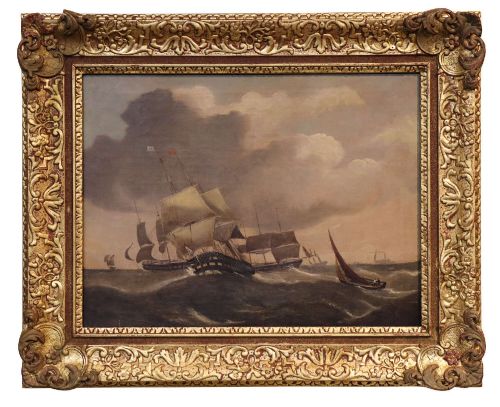
Victorian sailing ship art comprises maritime paintings, watercolours, and shadow box models created during the nineteenth century. These works depict specific named vessels, coastal shipping scenes, and dramatic open-sea voyages.
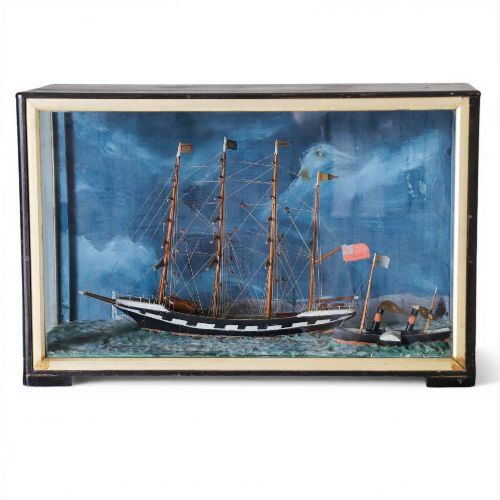
The most common formats met on this page are framed oil paintings on canvas or board, alongside intricate three-dimensional maritime dioramas housed in glazed wooden cases.
How They Were Made
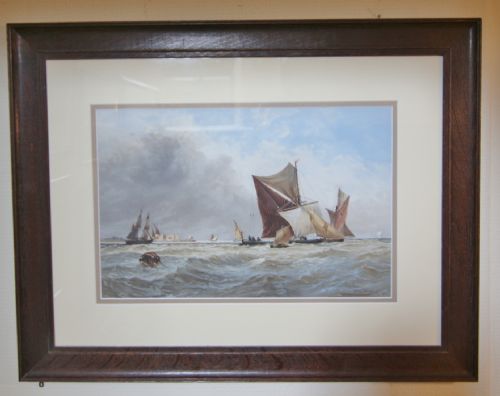
Makers applied oil paint to stretched canvas or wooden board, and watercolours to paper, capturing coastal light and rough seas. Many works incorporate gold leaf within period frames, while dioramas combine carved wooden ship models with painted backdrops and textured paper or straw work elements.
Victorian Sailing Ship Art Retail Price Guide 2026
Typical asking prices for victorian sailing ship art among the pieces listed under this phrase on Sellingantiques today, from the lower quarter to the upper quarter. They describe what is for sale here now, not the wider market.
Some nineteenth-century maritime artisans utilised humble straw work to construct intricate ship models inside shadow box frames.
What Varies in Quality
Quality rests upon the artist's command of maritime architecture, rigging accuracy, and the dynamic movement of water under changing weather conditions. Finer pieces demonstrate precise handling of atmospheric light and meticulous detail in the rendering of hulls and sails.
John Rose Miles·John Wilson Carmichael·Abraham Hulk I·William Frederick Settle·Thomas Bush Hardy·George Stanfield Walters·Daniel Sherrin
The Victorian Sailing Ship Art Glossary
- Diorama
- A three-dimensional model depicting ships at sea, enclosed in a glazed wooden shadow box. These often feature painted canvas backgrounds to create a sense of depth.
- Barque
- A sailing vessel with three or more masts, having the foremast and mainmast square-rigged and the mizzenmast fore-and-aft rigged. They formed the backbone of nineteenth-century merchant fleets.
- Seascape
- A work of art depicting the sea, coastal views, or ships operating in marine environments. These compositions focus heavily on the interaction between water, sky, and vessel.
- Clipper
- A very fast nineteenth-century merchant sailing ship with three masts and a curved bow. They are frequently shown under full sail in competitive racing scenes.
Victorian Sailing Ship Art: Frequently Asked Questions
What is a maritime diorama?
A maritime diorama is a cased three-dimensional model of a ship set against a painted background. These pieces combine carpentry, painting, and model-making to recreate sailing vessels in motion.
Enclosed in wooden frames behind glass, they often include detailed rigging, miniature lifeboats, and textured waves formed from paper, canvas, or carved wood.
How do oil paintings differ from watercolours here?
Oil paintings utilise heavy pigments on canvas or board to achieve rich textures and deep tones. They excel at showing heavy seas and stormy skies.
Watercolours on paper offer a lighter, more translucent medium suited to coastal atmospheres and clear daylight scenes, typically preserved beneath protective glass.
How were named ships recorded in art?
Artists often painted specific merchant vessels, clippers, and barques commissioned by ship owners, captains, or shipping lines. These works served as accurate portraits of working ships.
Inscriptions on the reverse or within the composition frequently identify the vessel, the captain, or the notable voyage depicted.
How should I hang these maritime artworks?
These framed paintings and shadow boxes require stable wall spaces away from direct sunlight and damp conditions. Heavy diorama cases need secure fixings suited to their substantial weight.
Grouping smaller watercolours or pairing complementary coastal oil paintings creates a balanced display that reflects nineteenth-century salon arrangements.