


Victorian Rosewood Vanity Box
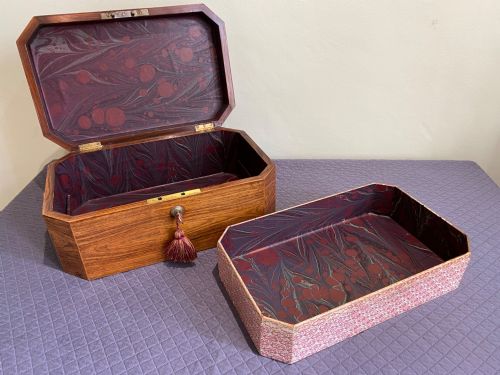
A victorian rosewood vanity box offers fitted compartments and rich timber grain, providing an elegant portable dressing case for daily use.
Victorian Rosewood Vanity Box
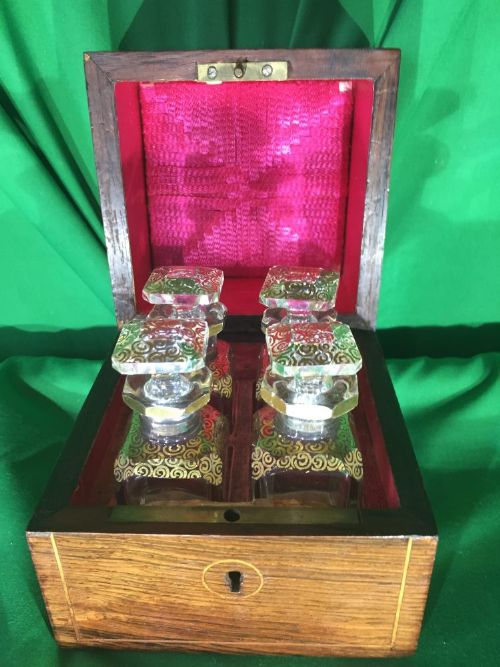
A victorian rosewood vanity box is a portable case designed for personal grooming and jewellery storage, frequently housing glass bottles and interior trays. The pieces found here span the nineteenth century, including specific dates such as eighteen forty-three and eighteen eighty, alongside broader Victorian and Edwardian examples. Alongside dedicated vanity boxes, the selection encompasses related forms such as jewellery cabinets, writing slopes, and workboxes.
Makers and craftsmen shaped these items into sarcophagus forms, rectangular caskets, and travelling cases intended for elite dressing tables. These objects served affluent owners who required secure storage for trinkets, sewing equipment, and scent bottles while travelling or at home.
How they were made
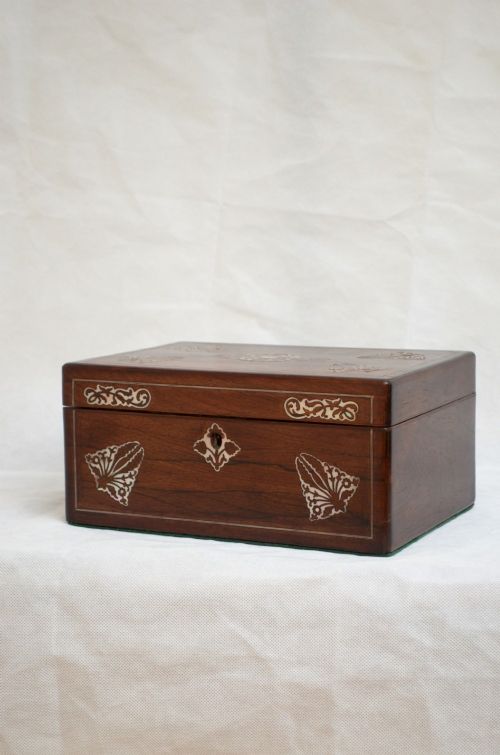
Workshops built these pieces using dense rosewood timber, often embellishing the exterior surfaces with contrasting brass banding and shimmering mother-of-pearl inlay. Interiors lined with velvet and fabric provided secure housing for delicate glass scent bottles and silver-plated or sterling silver fittings.
Craftsmen employed marquetry techniques to pattern the timber lids, while specialised regional techniques such as Tunbridge Ware added intricate mosaic wood decoration to select caskets. Metal stringing in brass or silver further accentuated the geometric lines of the rosewood carcasses.
Several boxes conceal hidden drawers triggered by secret wooden release catches, designed to outsmart prying eyes.
What varies in quality
The sophistication of the internal fittings defines the upper tier of these pieces, particularly the inclusion of original silver-gilt or sterling silver bottle caps and complete tray systems. Examples featuring musical movements or intricate Tunbridge Ware marquetry demonstrate higher standards of period craftsmanship.
The precision of the mother-of-pearl inlay and the preservation of the delicate velvet and fabric linings mark the distinction between standard production boxes and exceptional luxury items.
The Victorian Rosewood Vanity Box Glossary
- Rosewood
- A heavy, dark timber with distinct grain patterns used extensively for nineteenth-century luxury furniture and decorative boxes. It polishes to a deep lustre.
- Tunbridge Ware
- A type of decorative woodwork characterised by mosaic designs formed from tiny pieces of naturally coloured wood. It creates pictorial or geometric veneer patterns on box lids.
- Vanity Box
- A portable dressing case fitted with compartments for cosmetics, brushes, and glass scent bottles. These boxes often include secret drawers and removable trays.
- Mother-of-Pearl
- The iridescent inner layer of certain mollusc shells, sliced into thin sections for ornamental inlay on box exteriors. It catches the light with silvery and pinkish hues.
- Sarcophagus
- A box shape featuring a domed or sloping lid tapering inward toward the base, reminiscent of classical monumental tombs. This architectural form was popular during the Regency and early Victorian periods.
Victorian Rosewood Vanity Box: Frequently Asked Questions
What fits inside a vanity box?
These boxes typically house glass scent bottles, small jars with silver or plated lids, and fitted trays for jewellery and trinkets.
Deeper compartments beneath the removable trays accommodate larger accessories, documents, or sewing implements.
How do I date a rosewood box?
Stylistic markers such as brass banding, sarcophagus shaping, and the complexity of internal compartments help narrow down the decade of production.
Inscribed plaques, maker stamps, or specific patents found inside the lid can also provide precise manufacturing years.
Are the glass bottles original?
Many surviving boxes retain their matched sets of cut-glass scent bottles, often featuring fitted silver or plated caps.
Replacements do occur due to breakage over time, so examining the fit within the velvet recesses helps determine originality.
How should I care for rosewood?
Keep the timber away from direct sunlight and dramatic humidity changes to prevent the rosewood from drying out or splitting.
Gentle dusting with a dry cloth maintains the polished finish without harming the delicate mother-of-pearl inlay or fabric linings.