


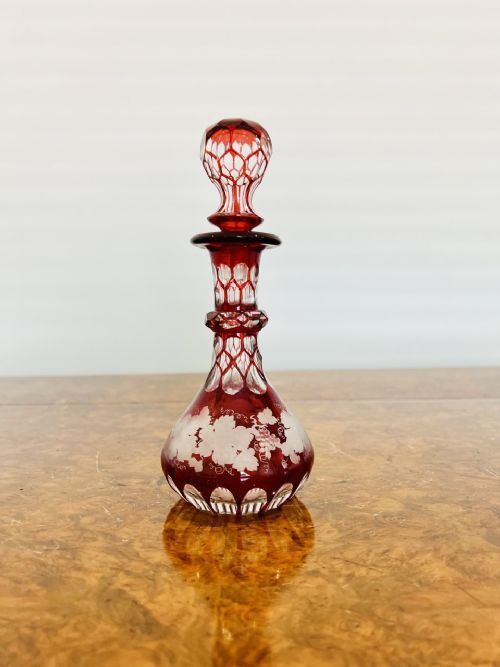


Glass Perfume Vanity Jars
Glass perfume vanity jars combine cut crystal, silver lids, and tortoiseshell to dress a dressing table with functional elegance.
Glass Perfume Vanity Jars
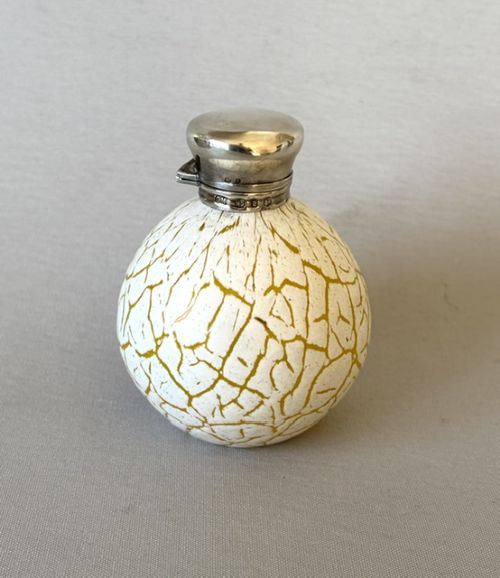
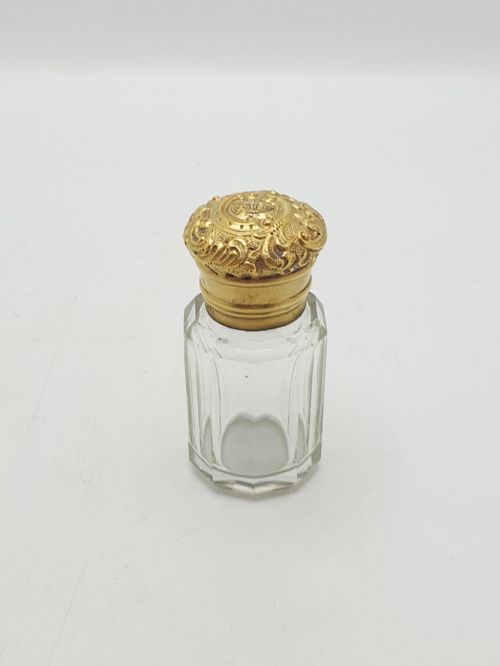
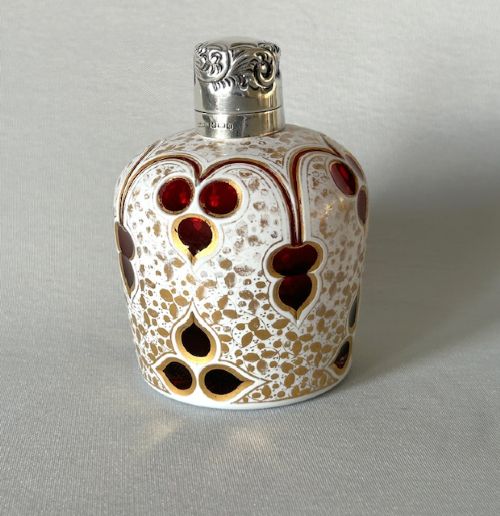
Glass perfume vanity jars represent a refined category of dressing table accessories designed for personal grooming and cosmetic storage. These items range from single scent bottles and globular perfume containers to larger vanity cases and matched dressing table sets.
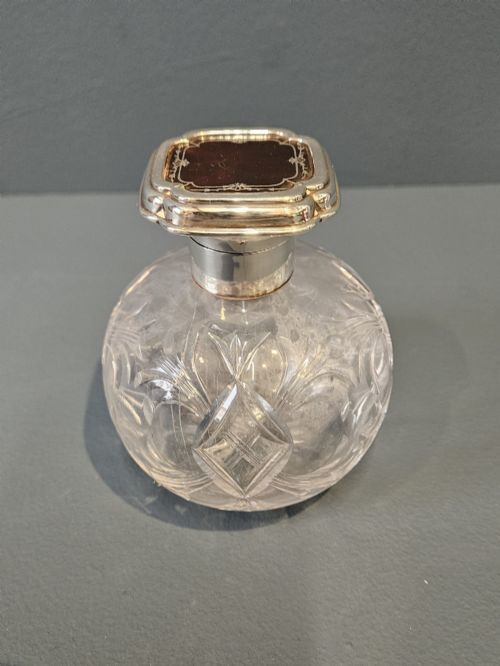
The pieces appearing most frequently on this page combine glass vessels with sterling silver mounts, often originating from the Victorian, Edwardian, and Art Deco periods. Buyers encounter cut glass, crystal, and coloured vessels paired with metalwork, enamel, or tortoiseshell lids.
Forms span from simple pocket scent bottles to elaborate travelling vanity boxes and lockable cologne containers. Each piece reflects the domestic habits of past decades, serving both a decorative and practical role upon the dressing table.
Markers of distinction in glass and silver
Quality reveals itself in the clarity and weight of the glass body, alongside the crispness of the cutting. Superior pieces display deep, precise faceting and smooth rims beneath well-fitted silver lids.
The intricacy of the secondary materials also dictates the calibre of the piece. Finely preserved guilloche enamel, unblemished tortoiseshell, and robust silver mounts with clear hallmarks distinguish finer examples from standard production.
Listings feature pieces spanning from the Regency period through Victorian, Edwardian, and Art Deco styles.
Henry Perkins·Barnsley and Co·Adie Brothers Ltd
The Glass Perfume Vanity Jars Glossary
- Sterling Silver
- A standard alloy of silver comprising ninety-two point five percent silver by mass, widely utilised for the protective lids and collars of these bottles.
- Guilloche Enamel
- A decorative technique where intricate geometric patterns are mechanised into a metal surface before translucent enamel colours are applied over top.
- Cut Crystal
- Glass containing lead oxide that increases brilliance and weight, allowing for sharper and more refractive decorative cutting.
- Tortoiseshell
- The mottled brown and amber keratin shell of certain marine turtles, historically mounted onto vanity box lids and scent bottle caps.
- Hallmark
- An official stamp applied to precious metal items denoting the purity, maker, assay office, and year of manufacture.
Glass Perfume Vanity Jars: Frequently Asked Questions
What periods do these vanity jars come from?
The pieces span from the Regency era through the Victorian and Edwardian periods into the Art Deco style of the nineteen thirties. Most surviving examples date from the late nineteenth and early twentieth centuries.
Assay marks on the silver mounts often provide precise decade or year indicators, helping collectors date individual items accurately.
How were these glass perfume bottles used?
These vessels held liquid scents, colognes, and powders on dressing tables or inside travelling vanity cases. Wealthy owners utilised them for daily grooming routines and toilette preparations.
Lockable versions and heavy stoppers ensured that precious volatile fragrances remained secure during travel or daily use.
How do I care for silver and glass items?
Keep glass bodies clean with gentle washing while protecting delicate materials like tortoiseshell and enamel from excessive moisture. Silver components benefit from occasional light polishing to maintain their finish without harming hallmarks.
Store the pieces away from direct sunlight to preserve the vibrant tones of coloured glass and enamel.
What materials appear alongside the glass?
Sterling silver forms the most common mount material, frequently paired with cut glass, crystal, and coloured glass bodies. Enamel, tortoiseshell, and rosewood also appear on lids and vanity boxes.
These varied substances reflect changing aesthetic preferences across the Victorian, Edwardian, and Art Deco eras.