


Ladies Dressing Case
A ladies dressing case is a fitted travelling box designed for personal grooming and jewellery, offering a glimpse into private domestic routines.
Ladies Dressing Case
A ladies dressing case brings together compartments for cosmetics, jewellery, and writing materials within a portable box. You will frequently encounter Victorian examples alongside mid-century and earlier pieces.
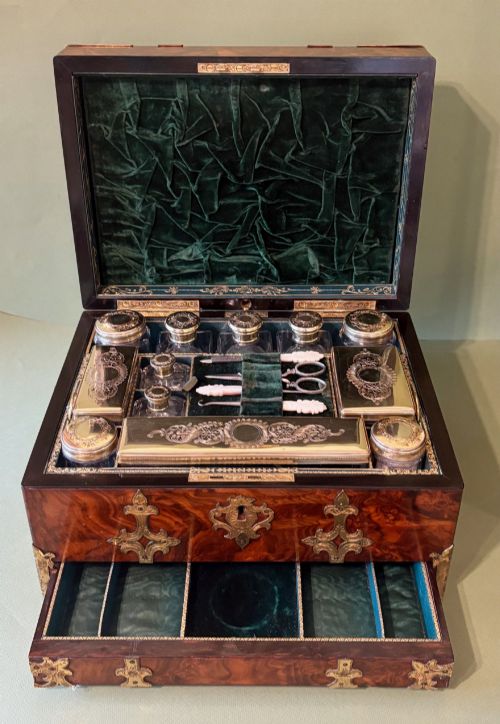
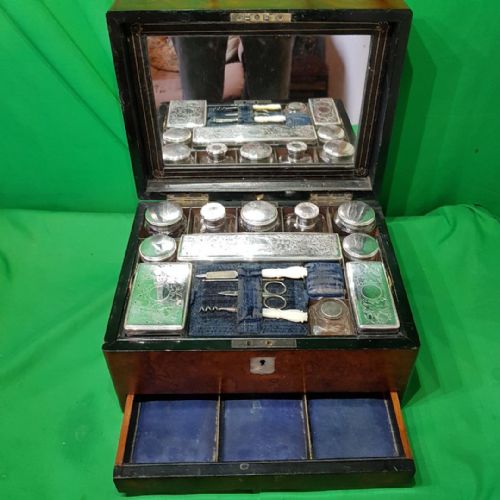
These items range from elaborate travelling sets with silver-mounted glass bottles to simpler walnut and rosewood vanity boxes. The form serves both utility and display, often housing fitted interiors with velvet linings.
Origins span English, Italian, and Chinese workshops, utilising local hardwoods and exotic veneers. The selection on this page reflects varied periods from the nineteenth century through to the mid-twentieth century.
Materials and construction
Cabinetmakers constructed these cases using robust timbers such as oak, elm, burr walnut, rosewood, and coromandel, frequently applying decorative veneers. Brass binding and inlay added structural reinforcement and visual contrast to the exterior corners and lids.
Interiors often feature fitted compartments lined with velvet, housing cut glass bottles with silver or hallmarked silver tops. Leather and lacquer also appear as surface treatments or secondary materials across the different styles.
Materials documented across the collection include burr walnut, brass, glass, silver, velvet, leather, rosewood, and cut glass.
Distinctions in quality
Quality rests in the selection of timber veneers and the precision of the brass work. Burr walnut and coromandel cases with integrated silver-topped glass fittings represent higher tiers of production.
The complexity of the interior architecture, including concealed drawers and writing slopes, separates standard boxes from exceptional ones. Intricate lacquer work and well-preserved velvet linings further distinguish finer examples.
The Ladies Dressing Case Glossary
- Burr walnut
- A figured timber derived from the warted growths of the walnut tree. It is prized for its swirling grain patterns on furniture and boxes.
- Coromandel
- A dense, heavy wood imported from Asia, featuring dark brown or black coloration with contrasting stripes. It was often utilised for high-end nineteenth-century boxes.
- Writing slope
- A hinged desk surface built into a box that folds down for correspondence. It typically conceals small compartments for inkwells and stationery.
- Vanity case
- A portable container for holding cosmetics and grooming implements. These often include mirrors and fitted trays.
Ladies Dressing Case: Frequently Asked Questions
What is inside a ladies dressing case?
These boxes typically contain fitted compartments, removable trays, and glass bottles with silver tops. Many also incorporate spaces for jewellery, writing equipment, or sewing tools.
Some examples feature secret drawers or folding writing slopes beneath the primary tray level.
How do I date a dressing case?
Dating relies on material choices, construction techniques, and hallmarks on any silver fittings. Burr walnut and coromandel point towards Victorian manufacture, while brass binding is common in nineteenth-century travelling pieces.
Stylistic cues such as Art Deco or Victorian revival details provide further chronological context.
Were these boxes meant for travel?
Many examples are designated as travelling cases or sets, built with robust timber frames and brass hardware to withstand journeys. Their fitted interiors kept glass bottles and personal items secure while in transit.
Others functioned primarily as stationary dressing table boxes for the home.
What woods were commonly used?
Makers utilised a variety of hardwoods including oak, elm, rosewood, burr walnut, and coromandel. Exotic veneers were frequently applied over a secondary wood base to create decorative exterior patterns.
Brass was often used alongside these timbers for edge binding and inlay work.