


Silver Inlaid Jewellery Box
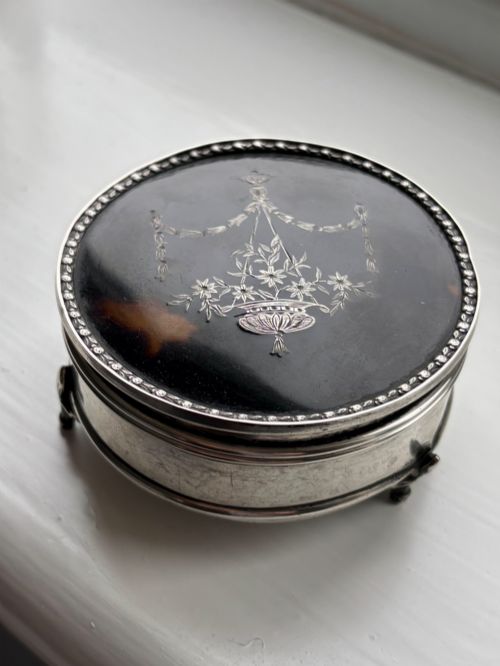
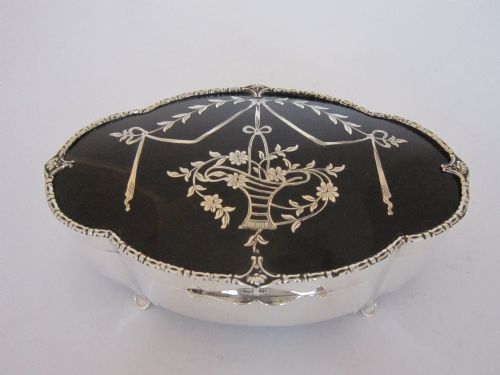
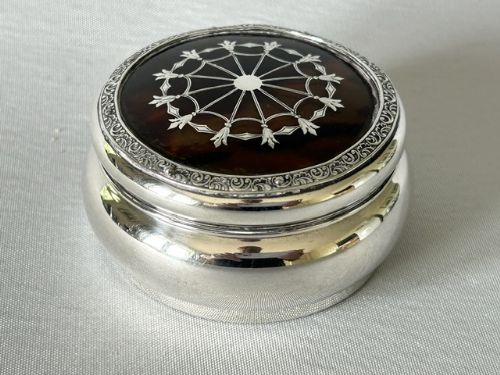
These pieces are silver inlaid jewellery box examples, designed to hold precious ornaments and valued for their tortoiseshell and sterling silver surfaces.
Silver Inlaid Jewellery Box
A silver inlaid jewellery box brings together compact dressing table storage and decorative craft from the Victorian, Edwardian and George V periods. These small caskets and trinket boxes are primarily encountered in Edwardian and early twentieth century incarnations, often pairing sterling silver mounts with tortoiseshell or faux tortoiseshell panels.
The form ranges from simple hinged trinket boxes to more elaborate dressing table boxes and fitted trays. Alongside tortoiseshell surfaces, examples employ ebonised wood, satinwood and rosewood foundations decorated with delicate silver stringing or metal inlay.
Makers and retailers such as Ollivant & Botsford and Asprey & Co. contributed to the output during the early twentieth century. Buyers seeking a silver inlaid jewellery box find a distinct domestic accessory that reflects the refined dressing table culture of the Edwardian era.
Materials and construction
Construction relies upon combining sturdy wooden carcases or metal frameworks with decorative surface layers. Tortoiseshell and faux tortoiseshell panels form the primary backdrop for sterling silver mounts and intricate pique work.
Inlaid elements utilise sterling silver, gold and metal wire shaped into delicate patterns and stringing. Secondary woods such as ebonised wood, satinwood and rosewood provide structural integrity and contrasting borders for the decorative lids.
Materials seen include sterling silver, tortoiseshell, faux tortoiseshell, ebonised wood, satinwood, metal and rosewood.
Judging quality and craftsmanship
Quality rests upon the precision of the silver inlay and the richness of the tortoiseshell or timber background. Fine execution shows tight joints around the sterling silver mounts and cleanly rendered pique work without gaps in the metal wire.
The choice of materials distinguishes standard dressing table boxes from finer pieces, particularly where genuine tortoiseshell, rosewood or satinwood meet recognised maker marks from firms like Asprey & Co.
Ollivant & Botsford·Asprey & Co.
The Silver Inlaid Jewellery Box Glossary
- Pique work
- A decorative technique involving tiny points or pins of silver and gold embedded in tortoiseshell to form intricate patterns. This meticulous inlay method defines the richest Edwardian trinket boxes.
- Tortoiseshell
- A mottled brown and amber material sourced from the shell of certain turtle species, used as a surface veneer. It provides a luminous background for sterling silver mounts.
- Silver stringing
- Thin lines of silver inlaid into the wooden surface of a box to create geometric borders and panels. This technique highlights the form of Victorian and Edwardian rosewood or satinwood caskets.
- Sterling silver
- An alloy consisting of pure silver and other metals to ensure durability in decorative mounts and lids. It forms the structural and ornamental hardware on dressing table boxes.
- Ebonised wood
- Timber treated to resemble ebony, offering a dark, uniform contrast to bright silver and tortoiseshell inlays. It appears frequently on early twentieth century boxes.
Silver Inlaid Jewellery Box: Frequently Asked Questions
What periods do these boxes come from?
The selection spans the Victorian, Edwardian and George V eras, stretching from the mid nineteenth century through the early twentieth century.
Most examples date specifically from the Edwardian period and the decades immediately following, reflecting the popularity of tortoiseshell and sterling silver dressing table accessories.
How were these boxes used?
These pieces served as secure, decorative receptacles for rings, brooches and delicate trinkets kept on bedroom dressing tables.
Dressing table boxes and workboxes also functioned as personal storage for daily adornments, combining practical utility with refined decorative display.
What materials should I expect to find?
Common materials include sterling silver, tortoiseshell, faux tortoiseshell, ebonised wood, satinwood and rosewood.
Many pieces feature pique work inlay using silver and gold wire set directly into the tortoiseshell lid.
How do I care for silver and tortoiseshell?
Keep these boxes away from direct sunlight and extreme humidity to protect the delicate tortoiseshell and wood foundations from warping.
Clean the sterling silver mounts gently with a soft cloth designed for precious metals, avoiding harsh chemical polishes near the inlay.