


Vintage Rosewood Storage Box
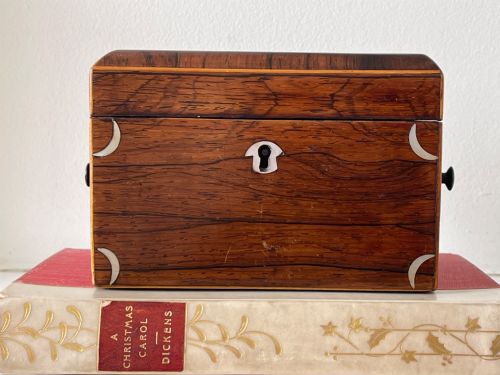
A vintage rosewood storage box offers dense grain and rich colour, providing a practical receptacle for letters, tea, or trinkets that anchors a desk or table.
Vintage Rosewood Storage Box
When you search for a vintage rosewood storage box, you encounter a diverse range of functional containers spanning the Regency, Victorian, and early twentieth-century periods. These include tea caddies, jewellery boxes, sewing boxes, document cases, and larger trunks originating from British workshops, Anglo-Indian trades, and Chinese export centres.
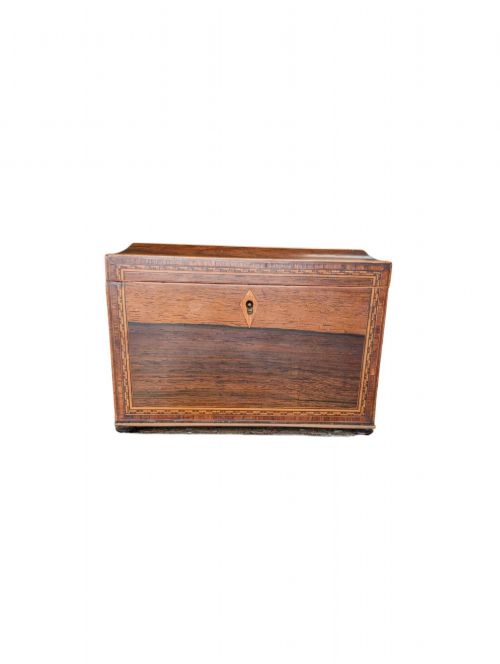
The most frequent examples on this page are Victorian and Regency pieces designed for specific domestic uses, such as compartmentalised tea caddies or fitted work boxes. Alongside these sit occasional larger items like merchants trunks and correspondence boxes, reflecting the global reach of nineteenth-century trade and travel.
Makers utilised the deep reddish-brown tones of rosewood to create impressive desk accessories and receptacles for the home. Form follows function closely across the selection, ranging from compact trinket boxes to sturdy brass-bound documents chests.
How they were made
Craftsmen built these pieces using solid or veneered rosewood over secondary timbers, frequently incorporating contrasting materials such as boxwood and mother-of-pearl for decorative effect. Brass banding, escutcheons, and campaign handles added structural reinforcement as well as visual contrast to the dark timber.
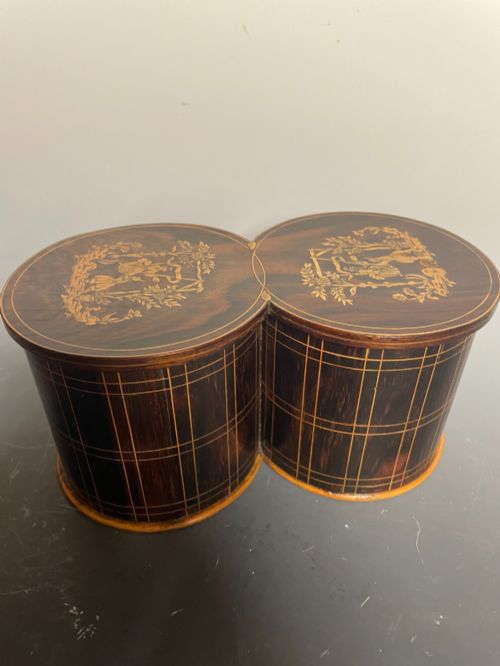
Surface decoration often involved intricate marquetry or Tunbridge ware micro-mosaic techniques, creating geometric or floral patterns across the lids and panels. Interiors were typically lined with velvet, silk, or leather, complemented by fitted compartments for sewing implements or tea canisters.
Some Victorian sewing boxes hide secret compartments beneath removable trays, designed to keep romantic letters out of prying eyes.
What varies in quality
Quality in these boxes rests on the precision of the joinery, the integrity of the timber, and the complexity of the internal fittings. Superior examples display seamless veneer work, crisp brass inlay, and fully intact interior compartments with original velvet or silk linings.
The refinement of decorative elements, such as detailed mother-of-pearl engraving or minute Tunbridge ware tesserae, distinguishes standard production pieces from finer commission work. Preservation of original locks, keys, and working internal mechanisms also elevates the standing of an individual box.
The Vintage Rosewood Storage Box Glossary
- Tea caddy
- A box designed specifically to store loose tea leaves, often featuring internal compartments or canisters. These containers were kept locked to protect valuable tea in past centuries.
- Tunbridge Ware
- A type of decorative woodwork produced in Kent, characterised by tiny pieces of coloured wood assembled into precise geometric or pictorial mosaics. This meticulous technique created striking imagery on box lids.
- Marquetry
- The art of applying decorative pieces of veneer to a structure to form intricate designs. Craftsmen used various contrasting woods to produce complex pictorial or abstract patterns.
- Escutcheon
- A flat plate surrounding a keyhole, usually made of brass or bone. It protected the surrounding wood from wear caused by the insertion of the key.
- Campaign box
- A portable container made for travel, typically fitted with flush brass handles and reinforced corners. These items were built to withstand the rigours of military campaigns or colonial journeys.
Vintage Rosewood Storage Box: Frequently Asked Questions
What were rosewood tea caddies used for?
Tea was an expensive commodity in the nineteenth century, requiring secure storage to prevent theft and preserve the aroma of the leaves. These caddies featured lockable lids and internal lidded compartments to separate different varieties of tea.
Servants typically brought the caddy to the drawing room so the lady of the house could dispense the tea herself. The addition of glass mixing bowls inside some caddies allowed different blends to be combined before brewing.
How do I care for rosewood?
Rosewood requires stable humidity and protection from direct sunlight to prevent the timber from drying out or fading. Dusting regularly with a soft, dry cloth maintains the surface sheen without damaging the polish.
Avoid placing these boxes near heat sources or radiators, which can cause the wood to shrink and the veneer to lift. Occasional application of a suitable wax helps nourish the antique finish.
Are keys usually included with these boxes?
Many antique boxes survive without their original keys due to centuries of displacement during house moves. Locks can often be worked by specialist locksmiths if a replacement key is required for daily use.
The absence or presence of a working key has a minor bearing on utility, though collectors generally prefer matching original hardware.
How can I tell a Regency box from a Victorian one?
Regency boxes often display classical restraint, favouring clean architectural lines, bold brass banding, and understated rosewood grain. They date from the early nineteenth century and reflect neoclassical design influences.
Victorian pieces tend towards greater elaboration, incorporating mother-of-pearl inlay, Tunbridge ware mosaics, and complex fitted interiors. Their aesthetic reflects mid-to-late nineteenth-century industrial capabilities and decorative tastes.