

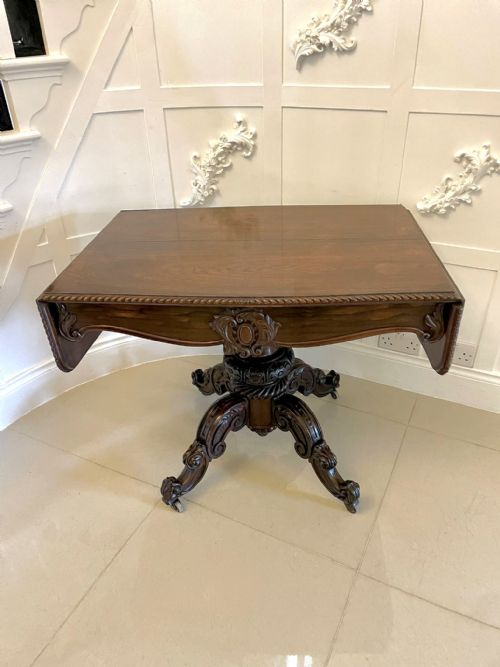

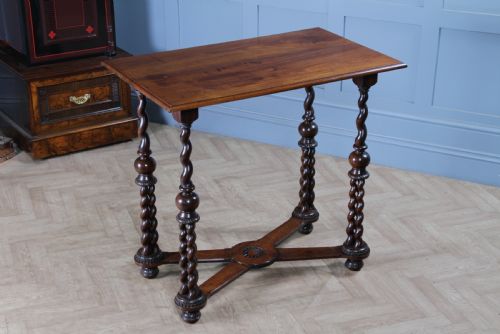


Victorian Rosewood Sofa Table
A victorian rosewood sofa table brings deep grain and substantial form to a room, offering the versatility of drop leaves and fitted drawers.
Victorian Rosewood Sofa Table
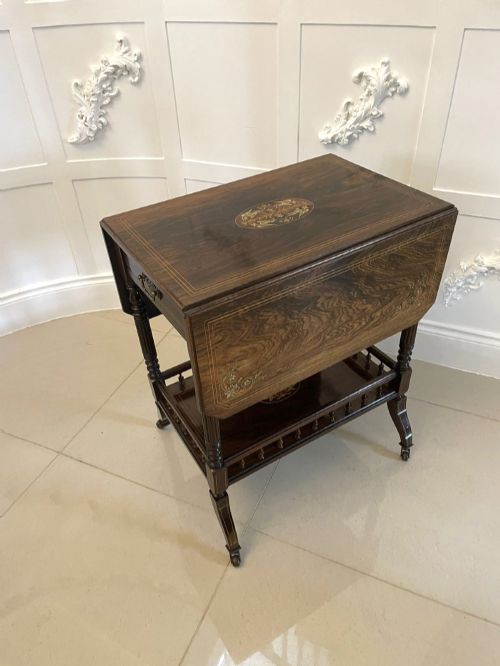
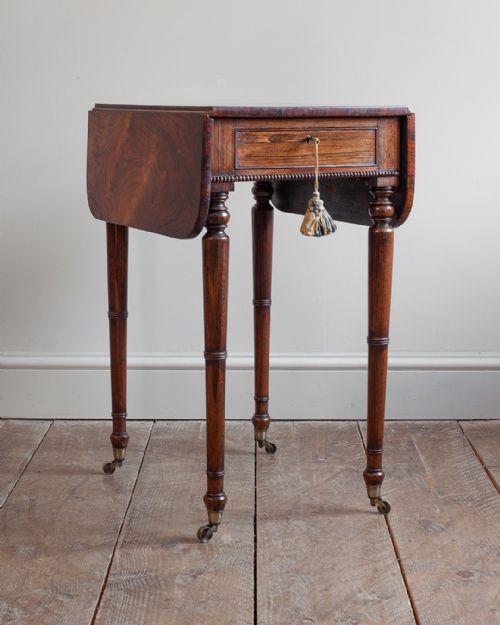
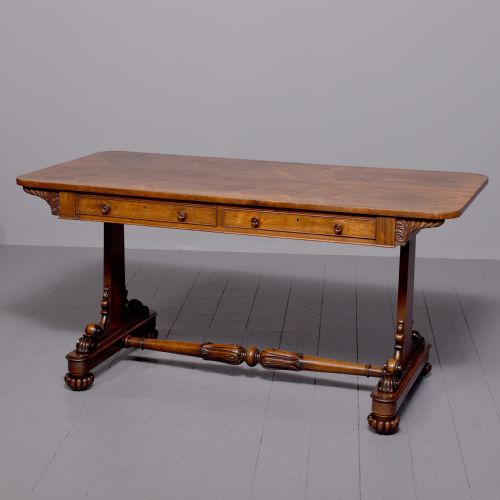
A victorian rosewood sofa table typically presents a rectangular top flanked by drop leaves, accompanied by drawers integrated into the frieze. These pieces originate predominantly across the nineteenth century, spanning early Victorian, William IV, and Regency periods.
Makers and cabinetmakers produced these furnishings in various regional workshops, including Irish and Anglo-Indian variants alongside standard English examples. The form serves multipurpose domestic roles, functioning alongside seating or freestanding in central spaces.
The inventory demonstrates a close relation between sofa tables, library tables, and centre tables, sharing identical timber choices and structural proportions. Buyers encounter both two-drawer library formats and drop-leaf occasional designs within the broader selection.
Materials and construction methods
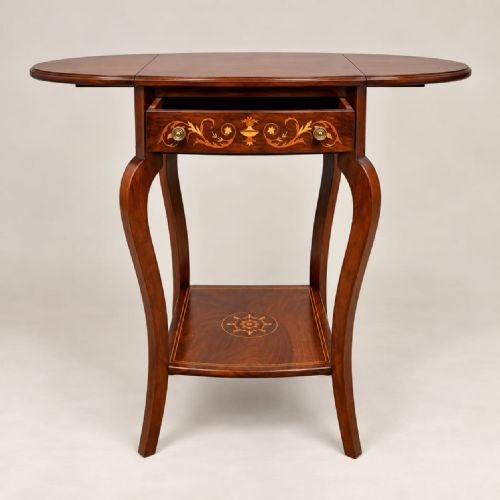
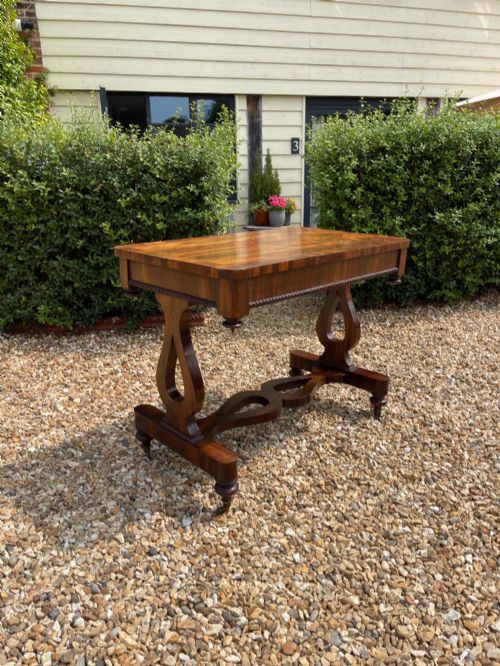
Construction relies heavily on dense rosewood veneers applied to stable secondary timbers, often enriched with contrasting satinwood or marquetry inlays. Brass fittings, leather inserts, and ceramic castors appear frequently on legs and underframes.
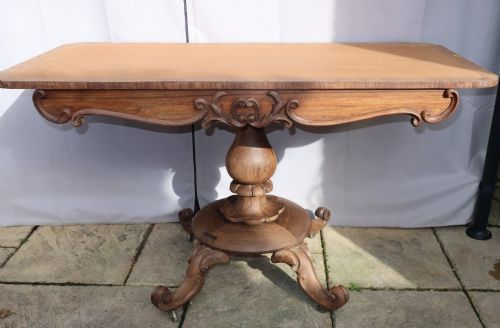
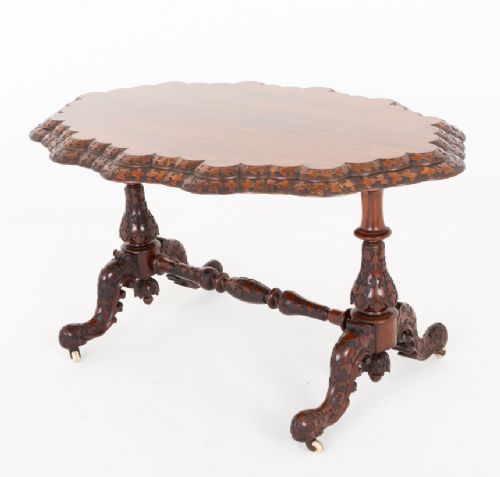
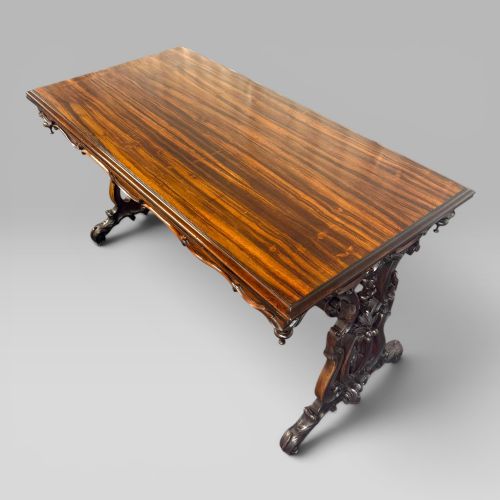
Carved elements manifest in ornamental supports, stretcher bases, and triple barley twist columns, reflecting the prevailing Victorian rococo revival and William IV aesthetic styles. Cabinetmakers utilised mahogany and zebrawood alongside primary rosewood stocks to achieve structural integrity.
Listings feature rosewood, mahogany, satinwood, and zebrawood materials across nineteenth-century periods.
Distinctions in craftsmanship
Quality reveals itself through the depth of the rosewood figure, the precision of marquetry inlay, and the crispness of carved wooden details. Finer examples display meticulous attention to drawer linings, brass mounts, and stable structural joinery.
Pieces bearing attribution to established cabinetmakers demonstrate superior timber selection and balanced proportions compared to unmarked regional equivalents. The integration of secondary woods like satinwood or zebrawood further distinguishes high-tier examples from standard production.
Mein of Kelso·Gillow·Gillows
The Victorian Rosewood Sofa Table Glossary
- Sofa table
- A rectangular table designed to stand behind a sofa, equipped with drop leaves on either end and two drawers in the frieze. This form developed during the late eighteenth century and remained popular throughout the Victorian era.
- Frieze
- The horizontal band situated directly beneath the table top, frequently housing one or two small drawers. Cabinetmakers often decorated this area with inlay or carved mouldings.
- Drop leaf
- A hinged flap of timber attached to the main table top that can be raised to extend the surface area. Supporting brackets swing out to hold the leaf in a horizontal position.
- Marquetry
- Decorative patterns formed by fitting together thin veneers of different coloured woods. Craftsmen applied these intricate designs to table tops and drawer fronts.
- Stretcher
- A horizontal wooden brace connecting the legs of a table to provide additional structural stability. Victorian designs sometimes utilised ornate turned or carved stretchers.
Victorian Rosewood Sofa Table: Frequently Asked Questions
Where did they place a sofa table?
These tables originally stood directly behind a sofa or settee in the principal reception rooms of a nineteenth-century home. The drop leaves allowed the surface to expand when needed for writing or needlework.
In modern interiors, they function effectively as freestanding console tables or writing desks against a wall or in the middle of a room.
What maintenance does rosewood require?
Rosewood surfaces benefit from minimal intervention, relying on occasional gentle dusting with a soft, dry cloth. Avoiding direct sunlight and maintaining stable room humidity preserves the natural oils and prevents timber splitting.
Applying specialised polishes is generally discouraged in favour of natural wax finishes that protect the historic patina accumulated over the decades.
How can I date a Victorian piece?
Dating relies on examining construction techniques, timber choices, and stylistic markers such as carved rococo revival motifs or simpler early Victorian lines. Pieces from the eighteen-fifties often display different leg turnings and joinery compared to later eighteen-eighty examples.
Maker signatures, stamps on drawer timbers, and associated hardware like brass castors also provide clues to the exact period of manufacture.