






Victorian Rosewood Parlour Cabinet
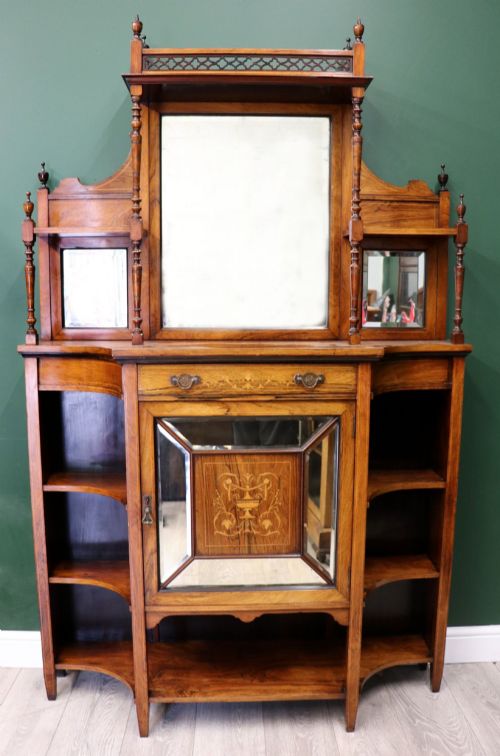
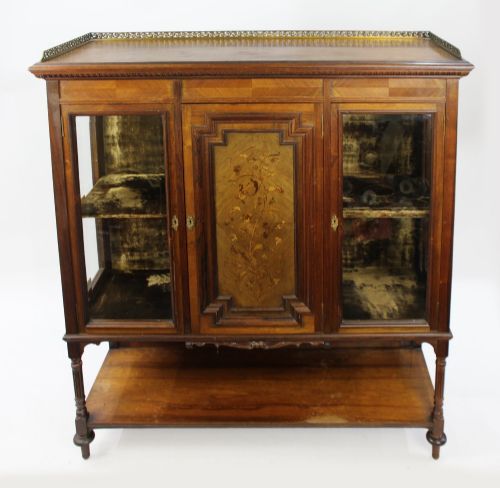
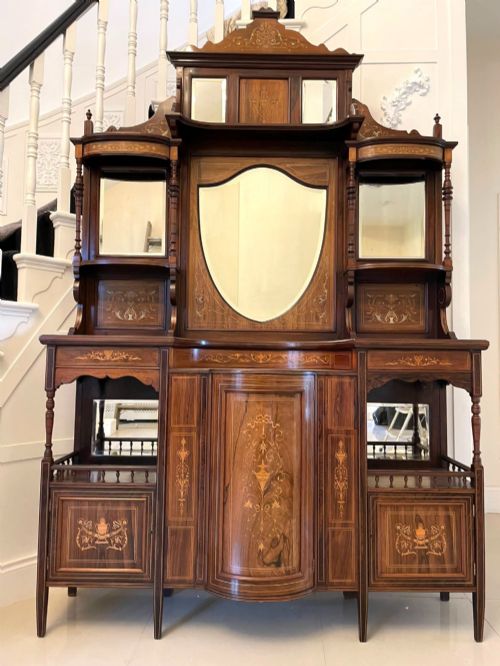
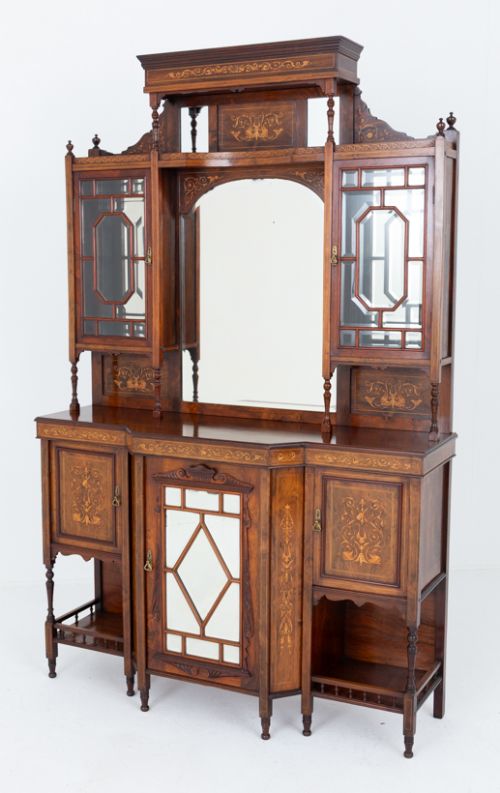
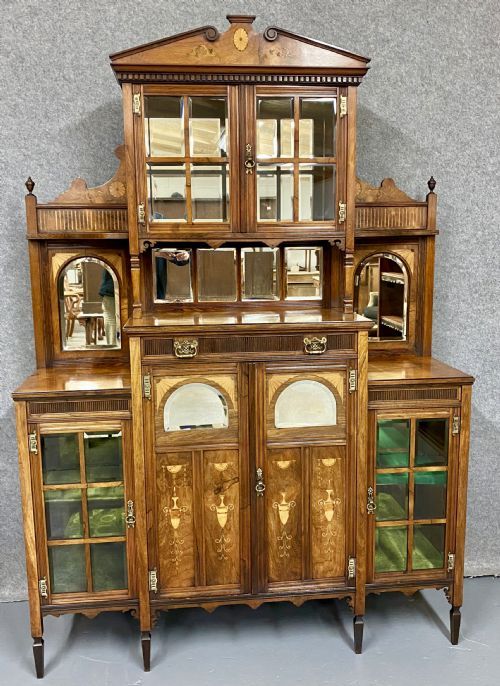
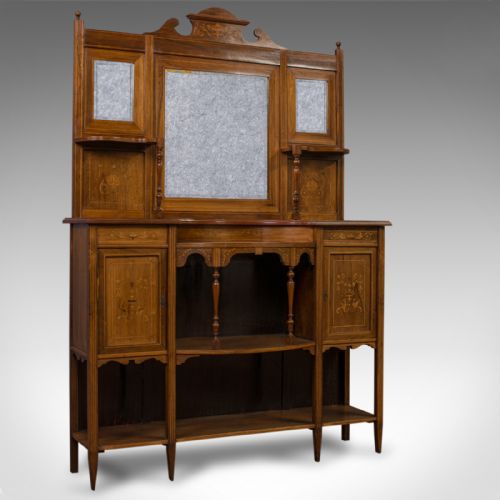
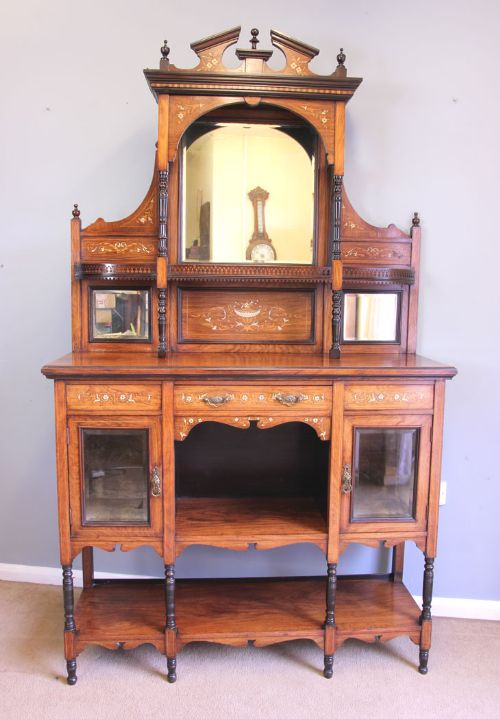
These Victorian rosewood parlour cabinet examples combine rich timber with delicate marquetry, offering both display space and refined storage for the discerning interior.
Victorian Rosewood Parlour Cabinet
A Victorian rosewood parlour cabinet serves as a sophisticated focal point, often incorporating display sections and mirrored backs designed for formal reception rooms. When searching for a Victorian rosewood parlour cabinet, buyers encounter diverse forms ranging from compact side cabinets to grand credenzas and display furniture.
The pieces on this page span the nineteenth century, with strong representation from the eighteen-eighties and eighteen-nineties. Alongside traditional side cabinets, listings include aesthetic movement designs and Sheraton revival interpretations featuring intricate marquetry.
Makers of the period utilised rich tropical timber combined with lighter contrasting woods to create striking visual depth. Many examples feature glass doors for exhibiting valued possessions alongside enclosed shelving for practical storage.
Materials and construction
Cabinet makers utilised dense, highly figured rosewood as the primary structural and surface timber, often pairing it with softer secondary woods for internal components. This dark, lustrous ground provided an ideal canvas for detailed ornamentation.
Craftsmen applied delicate boxwood inlay and complex marquetry to the exterior surfaces, creating contrasting geometric and floral motifs. Brass hardware and bevelled mirror glass further enhanced the decorative scheme of these sophisticated reception room pieces.
Victorian Rosewood Parlour Cabinet Retail Price Guide 2026
Typical asking prices for victorian rosewood parlour cabinet among the pieces listed under this phrase on Sellingantiques today, from the lower quarter to the upper quarter. They describe what is for sale here now, not the wider market.
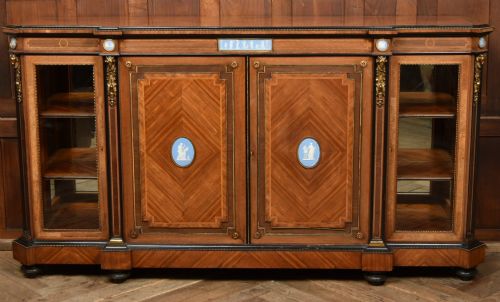
Listings demonstrate cabinet production spanning from eighteen-fifty through nineteen-hundred, incorporating boxwood inlay, marquetry, mirror glass and jasperware details.
Evaluating craftsmanship and design
The distinction between standard production and exceptional work lies in the precision of the marquetry and the depth of the rosewood grain. Finer examples display meticulous boxwood inlay and harmonious proportions that elevate the piece beyond utilitarian storage.
Attribution to notable workshops or makers such as Collinson and Lock often elevates a cabinet's standing within the market. Superior execution in the turning, mirror bevelling and interior lining distinguishes the finest nineteenth-century survivals.
Collinson and Lock·Edwards and Roberts
The Victorian Rosewood Parlour Cabinet Glossary
- Marquetry
- A decorative technique where small pieces of veneer are applied to a structure to form intricate pictorial or geometric patterns. This method allowed nineteenth-century artisans to display immense skill on flat cabinet doors and panels.
- Credenza
- A low-profile storage unit frequently used in Victorian parlours for displaying ornaments and serving refreshments. These pieces often feature central glass-fronted cupboards flanked by curved or straight side compartments.
- Aesthetic Movement
- A late nineteenth-century design style focusing on visual beauty rather than narrative or moral function. Cabinets from this movement often incorporate ebonised details, delicate floral inlay and asymmetrical arrangements.
- Sheraton Revival
- A late Victorian design current drawing inspiration from late eighteenth-century neoclassical furniture forms. Pieces in this style typically exhibit lighter proportions, refined stringing and classical urn or bellflower motifs.
- Boxwood Inlay
- The practice of inserting pale boxwood threads or shapes into dark rosewood surfaces to create crisp linear borders. This technique highlights the structural lines of nineteenth-century parlor cabinetry.
Victorian Rosewood Parlour Cabinet: Frequently Asked Questions
Where were parlour cabinets placed?
These cabinets traditionally stood against prominent walls in nineteenth-century reception rooms, serving as both ornamental focal points and functional storage for glassware or collectibles.
Their reflective mirror backs and glazed display sections were positioned to catch and distribute light within formal entertaining spaces.
How do I care for rosewood?
Rosewood surfaces benefit from stable room environments with minimal humidity fluctuations and protection from direct sunlight to preserve the rich timber colour.
Regular dusting with a soft, dry cloth maintains the polished finish without requiring heavy chemical polishes that can build up over time.
What is aesthetic movement style?
Aesthetic movement design emerged in the later Victorian period, prioritising artistic refinement and simplified, elegant forms over heavy historicism.
Cabinets reflecting this ethos often combine rich rosewood with subtle marquetry and refined brass mounts, aligning with the philosophy of art for art's sake.
How do I date a cabinet?
Dating relies on observing construction methods, timber selection, stylistic shifts and any maker attribution marks present on the piece.
Earlier nineteenth-century examples often display simpler classical proportions, while late Victorian pieces frequently embrace revival styles and elaborate boxwood inlay.