




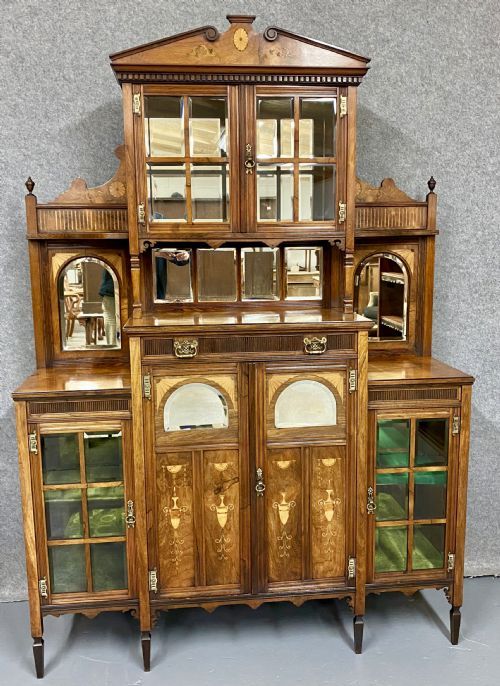


Edwardian Rosewood Side Cabinet
An edwardian rosewood side cabinet brings refined marquetry and rich grain to a room, offering both display space and concealed storage.
Edwardian Rosewood Side Cabinet
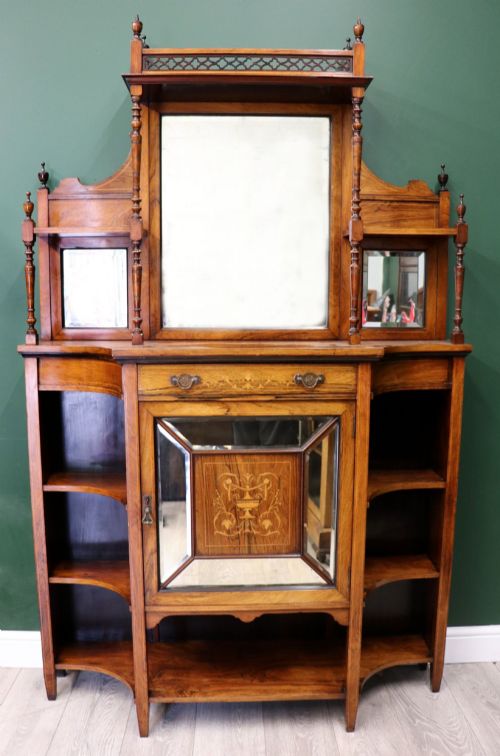
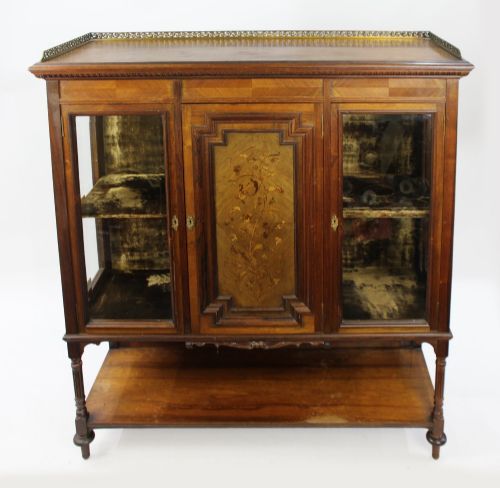
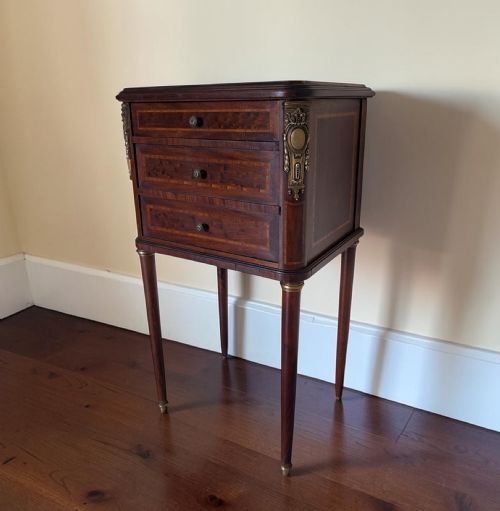
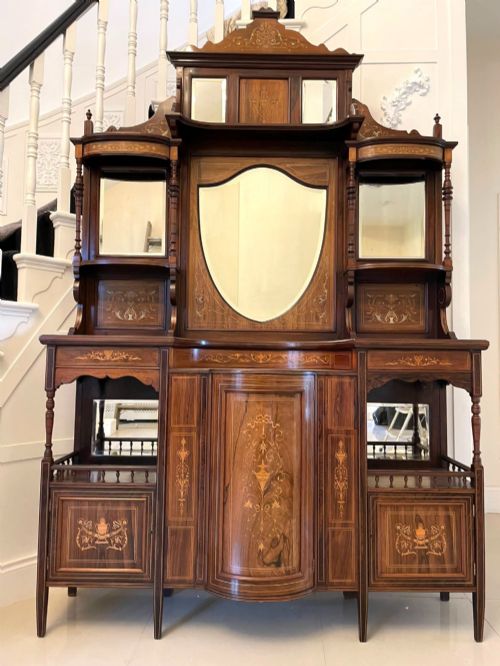
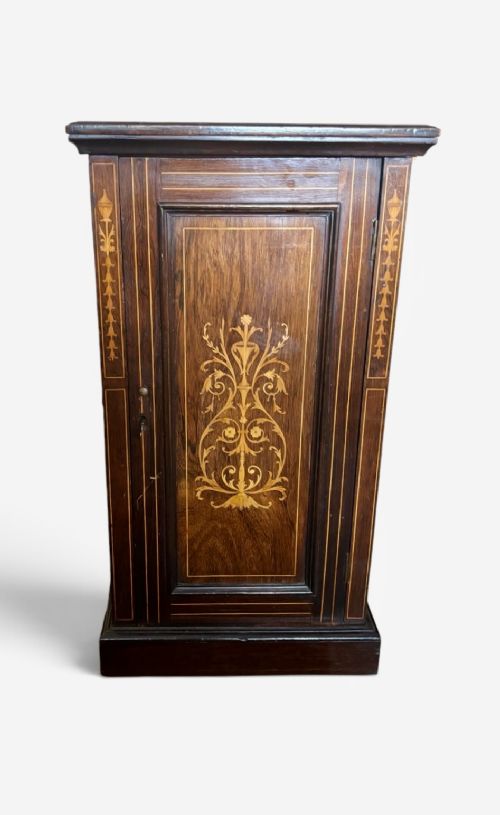
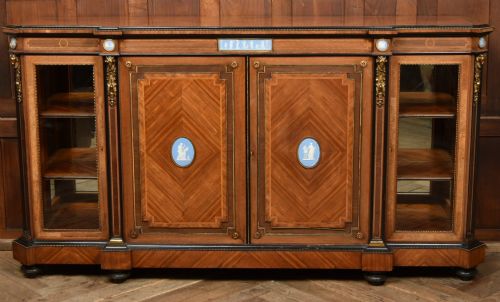
An edwardian rosewood side cabinet sits within a tradition of finely figured timber furniture that spans from the late nineteenth century into the edwardian era. The pieces seen here encompass various forms, from narrow display cabinets and music cabinets to credenzas and bedside tables, reflecting the diverse domestic needs of the period.
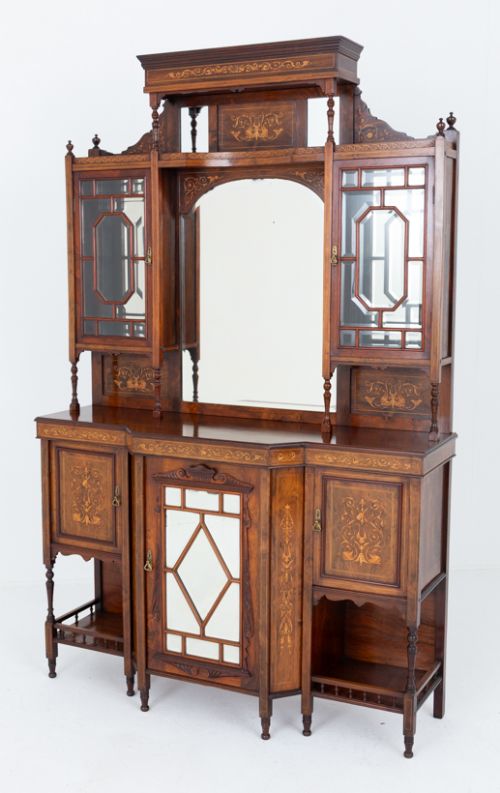
Makers of the time drew inspiration from earlier design vocabularies, producing works that align with edwardian french revival and sheraton revival styles alongside more restrained victorian aesthetic movement pieces. The version most commonly encountered combines a rosewood carcass with contrasting marquetry inlay, often featuring glazed doors or mirrored sections.
Origins stretch across nineteenth century workshops, capturing the transition from ornate victorian tastes toward lighter edwardian proportions. These versatile furnishings served as focal points in drawing rooms and parlours, designed to exhibit treasured objects or organise sheet music and small household items.
What varies in quality
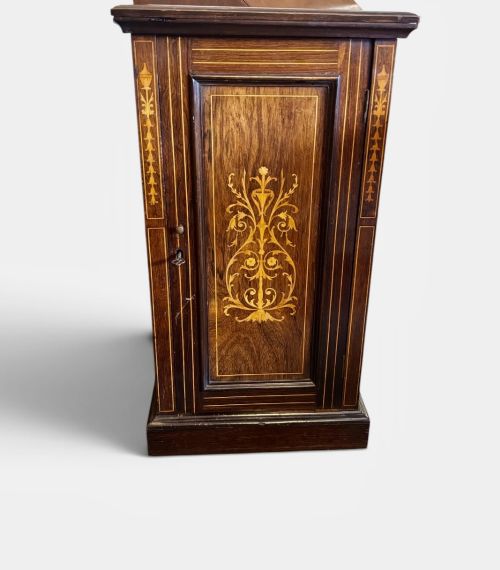
The sophistication of the marquetry and inlay work sets finer examples apart from simpler utilitarian pieces. Crisp, precisely fitted boxwood and satinwood details demonstrate a higher level of cabinet-making skill than broader, less defined patterns.
The selection and book-matching of the rosewood veneer dictate the visual impact of the surface grain. Superior examples exhibit a rich, consistent depth of finish that highlights the natural figuring of the timber without obscuring its character.
Edwardian Rosewood Side Cabinet Retail Price Guide 2026
Typical asking prices for edwardian rosewood side cabinet among the pieces listed under this phrase on Sellingantiques today, from the lower quarter to the upper quarter. They describe what is for sale here now, not the wider market.
Several cabinets were specifically engineered to keep sheet music tidy, proving that nineteenth-century sheet music clutter was a genuine domestic crisis.
Edwards and Roberts
The Edwardian Rosewood Side Cabinet Glossary
- Marquetry inlay
- Decorative patterns formed by fitting contrasting veneer pieces into a prepared wooden surface. This technique allows for elaborate floral and pictorial designs across cabinet doors.
- Satinwood
- A pale, lustrous timber utilised for stringing and inlay work. It provides a sharp visual contrast against dark rosewood surfaces.
- Credenza
- A low side cabinet or sideboard originally used for displaying plate and serving food. In later periods, it evolved into a formal living room display piece.
- Sheraton revival
- A late nineteenth and early edwardian style inspired by the neoclassical designs of eighteenth-century designer Thomas Sheraton. It favours slender proportions and delicate marquetry decoration.
- Boxwood
- A dense, pale wood frequently employed for fine stringing lines and delicate inlay details. Its tight grain allows for sharp, precise cutting.
Edwardian Rosewood Side Cabinet: Frequently Asked Questions
What is an edwardian rosewood side cabinet?
An edwardian rosewood side cabinet is a small storage or display piece featuring dark rosewood surfaces and decorative inlay. These cabinets were designed for refined domestic interiors to hold books, collections or music.
They combine practical enclosed storage with glass-fronted display areas, often standing on slender legs influenced by classical revival styles.
How do I date these cabinets?
Dating relies on stylistic clues, construction methods and materials recorded across the Victorian and Edwardian eras. Pieces from the edwardian period often display lighter proportions and refined sheraton revival motifs compared to heavier victorian predecessors.
Cabinet hardware, timber choice and the presence of specific inlay techniques also help narrow down the decade of manufacture.
Where were they placed at home?
These cabinets typically stood in drawing rooms, reception spaces or parlours as focal points for display. Their compact footprints allowed them to fit neatly against wall spaces where larger sideboards would not suit.
Some specialised variants, such as music cabinets, were kept beside pianos to organise sheet music and small accessories.
How do I care for rosewood furniture?
Rosewood benefits from regular dusting with a soft, dry cloth to protect the polished surface from abrasive particles. Keeping the timber away from direct sunlight and steady humidity prevents the veneer from drying or fading.
Occasional application of appropriate furniture wax helps nourish the wood and maintain its deep, lustrous sheen.