

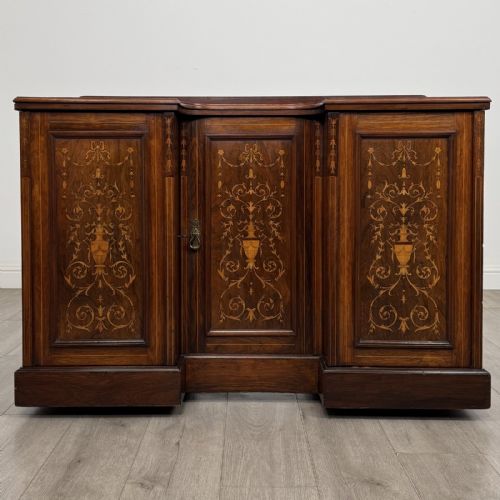
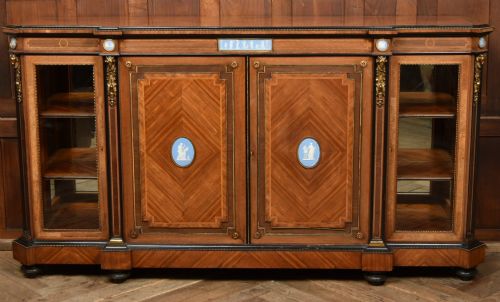
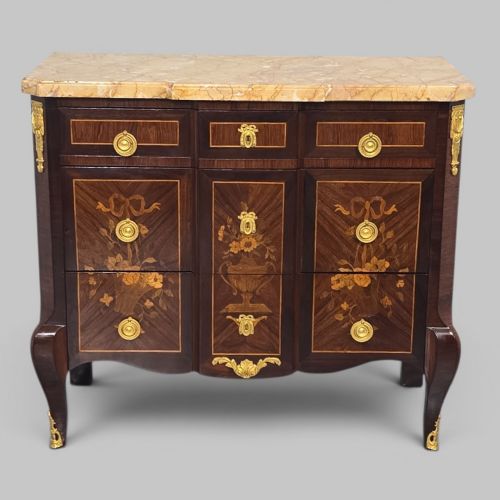
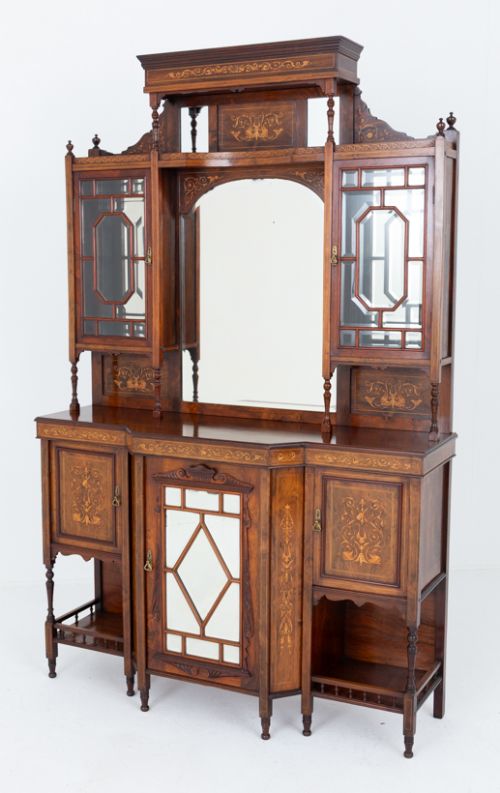


Inlaid Rosewood Breakfront Cabinet
An inlaid rosewood breakfront cabinet brings stately presence and refined storage to a room through rich timber and crisp contrasting detail.
Inlaid Rosewood Breakfront Cabinet
An inlaid rosewood breakfront cabinet presents a distinctive projecting central section flanked by recessed wings, creating architectural depth along a wall. The search phrase covers sophisticated storage and display furniture originating predominantly in the nineteenth century, including Victorian, Regency, and Napoleon III periods.
Buyers will most frequently encounter side cabinets, display cabinets, and credenzas shaped by these historic revival styles. These pieces combine functional cabinetry with decorative surfaces, frequently housing books, porcelain, or linens behind glazed or panelled doors.
Materials and Construction
Cabinetmakers relied on dense, richly grained rosewood as the primary carcass and veneer timber, often selecting figured boards for maximum visual impact. This dark wood provided a deep tonal background for meticulous contrasting details.
Intricate decoration was achieved through boxwood inlay, satinwood, and marquetry, alongside gleaming brass stringing and ormolu mounts. Glazed panels and mirror glass were frequently integrated into doors and backings to lighten the substantial timber forms.
Inlaid Rosewood Breakfront Cabinet Retail Price Guide 2026
Typical asking prices for inlaid rosewood breakfront cabinet among the pieces listed under this phrase on Sellingantiques today, from the lower quarter to the upper quarter. They describe what is for sale here now, not the wider market.
Some cabinets hide their contents behind mirrored doors designed to bounce flickering candlelight around the Victorian drawing room.
Judging Quality and Execution
Quality rests upon the precision of the contrasting inlay work and the harmonious grain selection across the breakfront facade. The finest examples demonstrate seamless integration of boxwood, satinwood, and brass against the rosewood ground.
Superior execution extends to the architectural proportions and the crispness of ormolu mounts or Boulle work. Finer cabinets balance complex surface ornamentation with sturdy structural integrity and refined internal fittings.
Collinson and Lock
The Inlaid Rosewood Breakfront Cabinet Glossary
- Breakfront
- A piece of furniture featuring a central section that projects further forward than the flanking sides. This architectural arrangement creates shadow and depth across the facade.
- Marquetry
- Decorative patterns formed by fitting together small pieces of coloured veneers into a wood panel. This technique creates elaborate floral or geometric pictorial designs.
- Boulle
- An elaborate form of marquetry using tortoiseshell and brass inlay, developed in seventeenth-century France and revived later. It adds brilliant metallic highlights to dark timber surfaces.
- Ormolu
- Gilt bronze mounts applied to furniture for decorative effect and edge protection. These cast metal details catch the light and punctuate the wooden structure.
Inlaid Rosewood Breakfront Cabinet: Frequently Asked Questions
What is a breakfront cabinet?
A breakfront cabinet is a large piece of furniture where the central section extends forward from the side sections. This design creates visual depth and architectural interest in formal rooms.
Historically, these cabinets served as grand storage or display vessels in dining rooms, libraries, and drawing rooms.
How do I care for rosewood?
Rosewood requires stable indoor humidity and protection from direct sunlight to prevent timber movement and fading. Dust gently with a dry, soft cloth and avoid commercial silicone polishes.
Periodic waxing with a traditional beeswax formulation preserves the natural lustre of the polished wood surface.
Are these cabinets purely decorative?
While highly ornamental, these cabinets offer substantial practical storage behind their panelled or glazed doors. Interiors frequently incorporate adjustable shelving for books, ceramics, or household collections.
Display cabinets use glass to showcase precious objects while keeping them protected from dust.
How do I distinguish Regency from Victorian pieces?
Regency pieces often display restrained neoclassical symmetry with precise brass inlay and architectural mounts. Victorian examples tend towards more eclectic revivalism, heavier carving, and profuse marquetry.
Examining the construction methods and secondary timbers inside the cabinet provides further clues to dating.