
Victorian Rose Gold Jewellery
Victorian rose gold jewellery combines the distinct warm copper hue of nineteenth-century metalwork with enduring forms like gate bracelets, guard chains and gem-set rings.
Victorian Rose Gold Jewellery
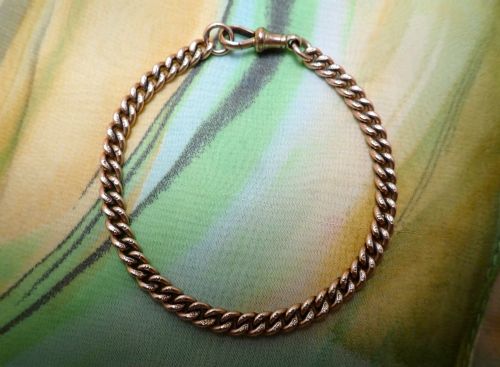
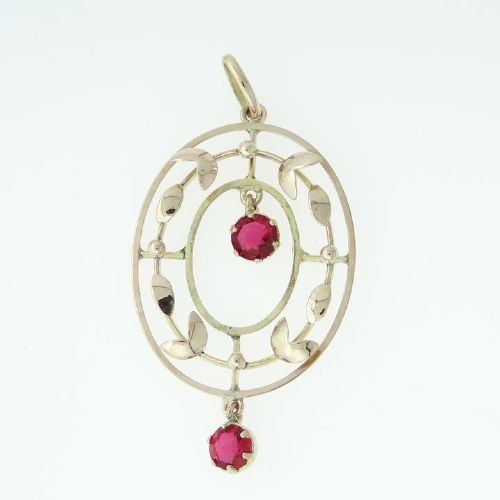
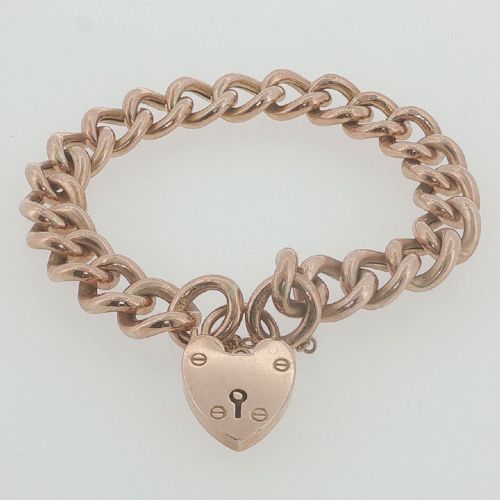
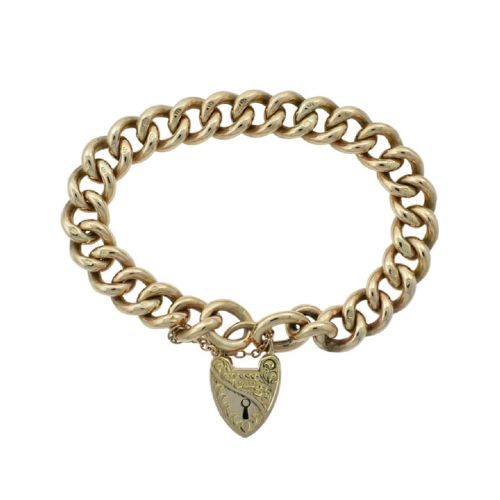
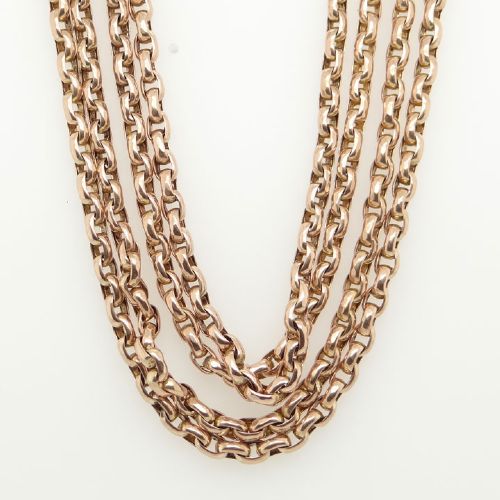
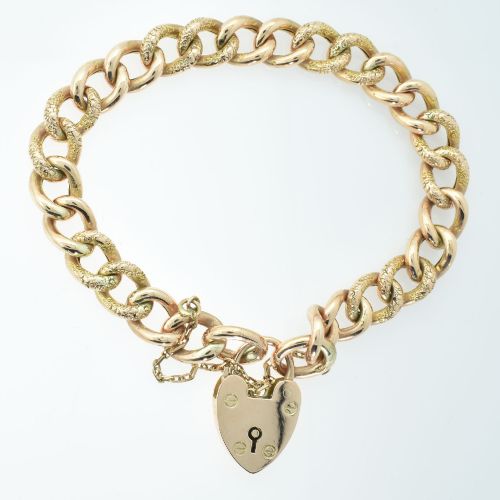
Buyers seeking victorian rose gold jewellery encounter a variety of nineteenth-century and early twentieth-century accessories, including heavy curb link bracelets, heart padlock bangles, and long guard chains. The pieces range from solid nine-carat and fifteen-carat gold to gold-backed items set with diamonds, garnets, turquoise and seed pearls.
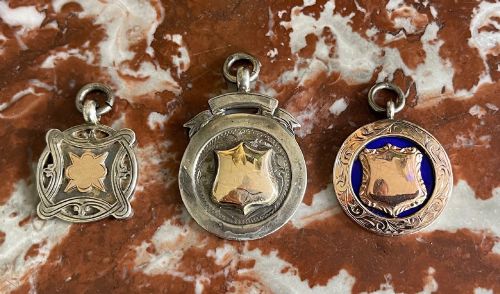
The selection on this page centres predominantly upon wearable items originating from the Victorian, Edwardian and nineteen-twenties periods. Bracelets fitted with heart padlocks, chatelaine pendants, and spinning fobs appear frequently alongside delicate negligee necklaces and daily wedding bands.
Originating largely from British workshops and towns such as Birmingham, these items reflect the evolution of decorative styles from early Victorian sobriety to late Victorian ornamentation and Edwardian lightness. Each piece carries the distinct character of hand-finished links, chased engravings and integrated security clasps.
How they were made
Goldsmiths shaped nine-carat and fifteen-carat rose gold into hollow or solid links, casting heavier components and drawing wire through plates for chains and jump rings. Surface enrichment relied upon hand engraving, half-engraved chasing, and the application of niello or applied decorative motifs.
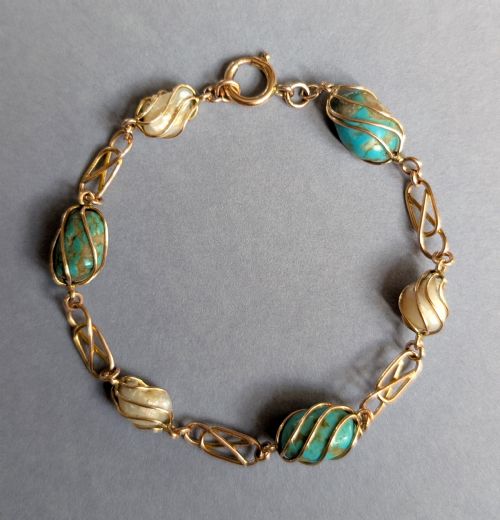
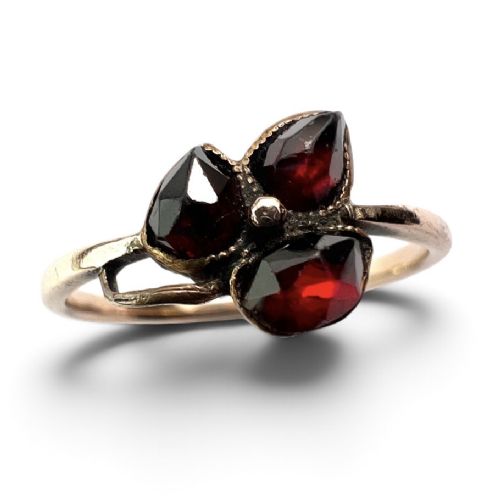
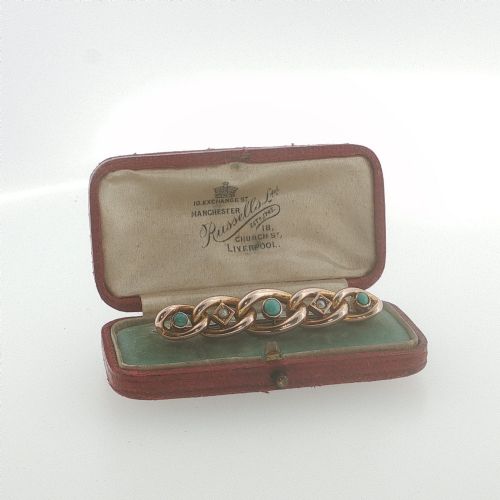
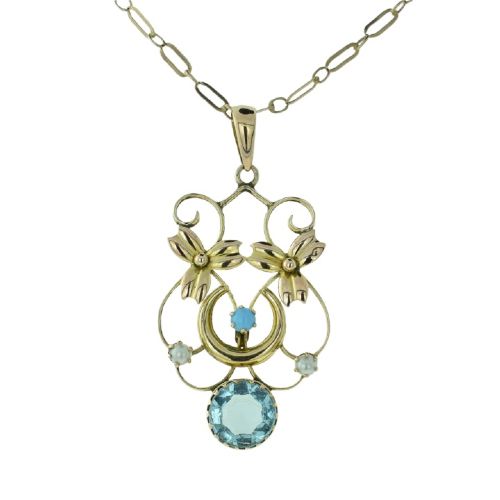
Gemstones including turquoise, seed pearls, rose-cut diamonds, garnets and blue topaz were secured in collet settings, star settings or flush mounts. Many lockets and pendants utilised a gold front and back construction over a base metal core to achieve structural rigidity without excessive weight.
Listings feature items spanning the Victorian era through to the nineteen-thirties, incorporating nine-carat rose gold, silver, turquoise, and diamonds.
What varies in quality
The standard of execution depends heavily on the integrity of the links, the crispness of hand-chased engraving, and the originality of components such as heart padlocks, dog clips and T-bars. Solid link construction and weight provide a direct measure of substance, distinguishing substantial daily wear items from lighter hollow alternatives.
The selection and matching of gemstones also govern the distinction between standard and finer examples, particularly where natural turquoise, seed pearls or rose-cut diamonds are grain-set into the metal. Original hallmarks and makers marks preserved on shackles and jump rings add clarity to provenance.
The Victorian Rose Gold Jewellery Glossary
- Albert chain
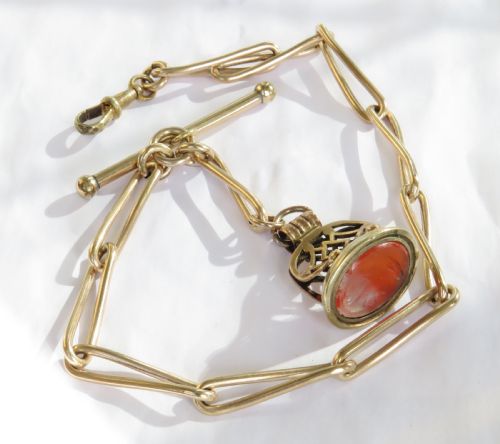
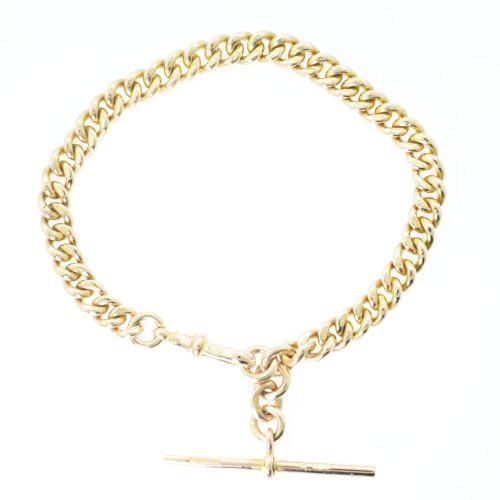
- A short watch chain designed to be worn across a waistcoat or attached to a pocket, often fitted with a T-bar and swivel clasp. These chains are frequently repurposed today as substantial wrist bracelets.
- Gate bracelet
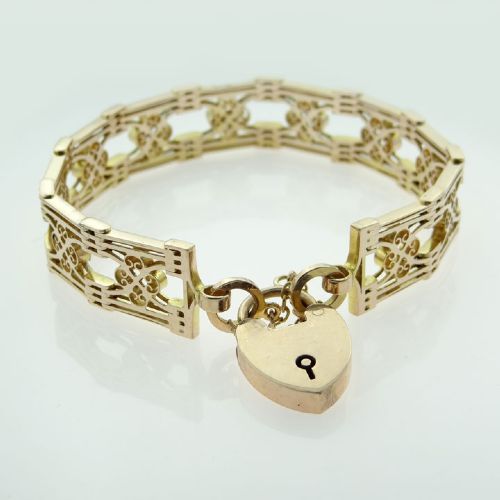
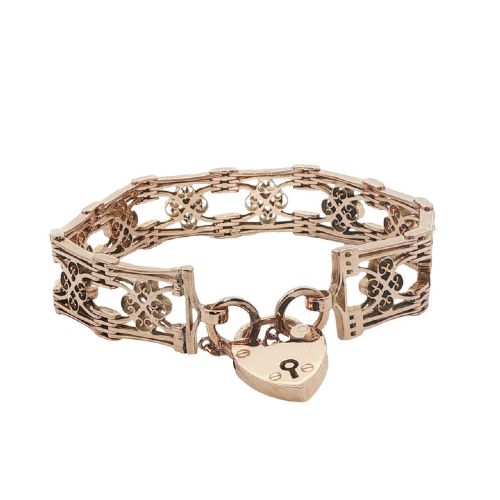
- A flexible jewellery style formed of parallel vertical metal bars linked together, usually terminating in a heart-shaped padlock clasp. This form became particularly popular during the late Victorian and Edwardian periods.
- Guard chain
- An exceptionally long chain worn looped around the neck, originally intended to secure pocket watches or lorgnettes. They offer versatility as multi-wrap bracelets or long necklaces.
- Negligee necklace
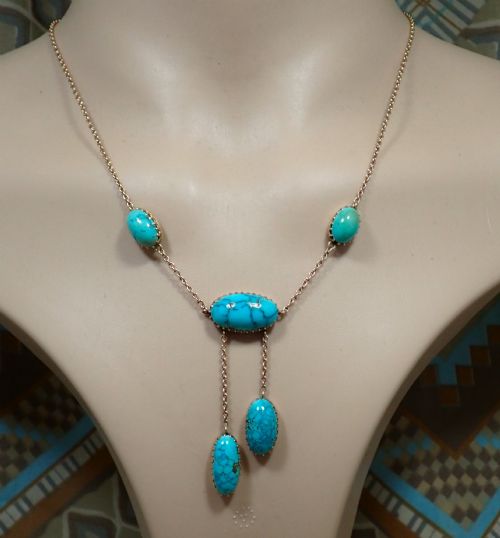
- A delicate drop necklace featuring asymmetric pendants suspended from a central chain by short lengths of varying drop. They characteristically incorporate seed pearls and small gemstones.
- T-bar
- A short transverse bar attached to the centre of a watch chain, designed to slip through a buttonhole to secure the chain safely.
Victorian Rose Gold Jewellery: Frequently Asked Questions
How do I wear a watch chain as a bracelet?
Many longer watch chains and albert chains wrap multiple times around the wrist to create a layered bracelet effect. The integrated swivel clasp or dog clip fastens securely to any link along the chain.
Heavier examples with T-bars allow the bar to pass through a suitable link or padlock loop to secure the piece in place.
What is gold back and front jewellery?
Gold back and front construction involves thin sheets of solid gold applied to the exterior surfaces of a locket or pendant over a supportive base metal core. This technique provided the appearance and wear resistance of solid gold while reducing weight and cost.
Items made this way remain durable and maintain their warm rose appearance with normal care.
How can I date these pieces accurately?
Dating relies upon a combination of stylistic clues, gemstone settings, and official hallmarks stamped directly onto the metal. Birmingham and other assay office marks provide specific assay years for British items.
Design motifs such as heart padlocks, star settings, and curb links further help narrow the period of manufacture between the mid-nineteenth and early twentieth centuries.
Are these pieces suitable for daily wear?
Solid gold bracelets, guard chains, and plain bands withstand daily wear when handled with reasonable care. Items set with softer organic materials like seed pearls or turquoise require extra mindfulness to avoid moisture and impact.
Checking the security of jump rings and clasps periodically ensures safe everyday use.