


Turquoise Cabochon Ring
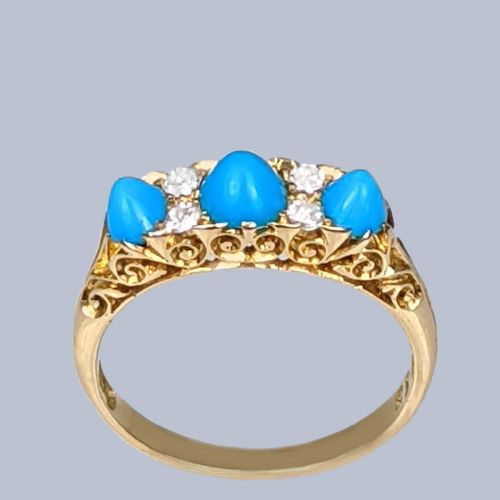
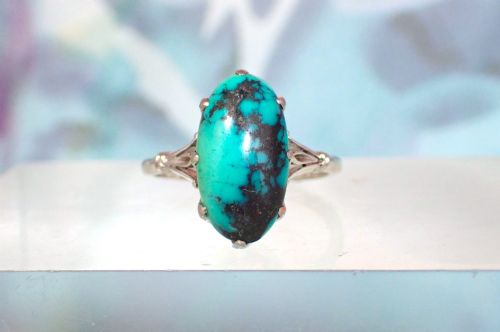
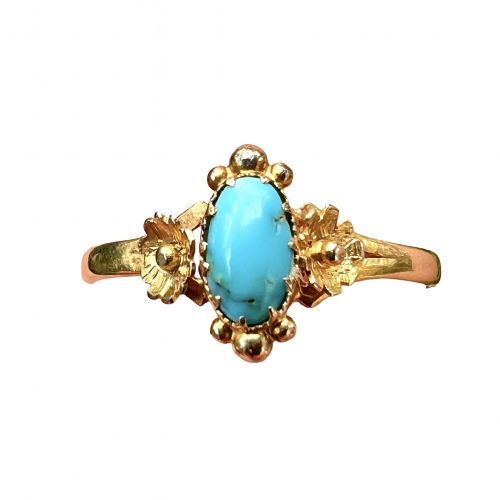
These turquoise cabochon ring examples bring smooth, rounded blue-green stones to the finger, offering a distinct historic character that collectors seek.
Turquoise Cabochon Ring
The objects seen across the listings include elaborate multi-row stacking bands and motif designs such as evil eyes, buckles, and pearl accents. These forms demonstrate how makers utilised small cabochon stones alongside seed pearls and gold settings.
Victorian and Edwardian versions appear frequently alongside 1950 examples, giving buyers a range of historic expressions. Each turquoise cabochon ring captures the specific decorative preferences of its respective era.
How they were made
Goldsmiths shaped precious metals including 9ct gold, 18ct yellow gold, and 18ct rose gold to form the structural bands and secure the central stones. Cabochon cutting required grinding turquoise into a smooth, domed shape rather than cutting flat facets.
Makers integrated delicate seed pearls alongside the main turquoise stones in several period pieces, adding texture and contrast. Metalwork techniques of the periods involved hand-forming settings to cradle the rounded cabochons securely.
Turquoise Cabochon Ring Retail Price Guide 2026
Typical asking prices for turquoise cabochon ring among the pieces listed under this phrase on Sellingantiques today, from the lower quarter to the upper quarter. They describe what is for sale here now, not the wider market.
Current listings span the Victorian, Edwardian, and 1950 periods, utilising turquoise, seed pearls, 9ct gold, and 18ct yellow or rose gold.
What varies in quality
The grade of the gold setting dictates much of the distinction between pieces, moving from 9ct gold up to substantial 18ct yellow and rose gold structures. Heavier multi-row bands and intricate motifs like buckles or evil eyes reflect greater labour in the workshop.
Stone uniformity and the integration of secondary elements such as seed pearls influence the overall execution of the design. Finer examples display meticulous stone selection and robust metalwork that survives intact across the decades.
The Turquoise Cabochon Ring Glossary
- Cabochon
- A gemstone shaped to have a smooth, rounded, convex upper surface with a flat or curved base. This traditional cutting method highlights the natural colour and matrix of opaque stones like turquoise without creating light-reflecting facets.
- Seed pearl
- A very small, naturally occurring or cultured pearl used historically as delicate decorative accents. These tiny pearls frequently border central stones in Victorian and Edwardian jewellery.
- Harem ring
- A multi-row band ring designed to look like several individual rings worn together. The style often incorporates various gemstones and metals in parallel rows.
- Buckle ring
- A piece of jewellery fashioned in the shape of a belt and buckle. This symbolic Victorian motif represented loyalty and attachment.
Turquoise Cabochon Ring: Frequently Asked Questions
What is a turquoise cabochon ring?
It is a finger ring featuring a turquoise stone cut into a smooth, rounded dome rather than faceted edges. These stones sit within gold settings derived from periods such as the Victorian era and the mid-twentieth century.
The smooth polish of the turquoise cabochon allows the natural variations in the blue-green material to remain the primary visual focus of the jewellery.
How do I care for antique turquoise?
Turquoise is a relatively soft and porous gemstone that absorbs oils, cosmetics, and water easily. Cleaning requires only a soft, dry cloth without harsh chemical dips or ultrasonic cleaners.
Storing the ring away from direct sunlight and other hard jewellery prevents surface discolouration and physical scratching over time.
How do I date these rings?
Dating relies on stylistic clues, metal types, and structural construction methods visible in the setting. Victorian and Edwardian examples often feature specific motifs like seed pearl borders or buckle designs, while 1950 pieces show mid-century proportions.
Analysing the gold purity marks and overall craftsmanship helps place the object within its historical period of manufacture.
Are these rings suitable for daily wear?
While historic gold bands are durable, antique turquoise requires mindful wear due to its softer natural composition. Removing the ring during heavy physical tasks protects both the soft stone and the historic setting.
Gentle daily use lets you enjoy the piece while preserving the integrity of the original mountings and delicate seed pearls.