


Edwardian Turquoise Ring
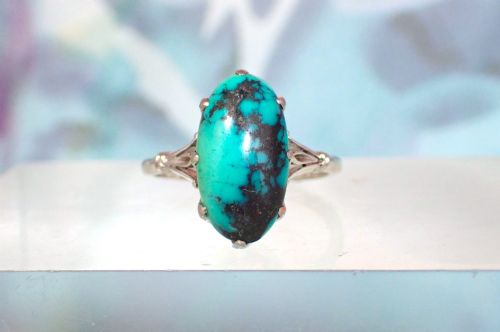
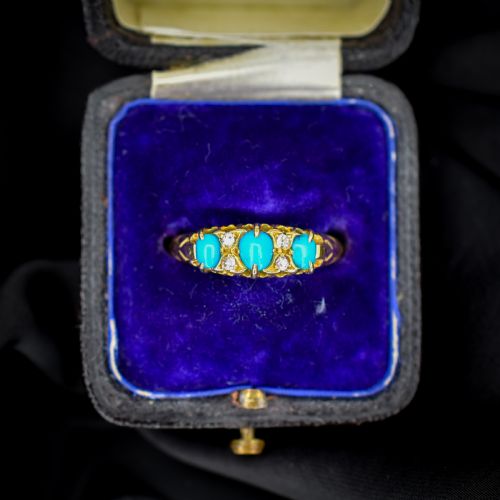
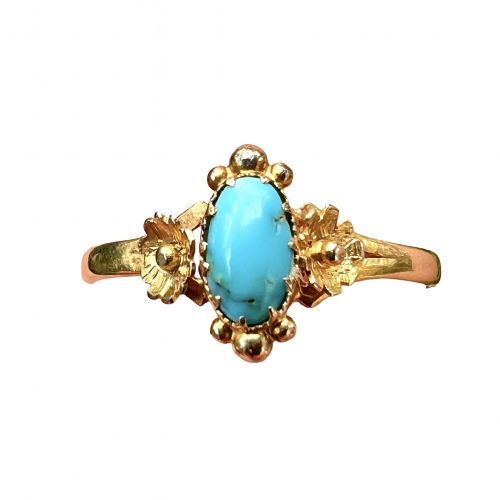
An edwardian turquoise ring brings together vibrant blue stones and rich gold, offering a distinct piece of period character for daily wear.
Edwardian Turquoise Ring
Buyers exploring this selection frequently encounter rings dated from the early twentieth century alongside Victorian antecedents and later Art Deco interpretations. The materials span standard golds, silver, and porcelain elements associated with broader jewellery sets.
How they were made
Goldsmiths utilised 9ct, 15ct, and 18ct yellow and white gold to construct delicate mounts, securing stones through traditional claw and flush settings. Seed pearls and diamonds frequently accompany the turquoise, held alongside precious metals shaped into scrolls, flowers, and geometric arrangements.
Makers integrated natural turquoise cabochons and matrix stones into rings, earrings, and broader suites. Metalworking techniques of the period balanced durability with intricate detailing, visible in carved shoulders and hallmarked bands.
Some Edwardian rings feature miniature horseshoe motifs designed to bring good fortune straight to your finger.
What varies in quality
The distinction between tiers rests upon the choice of gold purity, such as 18ct versus 9ct, and the quality of the accompanying diamonds or pearls. Superior examples display well-matched turquoise stones with stable colour and minimal matrix disruption.
Execution of the metalwork defines the upper range, where hand-finished scrolls, secure settings, and clear hallmarks indicate careful workshop production. Lesser examples rely on simpler casting or show greater wear to softer stones.
The Edwardian Turquoise Ring Glossary
- Cabochon
- A gemstone shaped and polished with a smooth, rounded surface rather than faceted. This cut highlights the natural colour and texture of turquoise without creating sharp edges.
- Matrix
- The host rock material that remains embedded within or attached to a turquoise stone. This web-like pattern adds unique character to individual gems.
- Seed pearl
- A very small, naturally formed pearl utilised in clusters and floral rings. These delicate elements provide a soft white contrast to bright blue turquoise.
- Hallmark
- An official stamp struck into precious metal indicating purity and origin. These marks help verify the period and location of manufacture.
- Cluster
- An arrangement of gemstones set closely together around a central stone. This design style maximises visual impact and combines different materials effectively.
Edwardian Turquoise Ring: Frequently Asked Questions
How do I care for an edwardian turquoise ring?
Turquoise is a relatively soft stone that absorbs moisture and oils easily, so you should remove the ring before washing hands, swimming, or applying cosmetics.
Clean the metal gently with a soft cloth and avoid chemical dips or ultrasonic cleaners which can damage the stones and pearls.
Are these rings suitable for everyday wear?
While many people wear them daily, turquoise requires mindful handling due to its lower hardness compared to diamonds or sapphires. Choosing a setting with protective shoulders or bezel mounts helps safeguard the central stone.
Rotating the piece with other jewellery reduces cumulative wear on antique settings and claws.
How can I tell if a ring is genuine Edwardian?
Examine the piece for period-specific design motifs such as delicate floral clusters, boat shapes, and scrollwork executed in yellow or rose gold. British hallmarks stamped inside the band provide specific dates and assay office locations.
Construction methods, including hand-finished details and the integration of seed pearls or old-cut diamonds, further support the era.
What gold purities appear in these rings?
Listings commonly feature 9ct and 18ct gold, alongside the distinct 15ct gold standard typical of the period. White gold and silver also appear in pieces influenced by later styles.
Each purity alters the colour and weight of the mount, interacting differently with the blue turquoise stones.