


Vintage Full Eternity Ring
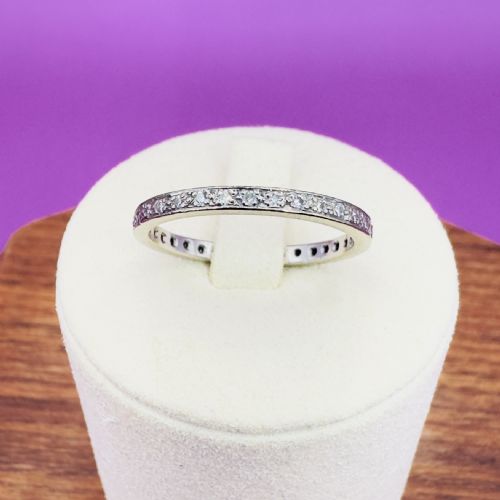
A vintage full eternity ring carries an unbroken circle of gems, most often diamonds set in platinum or white gold.
Vintage Full Eternity Ring
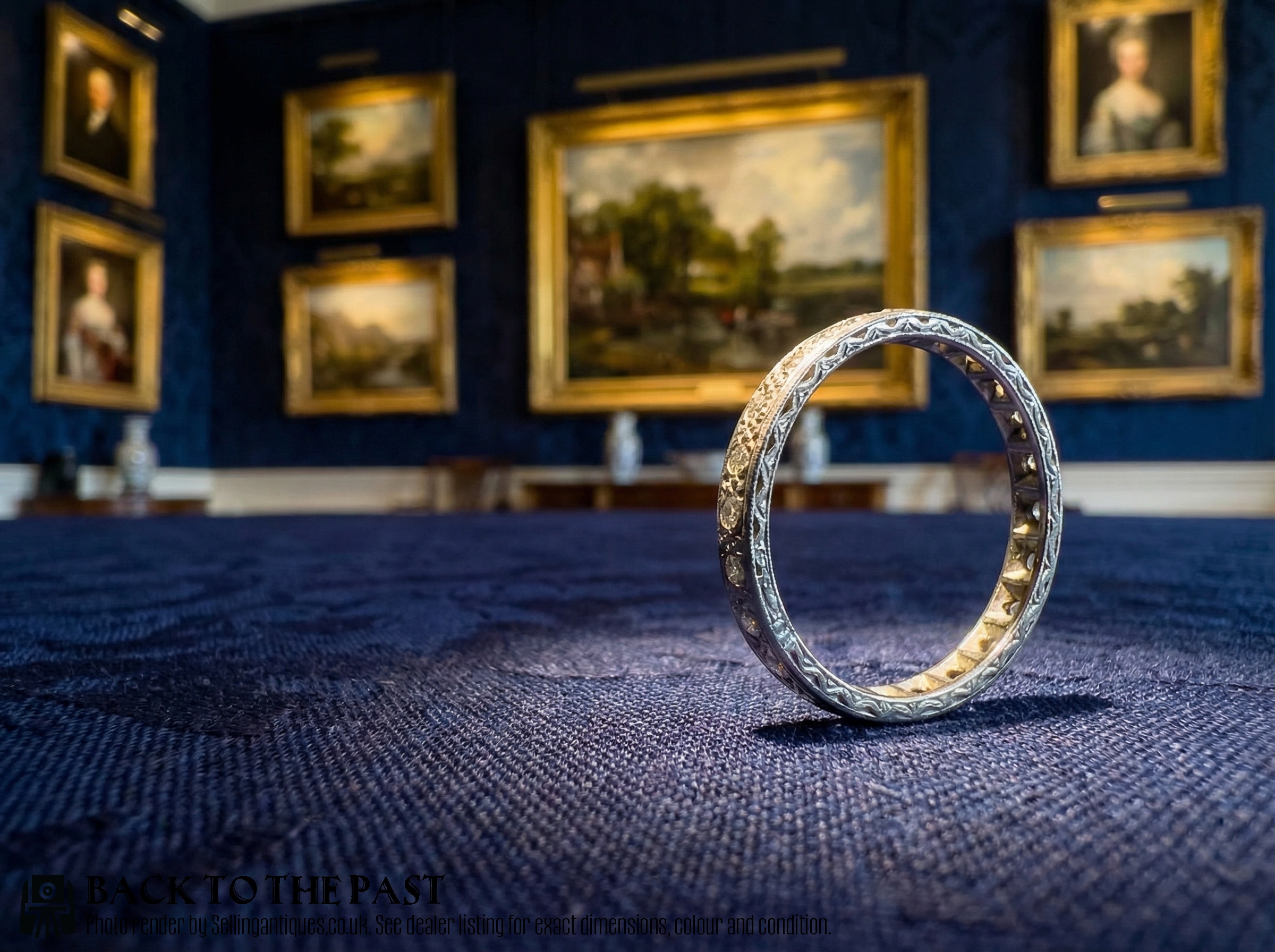
A vintage full eternity ring wraps gems around the entire band to symbolise everlasting affection, a tradition that endures across the decades. When you search for this phrase, you encounter pieces spanning the Edwardian era through the mid-century, with Art Deco examples appearing frequently.
The most common versions on this page pair brilliant-cut diamonds with durable platinum or white gold mountings. Alongside diamond bands, variations set with natural ruby or turquoise emerge from the nineteen-thirties and Edwardian periods.
The silhouettes shift from geometric platinum settings of the nineteen-thirties to streamlined white gold bands of the nineteen-fifties and nineteen-sixties. Every piece maintains the continuous circumference that defines the form, though finger sizes vary considerably across the selection.
What Varies in Quality
The overall visual impact rests on the matching of the stones and the precision of the metalwork between each gem. Finer examples display meticulous stone-setting where the metal grain or channel holds every gem securely while remaining visually discreet.
Heavier platinum and gold bands resist the warping that continuous stone channels can experience over decades of daily wear. Signed pieces by established makers carry distinct benchmarks of workshop capability that elevate their standing.
Vintage Full Eternity Ring Retail Price Guide 2026
Typical asking prices for vintage full eternity ring among the pieces listed under this phrase on Sellingantiques today, from the lower quarter to the upper quarter. They describe what is for sale here now, not the wider market.
Listings feature platinum, white gold, and rose gold alongside diamonds, rubies, and turquoise.
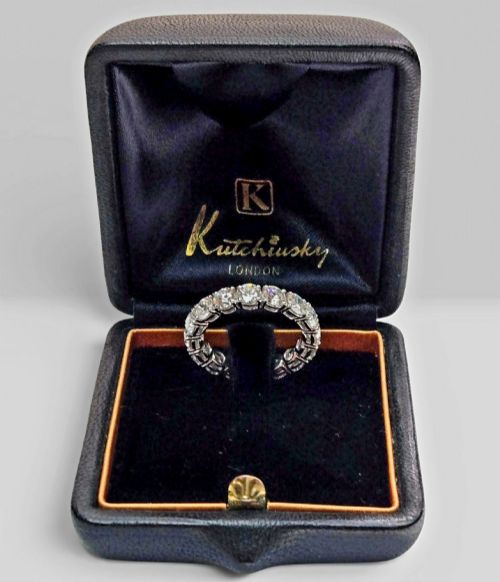
Kutchinsky
The Vintage Full Eternity Ring Glossary
- Eternity ring
- A finger ring set with a continuous line of identical gemstones symbolising endless time. This unbroken band requires careful sizing because altering the circumference disrupts the stone layout.
- Platinum
- A dense, durable white metal favoured for fine jewellery during the Art Deco period. Its strength allows for slender settings that hold diamonds securely.
- Art Deco
- A design style spanning the nineteen-twenties and nineteen-thirties characterised by geometric lines and crisp symmetry. In rings, this translates to sharp milling and structured platinum mountings.
- Edwardian
- The period spanning the reign of King Edward VII, noted for delicate, lacy metalwork. Rings from this era often utilise yellow or rose gold alongside alternative stones like turquoise.
Vintage Full Eternity Ring: Frequently Asked Questions
Can eternity rings be resized?
Resizing a full eternity ring is generally not possible because the stones run entirely around the band. Altering the metal circumference would disrupt the continuous setting of the gems.
Buyers must find a piece matching their exact finger size from the start. Independent jewellers can sometimes add inner sizing beads, but this remains limited.
How do I wear an eternity ring?
These rings sit comfortably alongside a wedding band and engagement ring on the left ring finger. Many people stack them together to create a layered look on the hand.
Because stones encircle the entire band, daily friction against other rings can occur. Regular checks help ensure the mounting remains secure.
What is the difference between platinum and white gold?
Platinum is a naturally white, dense metal that maintains its colour and develops a soft patina over time. It offers high durability for intricate stone settings.
White gold is an alloy of yellow gold mixed with white metals, often plated with rhodium to enhance brightness. Both metals provide a bright backdrop for diamonds.
How do I date an eternity ring?
Dating relies on stylistic markers, such as the geometric milling of Art Deco pieces from the nineteen-thirties or the clean lines of nineteen-fifties designs. Metal choices also offer clues, with platinum dominating earlier decades and white gold rising later.
Maker marks and hallmarks stamped inside the band provide further chronological context. Comparing the construction methods to known period examples clarifies the era.