



Gold Navette Ring
When you search for a gold navette ring, you are looking at elongated, boat-shaped cluster jewellery designed to flatter the finger.

Gold Navette Ring
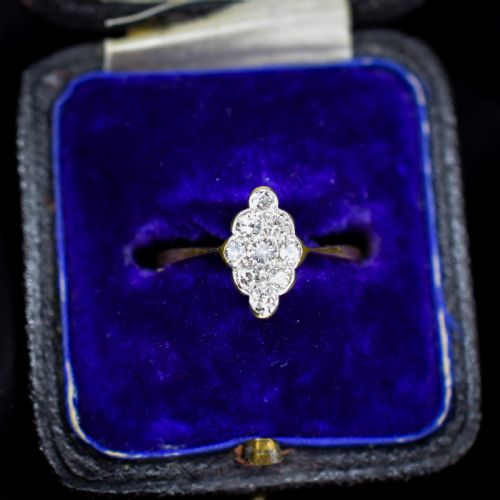
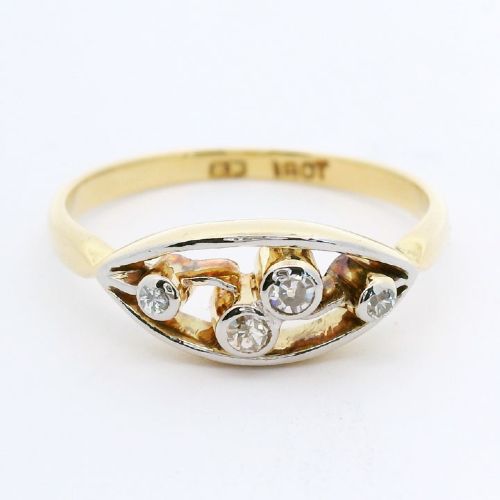
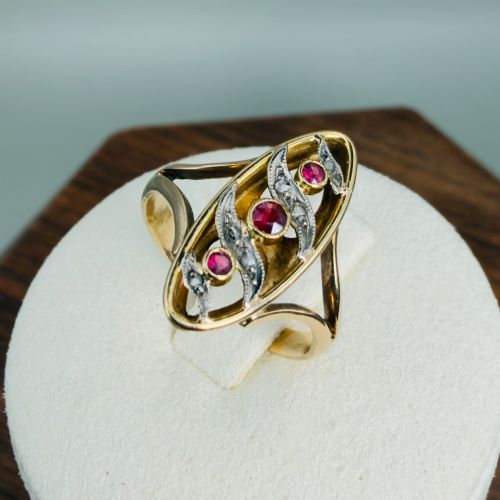
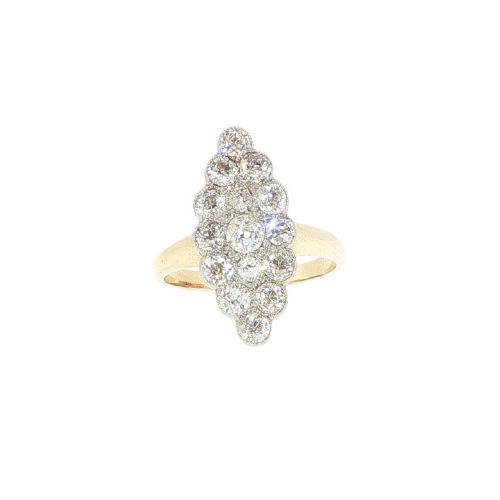
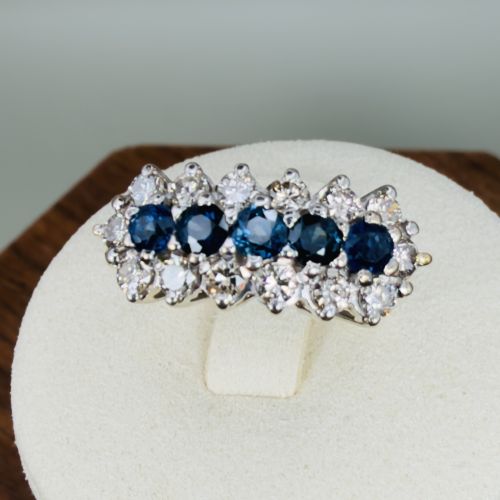
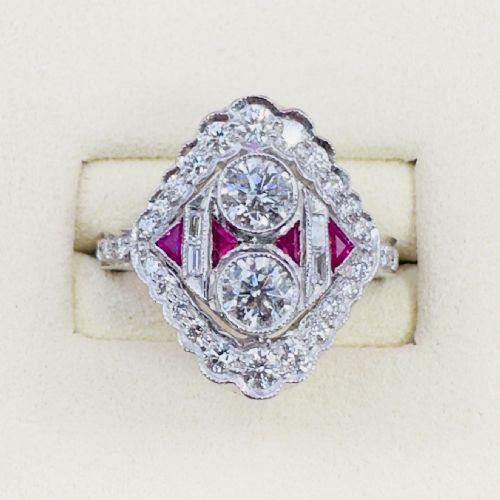
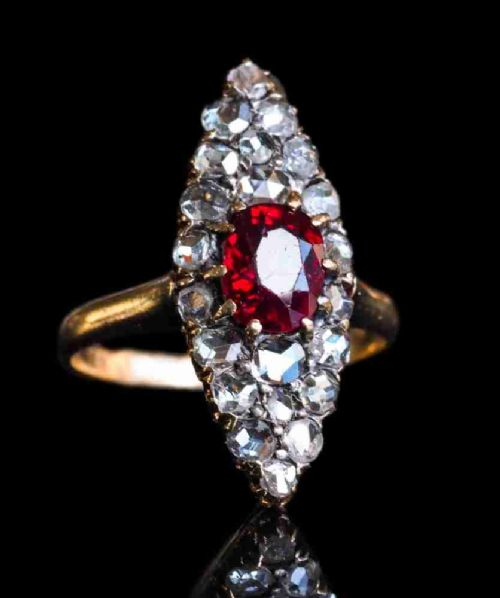
You will most frequently encounter Edwardian and Victorian examples on this page, often pairing central old-cut diamonds with calibrated rubies, sapphires or emeralds. The form relies on symmetry and proportion to create a commanding visual presence without excessive bulk.
Makers constructed these clusters to sit low to the skin, utilising stepped shoulders and narrow shanks to accentuate the central navette or marquise outline. The design serves as both a daytime dress ring and an evening statement piece.
How they were made
Goldsmiths combined 18ct yellow gold, rose gold and platinum, frequently mounting silver over gold in earlier Victorian examples to brighten the diamond facets. Platinum emerged fully during the Edwardian era, allowing jewellers to pierce and millgrain delicate metal wire into intricate lace-like settings.
Gemstones including old mine cut, rose cut and transitional cut diamonds were paired with natural rubies, emeralds, sapphires, seed pearls and turquoise. Setting techniques relied on bead setting, claw work and rub-over mounts to secure tightly packed clusters of coloured stones.
One unexpected survivor among the boats and clusters is an evil eye ring from the Edwardian period.
What varies in quality
The distinction between average and exceptional pieces lies in the precision of the stone matching and the integrity of the pierced metalwork. Superior examples display closely calibrated gems that follow the sharp taper of the navette ends without awkward gaps in the setting.
Mount construction dictates durability, where heavier 18ct gold shanks and intact platinum top plates maintain their structural rigidity over decades of wear. Hand-cut facets on older diamonds and untreated coloured stones elevate the desirability of the piece.
The Gold Navette Ring Glossary
- Navette
- A boat-shaped gemstone setting with pointed ends resembling a small ship hull. This silhouette defines the entire aesthetic of the style.
- Marquise
- An interchangeable term for a navette shape, particularly applied to gemstone cuts or pointed cluster outlines. Legend attributes the shape to the lips of the Marquise de Pompadour.
- Old Cut
- A hand-faceted diamond cut dating from the nineteenth or early twentieth century with a small table and high crown. These stones produce a warm, chunky candlelit sparkle rather than modern brilliant flashes.
- Millgrain
- A decorative border of tiny raised metal beads rolled onto the edges of a setting. This technique typifies Edwardian platinum work.
- Cluster
- An arrangement of multiple smaller gemstones gathered tightly around a central stone or focal point. This method maximises visual spread and colour impact.
Gold Navette Ring: Frequently Asked Questions
How do I wear a navette ring daily?
Because these rings feature elongated profiles and delicate shoulders, pairing them with straight wedding bands requires careful attention to avoid rubbing. Many owners wear them on the middle finger to let the boat shape sit comfortably without interference from adjacent bands.
Take the ring off during heavy manual tasks to protect the slender end points and prongs from accidental bending or impact.
Are these rings comfortable to wear?
The low profile of Victorian and Edwardian clusters means they sit flat against the skin and rarely catch on clothing. The tapering ends follow the natural line of the finger rather than digging into the joints.
Heavier multi-stone examples have enough weight to occasionally spin if the shank is slightly too large for the wearer.
How can I tell a Victorian from an Edwardian navette?
Victorian pieces tend to utilise warmer 18ct yellow or rose gold settings, often combining rubies and old-cut diamonds with substantial closed-back or heavy-bezel constructions. They carry a robust, romantic aesthetic rooted in the nineteenth century.
Edwardian examples introduce platinum-topped gold, millegrain edges and lighter filigree wirework, shifting the palette towards icy white metals and brighter, airier gemstone arrangements.
Can a navette ring be resized easily?
Resizing depends entirely on the decorative shoulders and gallery work that run down the sides of the band. If the pierced metalwork extends too far down the hoop, a jeweller must work carefully to alter the band without distorting the main cluster.
Consult a specialist experienced in antique jewellery to ensure the shank remains structurally sound after adjustment.