






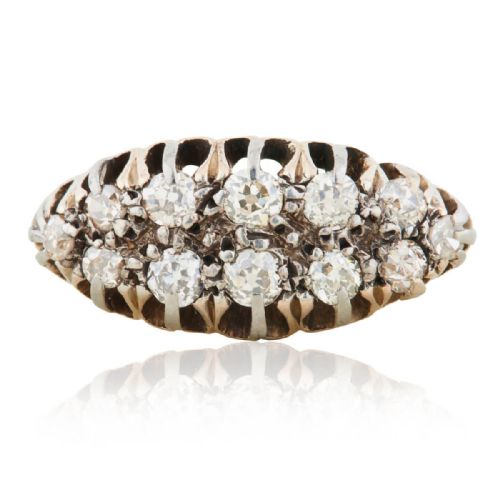
Antique Boat Shaped Ring
An antique boat shaped ring offers an elongated silhouette that flatters the hand, combining period gemstones with distinctive geometry.

Antique Boat Shaped Ring
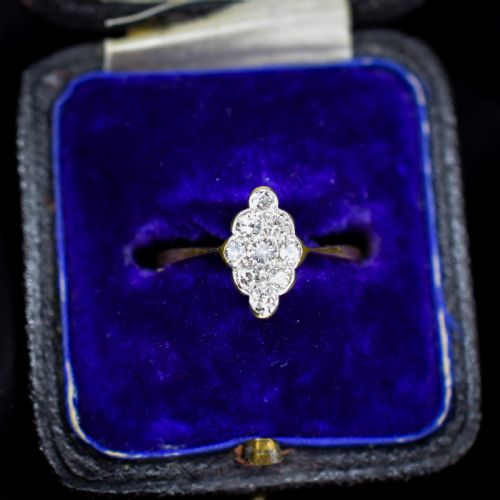
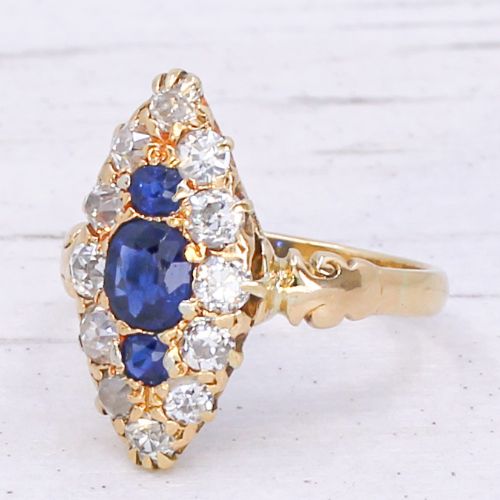
An antique boat shaped ring presents a long, tapered profile that sits flat along the finger, housing clustered stones or pavé settings. These pieces span the Victorian, Edwardian, and Art Deco eras, with examples appearing from eighteen ninety to nineteen twenty.
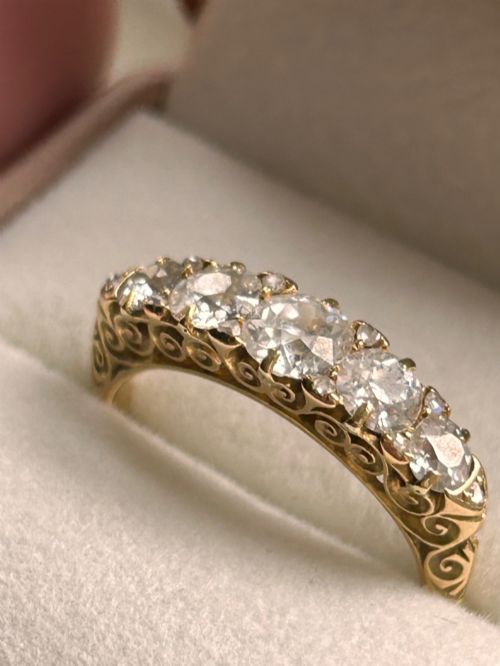
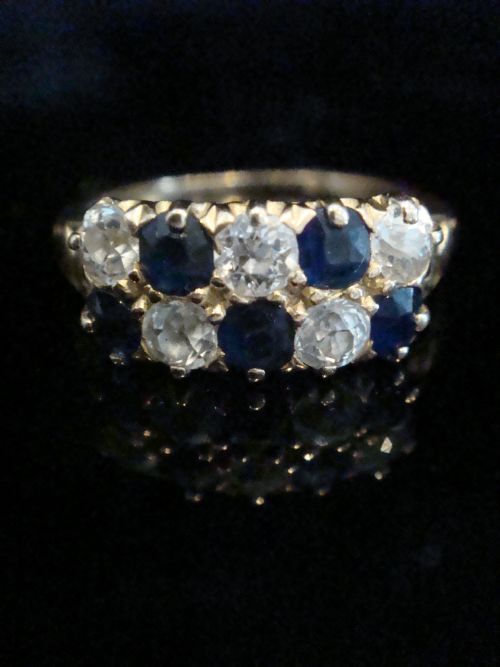
The most frequent versions on this page combine eighteen carat yellow gold and platinum mounts with old cut diamonds, sapphires, or rubies. Navette and marquise clusters dominate the selection, offering significant finger coverage through geometric arrangements.
Originating from British workshops, these rings reflect shifting aesthetic preferences from nineteenth-century cluster designs to the crisp symmetry of the nineteen twenties. Each piece demonstrates the characteristic boat silhouette, whether styled as a traditional cluster or a five-stone navette.
How they were made
Goldsmiths constructed the foundational mounts using eighteen carat yellow gold for the shank and gallery, often pairing it with platinum on the upper face to securely hold white diamonds. This dual-metal technique emerged strongly in the Edwardian and Art Deco periods to maximise the brilliance of old cut stones against a white background.
Gemstones including diamonds, sapphires, and rubies were hand-set into cluster and navette configurations using claw, bezel, or gypsy settings. Hallmarks stamped into the gold bands record assay office origins such as Birmingham and Chester during the early twentieth century.
Several pieces preserve provincial assay marks from Birmingham and Chester alongside the fingerprints of nineteenth-century goldsmiths.
What varies in quality
Quality rests upon the proportion and symmetry of the navette or boat silhouette, where fine pieces maintain crisp geometry without distortion of the gallery. The skill of the bench jeweller dictates how cleanly the platinum and gold elements meet around the central stones.
The selection of old cut diamonds and natural coloured gemstones defines the upper tier of these rings. Superior examples exhibit well-matched stones with secure claw work that preserves the delicate openwork typical of Victorian and Edwardian manufacturing.
The Antique Boat Shaped Ring Glossary
- Navette
- A boat-shaped or eye-shaped ring design that tapers to points at either end. The term derives from the French word for a little ship.
- Marquise cluster
- A gathering of gemstones arranged in an elongated, pointed oval shape. This style maximises visual spread across the finger.
- Old cut diamond
- A hand-faceted diamond cut before the standardisation of modern brilliants. These stones feature smaller tables and high crowns that catch candle or gas light.
- Gypsy set
- A mounting style where the gemstone is flush-set directly into the thick gold band. The metal is pushed over the girdle of the stone to hold it securely.
- Hallmark
- Official stamps struck into precious metals to indicate purity, maker, and assay office origin. British pieces often display city marks and date letters.
Antique Boat Shaped Ring: Frequently Asked Questions
How do I wear a boat shaped ring?
These elongated rings sit best on the middle or ring finger where the tapered silhouette follows the natural line of the hand. They pair comfortably beside plain wedding bands due to their relatively low profile.
Care should be taken during heavy manual tasks to protect the delicate platinum or gold galleries and old cut stones from sharp impacts.
Are these rings comfortable to wear daily?
The flat navette and boat designs distribute the width along the finger rather than across adjacent fingers, making them practical for regular wear. Most examples feature smooth inner shanks designed for ease of movement.
Owners should consult a jeweller periodically to check the security of the claws holding the diamonds and coloured stones.
How can I tell a Victorian ring from an Edwardian one?
Victorian examples from the late nineteenth century frequently utilise rich eighteen carat yellow gold settings with substantial old mine or old cut diamond clusters. The mountings often feel heavier and more robust.
Edwardian and later pieces from the nineteen tens and twenties introduce platinum tops to contrast with yellow gold, favouring lighter, airier openwork in navette forms.
What gemstones appear in these rings?
Old cut diamonds form the primary focus of most pieces, frequently accompanied by natural sapphires or rubies. Coloured gemstones are selected for their depth of hue rather than strict modern calibration.
Some variations incorporate coloured stones arranged in rows or bands across the length of the boat-shaped gallery.