



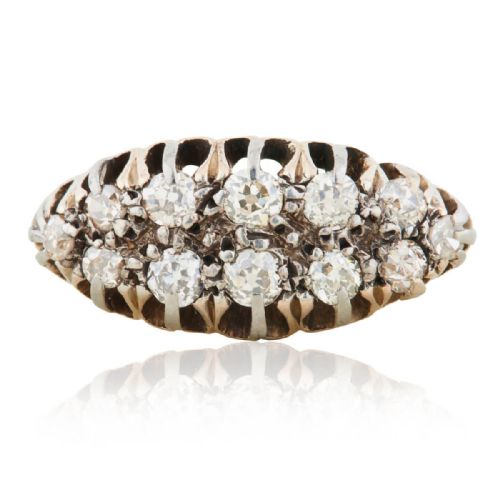

Victorian Navette Diamond Ring
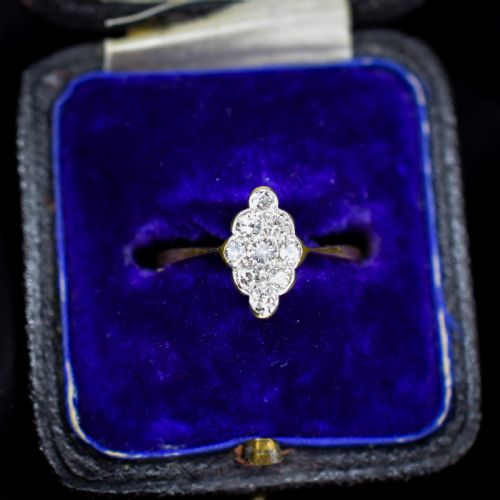
A victorian navette diamond ring sits low on the finger with a characteristic boat-shaped silhouette that commands attention through sheer geometric elegance.

Victorian Navette Diamond Ring
A victorian navette diamond ring presents an elongated, boat-shaped cluster designed to maximise finger coverage while maintaining a low profile. These pieces most frequently emerge from the late nineteenth century, spanning decades from the eighteen-eighties to nineteen-hundred, alongside occasional Edwardian and later interpretations.
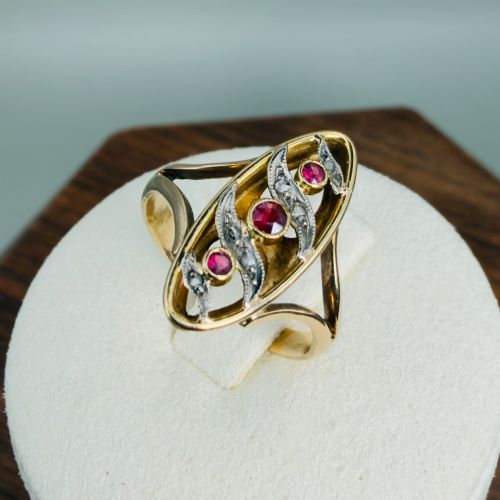
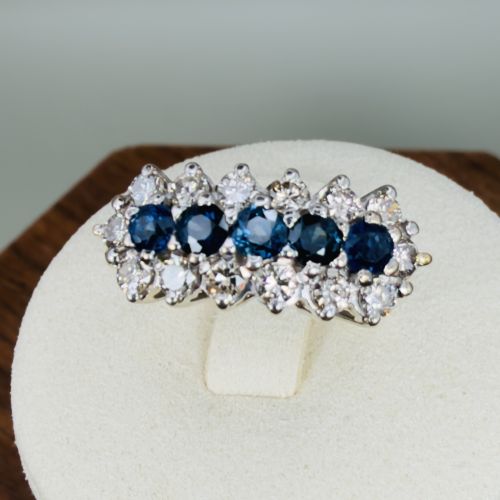
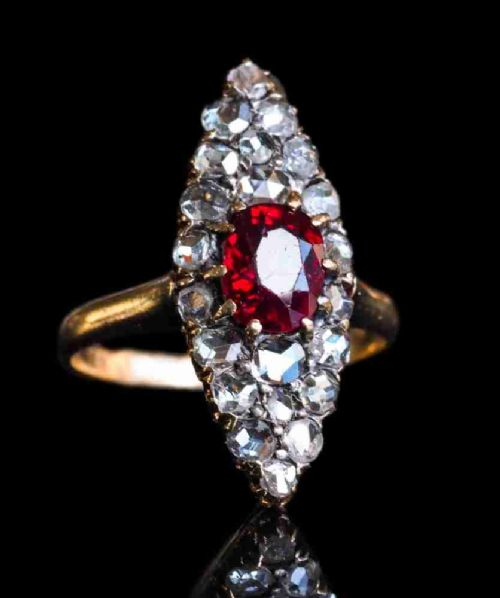
The characteristic marquise outline frames multi-stone diamond settings, often accompanied by rubies, sapphires, emeralds, pearls, or turquoise. Makers arranged old cut and rose cut diamonds to follow the pointed contours of the navette form, frequently set in combinations of yellow gold, 18ct gold, and platinum.
How They Were Made
Goldsmiths constructed these clusters primarily in 18ct yellow gold, sometimes incorporating silver for the upper settings to brighten the appearance of old cut and rose cut diamonds. Platinum appears in later examples, providing a durable white metal framework for closely clustered stones.
Gemstones including rubies, sapphires, and emeralds were integrated directly into the intricate geometric framework alongside pearls and turquoise. Setting techniques relied on hand-cut collets and meticulous claw or bezel arrangements to secure each stone within the narrow boat shape.
Listings feature 18ct gold, platinum, and silver alongside yellow gold bands, paired with pearls, turquoise, rubies, and sapphires.
What Varies in Quality
The skill of the jeweller dictates the harmony of the navette silhouette, where balanced proportions between length and width determine the visual grace of the ring. Superior examples display seamless integration of secondary stones like rubies or sapphires without crowding the central diamond cluster.
Metalwork refinement distinguishes exceptional items, visible in delicate granulation, pierced galleries, and secure claw work that withstands generations of wear. The choice of diamond cutting, from brilliant old cuts to flat-backed rose cuts, alters the internal light return and overall depth of the face.
The Victorian Navette Diamond Ring Glossary
- Navette
- A boat-shaped gemstone setting with pointed ends, also known as a marquise shape. This silhouette creates an elongated appearance along the finger.
- Old cut
- An early form of diamond cutting featuring a small table, high crown, and large culet facet. These stones were shaped by hand to catch candlelight.
- Rose cut
- A diamond cut with a flat base and a domed crown of triangular facets arranged in a symmetrical pattern. This style produces a soft, translucent shimmer.
- Cluster ring
- A ring design featuring a central gemstone surrounded by a border of smaller stones. This arrangement increases the visual presence on the hand.
Victorian Navette Diamond Ring: Frequently Asked Questions
How do I wear a navette ring safely?
The elongated boat shape sits comfortably along the axis of the finger, though the pointed ends require mindful daily wear. Pairing the piece with plain bands prevents rubbing against surrounding rings.
Regular checks by a jeweller ensure the tiny claws holding the outer diamonds remain secure within the narrow gold framework.
Are these rings suitable for daily engagement wear?
Many nineteenth-century examples serve as engagement rings, though the delicate metalwork and older diamond cuts benefit from gentle care. Removing the ring during heavy manual tasks protects the setting from structural strain.
Gold and platinum components paired with diamonds offer adequate durability for regular use when inspected periodically for wear.
How can I tell a Victorian navette from later periods?
Victorian examples typically feature warm 18ct yellow gold shanks, hand-carved shoulders, and traditional old cut or rose cut diamonds. The integration of closed-back foils or specific hallmarking practices often points directly to nineteenth-century British assay offices.
Later Edwardian and twentieth-century interpretations introduce platinum elements and brighter white metal settings that alter the overall tonal appearance.
What gemstones accompany the diamonds in these rings?
Rubies, sapphires, and emeralds frequently border or centre the diamond clusters, alongside natural pearls and turquoise accents. Burmese rubies and deep blue sapphires provide strong colour contrast against the yellow gold mounts.
These coloured stones are typically shaped as small rounds or calibre-cut sections following the sweeping lines of the navette design.