


Diamond Pave Cluster Ring
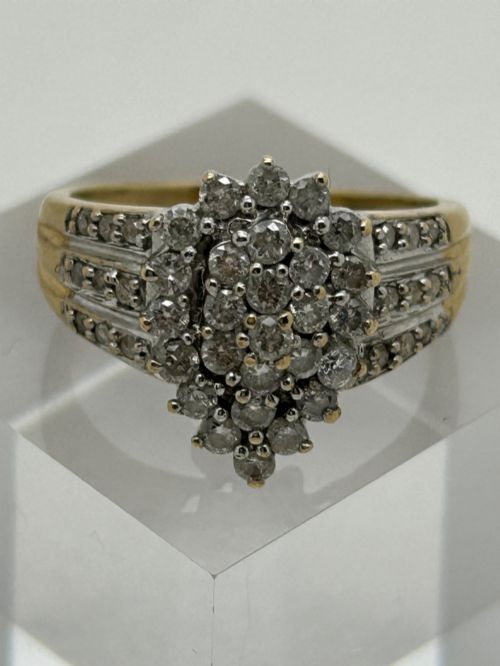
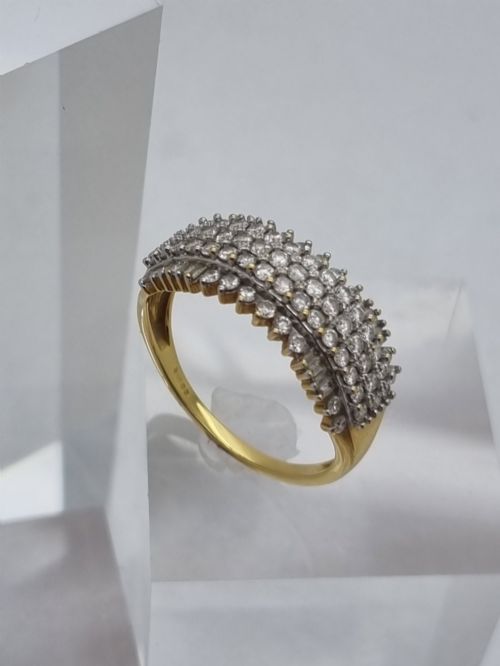
A diamond pave cluster ring groups small stones closely together in platinum and gold, offering a dense surface of brilliance that defines the style.

Diamond Pave Cluster Ring
When you search for a diamond pave cluster ring, you encounter pieces spanning from the Victorian and Edwardian eras through the Art Deco period, 1950s retro, and up to contemporary classic designs. These rings bring together multiple stones in close settings to form a unified visual impact on the finger.
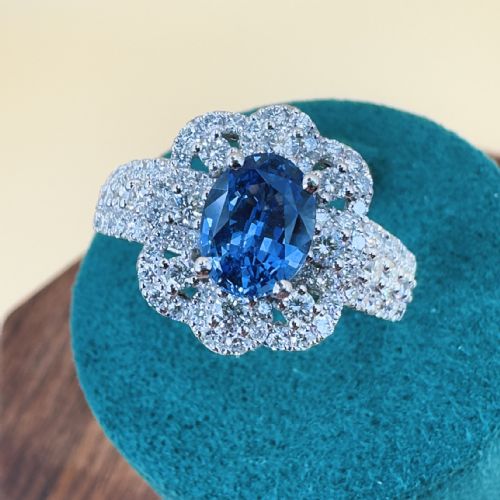
The most common versions on this page combine diamond pave work with platinum and 18ct gold, often incorporating sapphire, emerald, or ruby alongside the central diamonds. You will find forms ranging from teardrops and marquis shapes to four leaf clover panels and scroll designs.
The periods represented show distinct aesthetic shifts, from Edwardian old cut diamond pave rings to 1950s cocktail rings and later 20th century dress rings. Each piece uses the cluster format to maximise the presence of the stones within fine metalwork.
Distinctions in quality and execution
Quality in these rings is determined by the precision of the pave setting and how closely the stones are aligned to create an uninterrupted surface of light. Finer examples display meticulous metalwork that secures each small stone without overwhelming the overall geometry.
The choice of materials, such as heavy platinum mounts paired with well-matched old cut diamonds and natural coloured gemstones like sapphires or emeralds, separates superior pieces from standard production. The integrity of the original design, whether a complex four leaf clover or a scroll panel, dictates the enduring appeal of the ring.
Listings feature 18ct gold, platinum, diamonds, sapphires, emeralds, and rubies across periods from Victorian to later than 1960.
Le Vian
The Diamond Pave Cluster Ring Glossary
- Pave
- A setting style where small stones are set closely together with minimal visible metal, creating a pavement of diamonds.
- Old cut
- A traditional diamond cutting style characterised by a small table, high crown, and large culet, common in antique pieces.
- Marquis
- A boat-shaped gemstone cut with pointed ends, often used as the central focal point in cluster rings.
- Cluster
- An arrangement of smaller gemstones grouped tightly around a central stone or forming a unified geometric shape.
- Rose cut
- An antique diamond cut featuring a flat base and a domed crown faceted with triangles.
Diamond Pave Cluster Ring: Frequently Asked Questions
How do I wear a diamond pave cluster ring daily?
These rings suit everyday wear provided you take care around heavy impacts, as the close setting of multiple stones requires secure prongs and metal integrity.
Consider removing the ring during manual tasks to protect the platinum or gold settings and the smaller pave stones from unnecessary strain.
What periods do these cluster rings come from?
The selection includes pieces from the Victorian and Edwardian eras, through Art Deco and 1950s retro designs, up to contemporary classic styles.
Each period brings distinct metal choices and stone cuts, such as platinum Edwardian work or yellow gold 1950s cocktail designs.
Are coloured stones common in these clusters?
Many cluster rings pair diamonds with sapphires, emeralds, or natural rubies to create contrast within the geometric or floral designs.
These coloured gemstones often sit alongside old cut or rose cut diamonds in platinum and 18ct gold settings.
What is the difference between old cut and modern stones?
Old cut and rose cut diamonds feature hand-cut facets designed under older lighting conditions, giving them a softer, warmer sparkle than modern brilliant cuts.
These antique stones are typical of Edwardian and Victorian cluster rings found in the collection.