



Blue Stone Cluster Ring
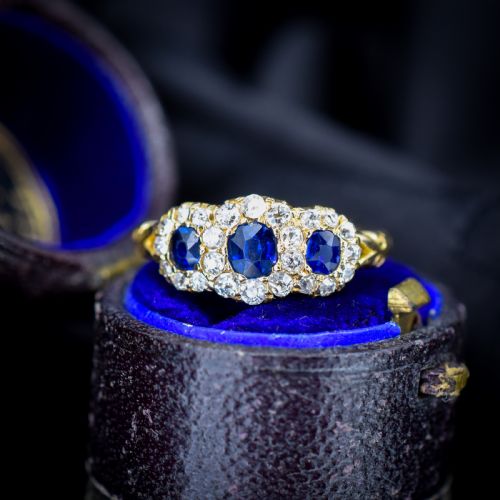
When you search for a blue stone cluster ring, you are looking at centuries of lapidary skill focused on centring a vivid focal gemstone amid a border of diamonds.
Blue Stone Cluster Ring
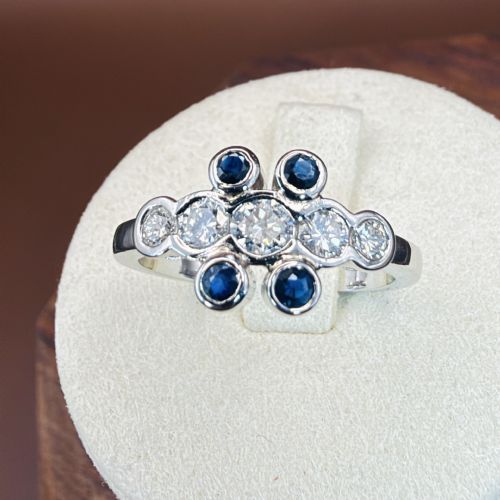
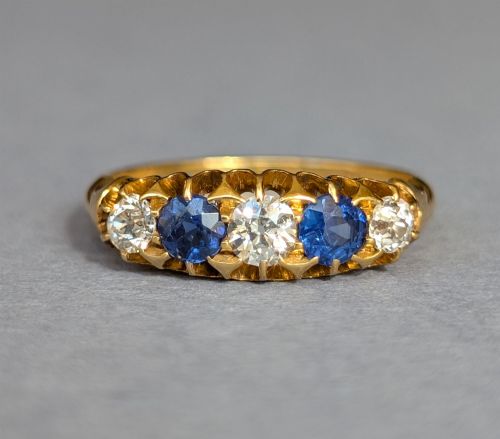
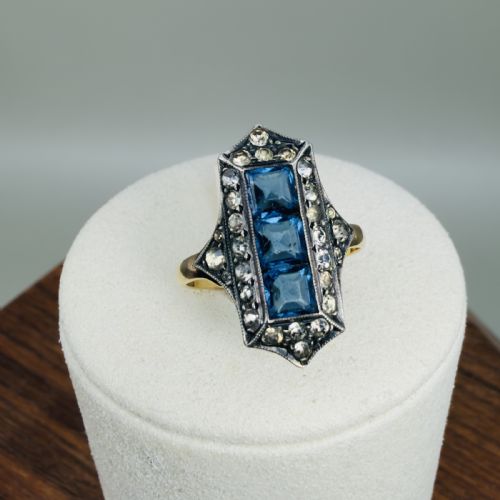
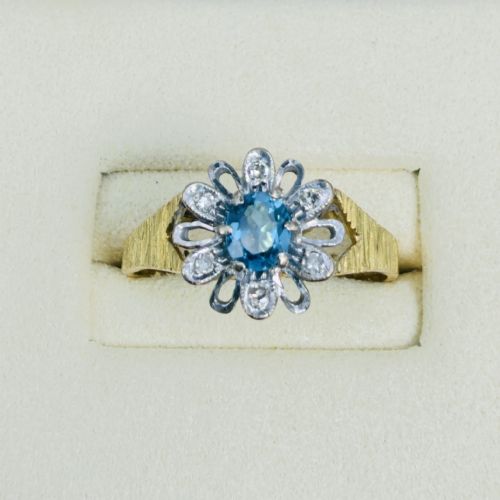
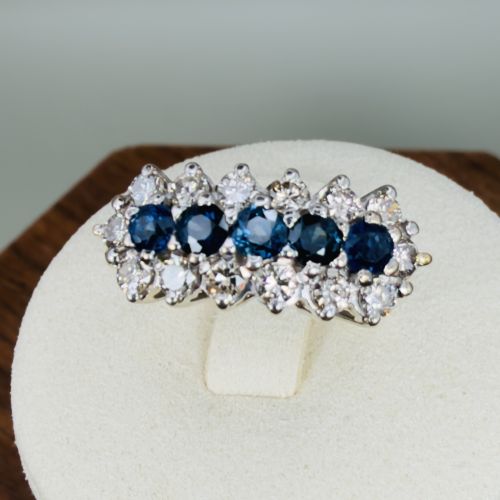
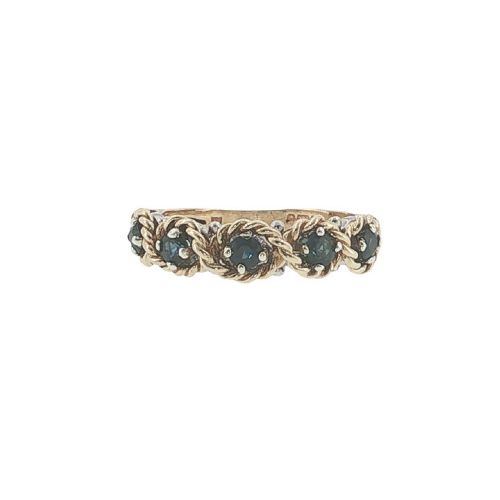
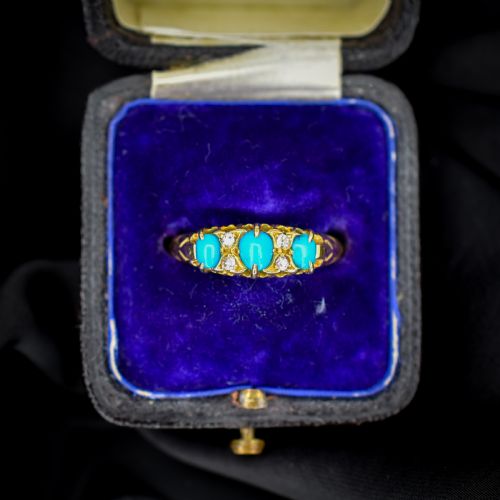
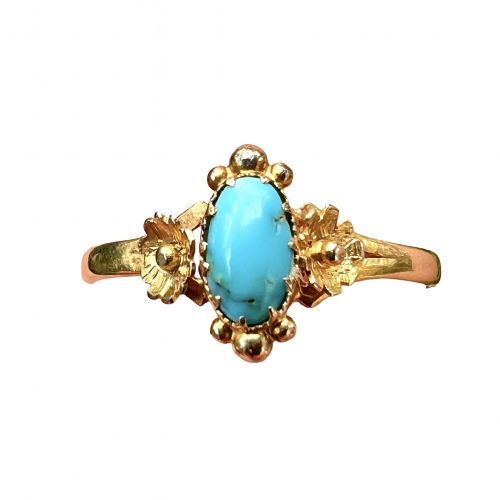
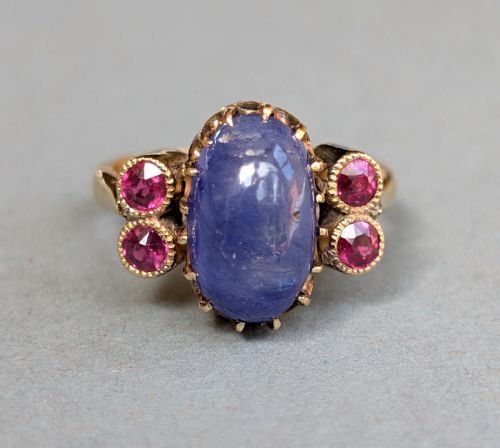
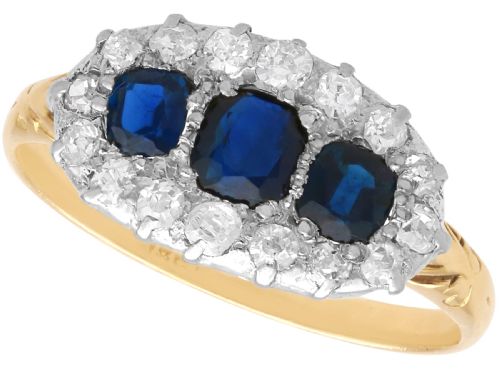
A blue stone cluster ring groups surrounding diamonds or paste stones around a central coloured focal point, most frequently seen in sapphire or turquoise alongside aquamarine, zircon and tanzanite. The forms span Victorian flower and star motifs through Edwardian elegance and geometric Art Deco designs up to mid-century settings.
Victorian and Edwardian examples lean towards organic botanical shapes like daisy and flower clusters, while Art Deco pieces favour crisp geometric lines. Mid-century rings introduce broader gold bands and white gold or platinum settings that alter the visual weight of the central stones.
How they were made
The materials rely heavily on 18ct yellow and white gold alongside platinum and silver-topped settings, providing the structural strength needed to hold multi-stone configurations securely. Central sapphires, aquamarines or turquoise stones are paired with old cut, rose cut or brilliant cut diamonds.
Goldsmiths utilised claw, rubover and flush settings to fix each stone into the metal framework. Platinum and white gold sections were frequently employed in Edwardian and Art Deco pieces to heighten the contrast against yellow gold bands.
Some Victorian flower rings use turquoise petals to whisper affection across the centuries.
What varies in quality
The distinction in quality rests upon the saturation and clarity of the central blue stone, alongside the matching and brilliance of the surrounding diamond border. Master jewellers balanced the proportions of the cluster so that the mounting metalwork supported rather than overwhelmed the gemstones.
Hand-finished details, such as delicate millegrain edges on Edwardian platinum settings or precise channel and claw work, separate standard production from finer bench craftsmanship. The choice of heavier precious metal weights, such as robust 18ct gold or platinum, also dictates the longevity and substance of the piece.
The Blue Stone Cluster Ring Glossary
- Cluster ring
- A ring featuring a prominent central gemstone encircled by a group of smaller surrounding stones. This layout maximises visual impact and light return.
- Old cut diamond
- A hand-faceted diamond shape typical of the Victorian and Edwardian eras, featuring a smaller table and larger culet. These stones catch candlelight distinctively.
- Millegrain
- A decorative technique involving a row of tiny raised metal beads along the edge of a setting. It adds a refined texture frequently seen in Edwardian and Art Deco jewellery.
- Boat ring
- A navette or elongated boat-shaped mounting that sits horizontally across the finger. This form accommodates multiple stones in a streamlined profile.
- Rose cut diamond
- A vintage stone cut with a flat base and a faceted dome crown resembling an unopened rosebud. It yields a soft, translucent shimmer.
Blue Stone Cluster Ring: Frequently Asked Questions
How do I care for my ring?
Precious stone rings benefit from gentle cleaning in warm soapy water using a soft brush to remove everyday oils. Avoid harsh ultrasonic cleaners, particularly on softer stones like turquoise.
Store each ring individually in a fabric-lined box to prevent the metal and stones from scratching one another when not being worn.
Can antique rings be resized?
Most gold and platinum cluster rings can be altered by a skilled jeweller who understands antique settings. The shank can be opened and adjusted without disturbing the delicate cluster head.
Consult a specialist to ensure the structural integrity of the shoulders and gallery remains intact during the process.
What is the difference between old cut and modern cut diamonds?
Old cut diamonds were shaped by hand before modern machinery standardised proportions, resulting in deeper pavilions and smaller tables. They exhibit a charming, softer glow under low lighting.
Modern brilliant cuts are engineered for maximum light return and uniform sparkle, contrasting with the artisanal character of antique stones.
Are these gemstones natural?
Many period pieces incorporate natural sapphires, turquoise and aquamarines formed over millions of years. Certification or professional examination can identify untreated stones.
Past makers also utilised high-quality paste or synthetic stones in specific decorative contexts, particularly during periods of material scarcity.