


Gold Floral Cluster Ring
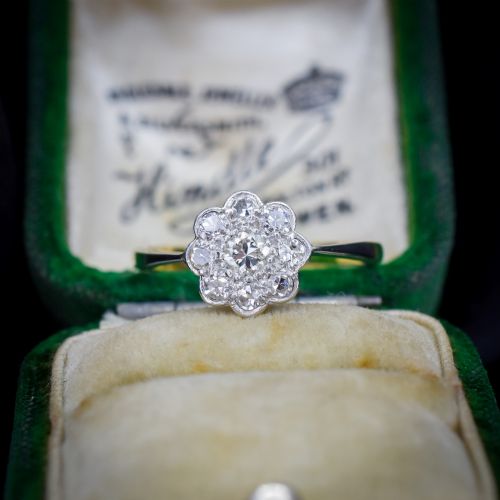
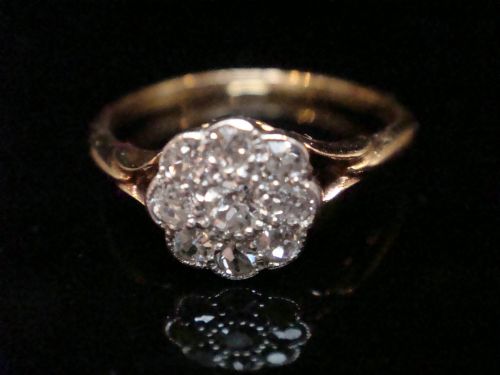
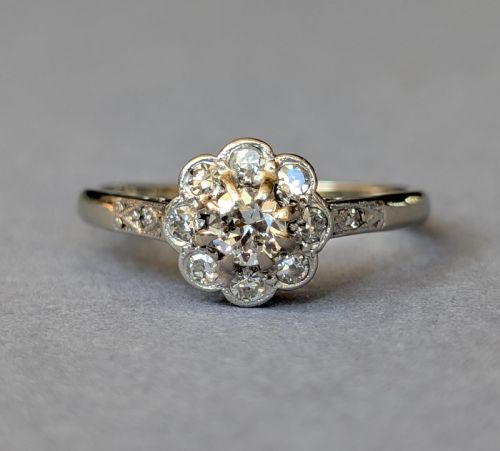
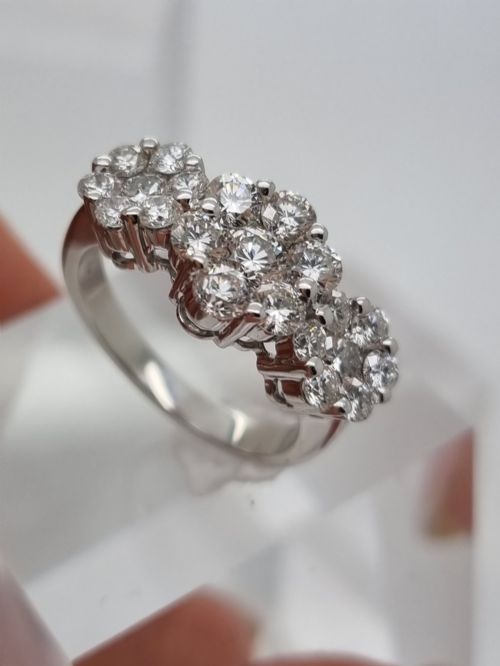
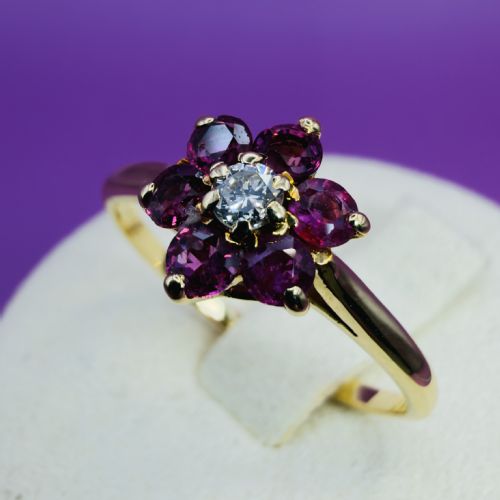
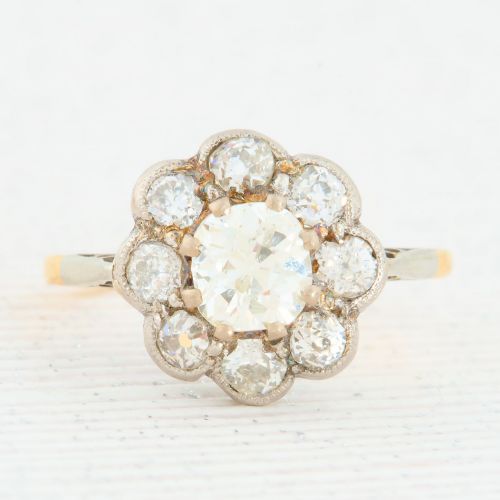
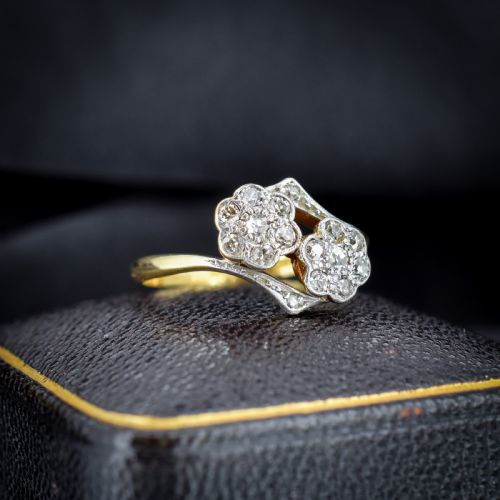
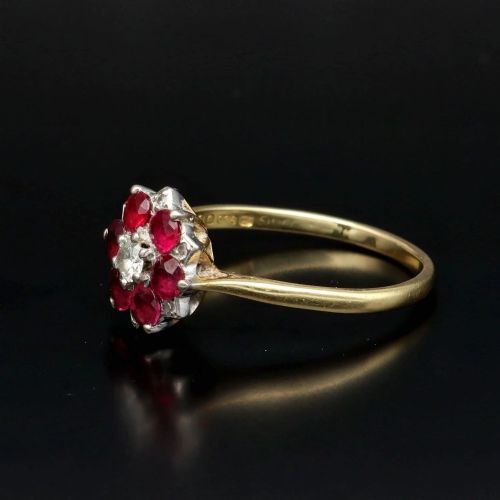
A gold floral cluster ring brings together central gems and surrounding stones in a timeless botanical motif.
Gold Floral Cluster Ring
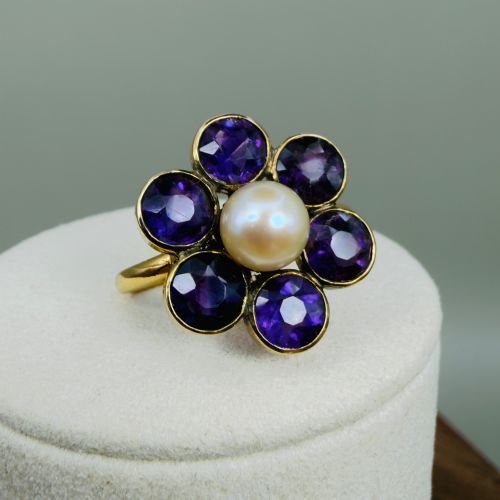
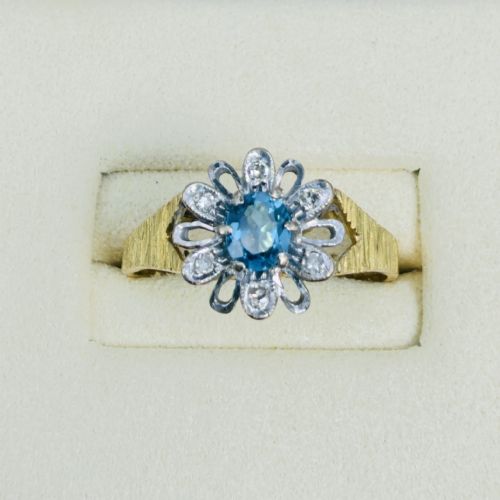
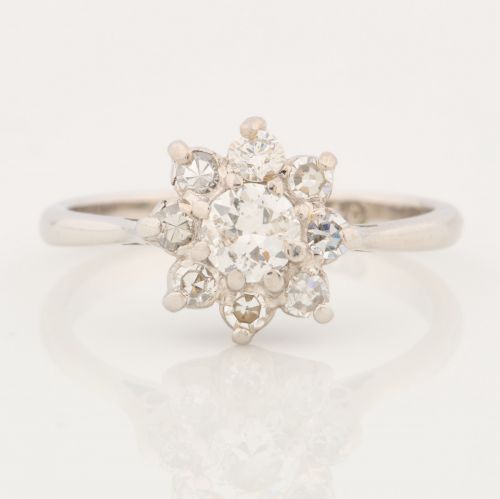
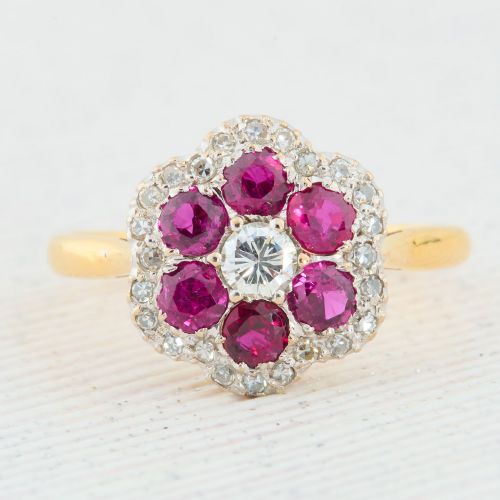
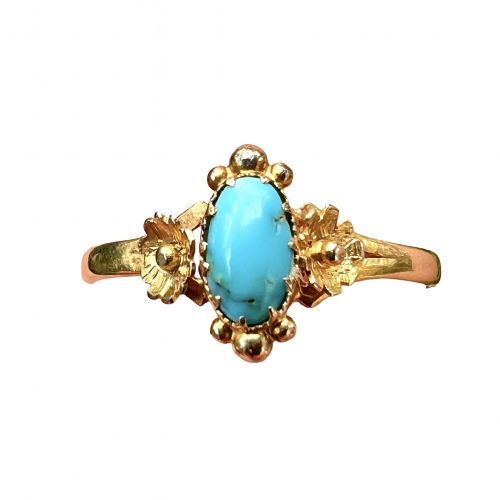
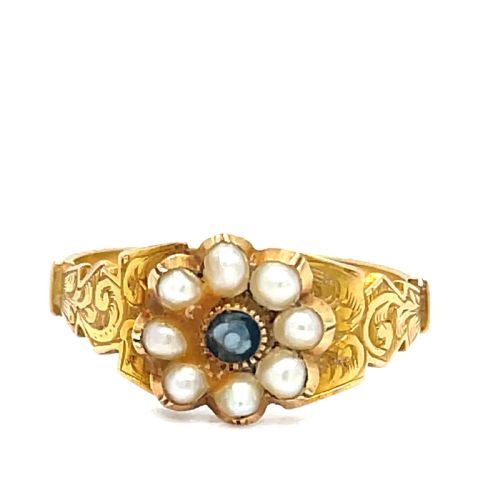
When you examine a gold floral cluster ring, you find a central gemstone encircled by smaller stones that create the distinct appearance of a blooming flower. These jewels span multiple eras, with Edwardian, Victorian, and mid-century examples appearing frequently across the selection.
The layout typically positions a diamond, sapphire, ruby, or pearl at the heart, framed by a border of brilliant or old-cut diamonds to resemble petals. While rings dominate the selection, the category occasionally embraces earrings sharing the same botanical arrangement.
Makers from the late nineteenth century onward adapted this daisy or floral motif for engagements and formal dress wear. Surviving pieces demonstrate how jewellers balanced natural inspiration with the structural demands of gold and platinum settings.
How they were made
Goldsmiths constructed these clusters primarily in 18ct yellow or white gold, frequently pairing gold shanks with platinum settings to enhance the brilliance of mounted diamonds. This combination provided both the warm tone of traditional gold and the bright, secure grip of platinum for intricate claw work.
Craftsmen utilised various stone cuts, including old mine cuts in earlier pieces and brilliant cuts in later mid-century examples. Gemstones such as turquoise, amethyst, aquamarine, and emerald found placement alongside diamonds, secured within millegrain edges or detailed floral galleries.
Some antique floral rings incorporate hidden hair compartments beneath the central blossom for sentimental mourning purposes.
What varies in quality
The distinction between ordinary and exceptional examples rests upon the harmony of proportions and the precision of the stone setting. Finer specimens display closely matched peripheral gems that follow the contour of the central stone without awkward gaps.
Workmanship in the gallery and shoulders separates standard production from superior output. Hand-finished millegrain work, well-preserved original claws, and substantial gold gauge indicate higher atelier standards.
The Gold Floral Cluster Ring Glossary
- Cluster ring
- A ring featuring a central stone surrounded by a geometric arrangement of smaller gems. This configuration maximises visual impact and light return.
- Daisy ring
- A specific cluster design resembling a daisy, typically consisting of colourless diamonds around a central yellow or white gem. The motif enjoyed immense popularity during the Edwardian period.
- Old-cut diamond
- A diamond cut by hand before modern brilliant-cut standards were established. These stones possess smaller tables, higher crowns, and distinctive open culets.
- Millegrain
- A decorative technique involving a row of tiny raised metal beads along the edge of a setting. It adds a refined texture typical of Edwardian jewellery.
- Platinum
- A dense, durable white metal utilised for secure stone settings. Its strength allows for delicate claw work that maximises light exposure.
Gold Floral Cluster Ring: Frequently Asked Questions
What is a cluster ring?
A cluster ring arranges multiple gemstones into a single focal design, usually featuring a prominent centre stone bordered by smaller gems.
This method creates significant visual presence on the hand while allowing jewellers to combine different colours and stone types.
How do I date a floral ring?
Dating relies on observing mounting styles, metal combinations, and gemstone cut characteristics. Edwardian pieces often pair yellow gold with platinum, whereas mid-century examples utilise distinct white gold settings.
Examining the internal shank markings and overall construction offers further clues regarding the era of manufacture.
Are these rings suitable for daily wear?
Many buyers select these botanical designs for engagement use, relying on their durable gold and platinum construction.
Checking the security of the claws and the thickness of the shank ensures the ring withstands regular daily routines.
What stones are used in floral clusters?
Diamonds form the traditional choice for petalled borders, frequently encircling central sapphires, rubies, emeralds, or pearls.
Alternative stones such as aquamarine, turquoise, and garnet also appear within Victorian and twentieth-century variations.