


Gold Flower Head Ring
These gold flower head ring selections present floral motifs in precious metal, offering buyers classic cluster settings formed of diamonds and coloured stones.
Gold Flower Head Ring
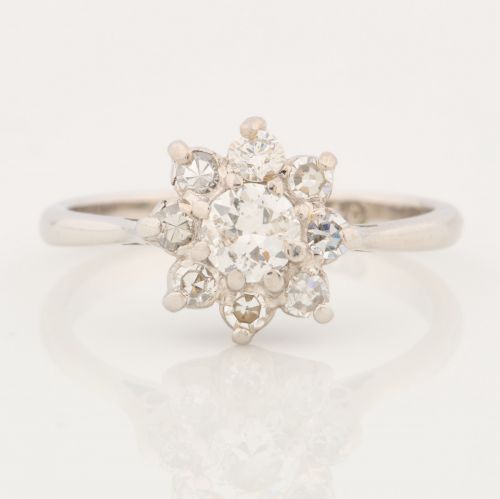
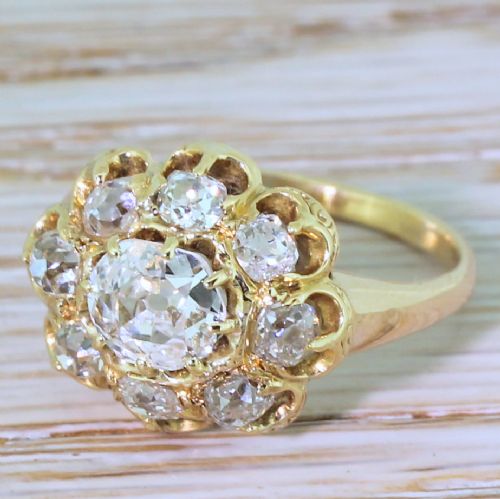
A gold flower head ring typically showcases a central stone encircled by a cluster of smaller gems, mimicking the natural arrangement of petals. These floral clusters emerge frequently in Edwardian, Art Deco, and mid-century designs, often taking the shape of daisies or broader botanical motifs.
Buyers encounter numerous variations on this page, ranging from 1910 Edwardian diamond clusters to 1950s interpretations in yellow and white gold. Alongside traditional diamond examples, pieces incorporate alternative centre stones such as garnet, ruby, opal, and emerald.
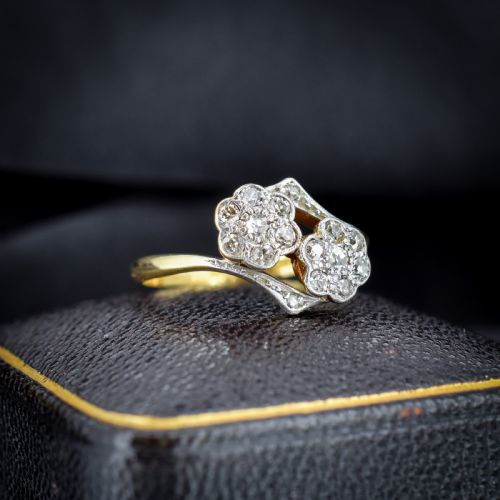
The underlying metal configurations shift across the decades, moving from early platinum-topped yellow gold to solid 18ct white gold and 9ct yellow gold settings. Double twist shanks and floral motifs define the predominant visual style seen in these listings.
Materials and construction
Jewellers constructed these rings using a foundation of 9ct gold, 18ct yellow gold, or 18ct white gold, frequently pairing white metal claws with yellow gold shanks during the Edwardian era. Platinum settings also appear, utilised to secure diamonds safely while maintaining a bright, white border around the stones.
Diamond clusters form the majority of the construction, supplemented by occasional garnet, ruby, emerald, and opal centrepieces. Metalsmiths mounted these stones in close groupings to create the characteristic floral outline without excess bulk.
Materials recorded across the inventory include 9ct gold, 18ct yellow gold, 18ct white gold, platinum, diamonds, garnets, rubies, emeralds, and opals.
Factors of quality
Quality in these rings rests upon the precision of the stone setting and the integrity of the metalwork forming the floral cluster. Finer examples display balanced proportions between the central stone and the surrounding petal gems, ensuring the silhouette remains distinct and harmonious.
The weight and purity of the gold, whether 9ct or 18ct, alongside the choice of platinum for settings, dictates the longevity and physical substance of the band. Masterful claw work and secure mounting separate superior pieces from standard production.
The Gold Flower Head Ring Glossary
- Cluster ring
- A ring featuring a central gemstone surrounded by a group of smaller stones. This configuration maximises visual presence and underpins the floral aesthetic.
- Daisy cluster
- A specific cluster arrangement where smaller white stones encircle a prominent centre gem to resemble a daisy flower. It remains a staple of Edwardian jewellery design.
- Toi et Moi
- French for you and me, describing a ring style with two main gemstones resting side by side or close together. This form appears within the selection alongside traditional clusters.
- Old cut diamond
- A precursor to the modern brilliant cut, characterised by a smaller table, higher crown, and open culet. These stones are typical of Victorian and Edwardian examples.
- Platinum set
- Jewellery constructed with a platinum top section holding the diamonds, bonded to a gold band. This technique was favoured for its strength and bright white colour.
Gold Flower Head Ring: Frequently Asked Questions
What is a gold flower head ring?
A gold flower head ring is a piece of jewellery designed with a central gemstone encircled by a cluster of smaller stones to resemble a floral blossom. These rings utilise various metals like 9ct and 18ct gold.
Such designs date across multiple historical periods, including the Edwardian era, Art Deco period, and mid-century decades.
How do I date an antique cluster ring?
Dating relies on examining the metal combinations, such as platinum-topped gold, alongside the cut of the diamonds and the overall shank style. Edwardian pieces often feature delicate openwork and floral motifs.
Later mid-century examples tend toward heavier 9ct or 18ct gold settings with different gemstone combinations like garnets or emeralds.
Are these rings suitable for daily wear?
Many buyers wear these cluster rings daily, provided the settings and claws remain secure and receive appropriate periodic checks by a jeweller. 18ct gold and platinum offer good durability for regular use.
Weaker 9ct gold or softer stones like opal require more mindful care to prevent undue wear over time.
What stones are used besides diamonds?
While diamonds dominate the cluster arrangements, jewellers also incorporated garnets, rubies, emeralds, and opals into these floral designs. These alternative stones often occupy the centre position within the petal cluster.
Such coloured gemstone rings reflect the varied tastes of the Victorian, Edwardian, and mid-century periods.