

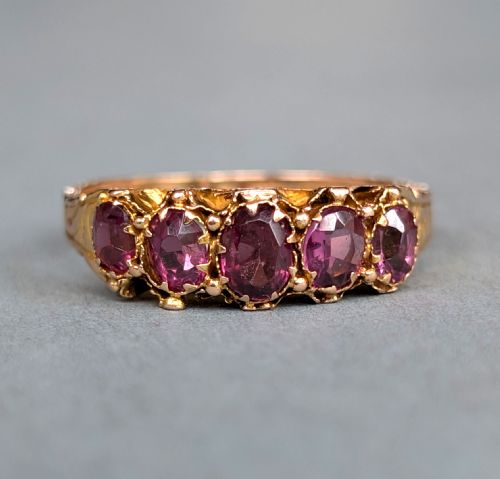


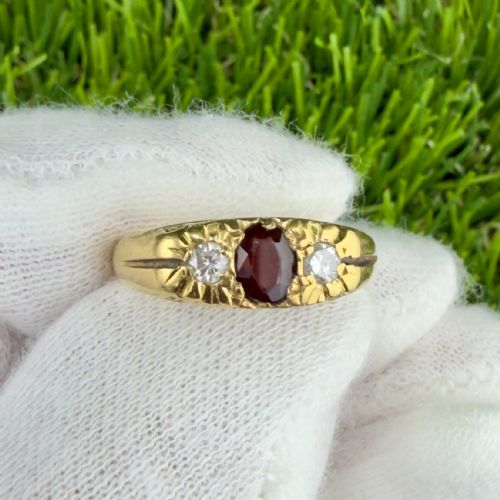
Gold Garnet Ring
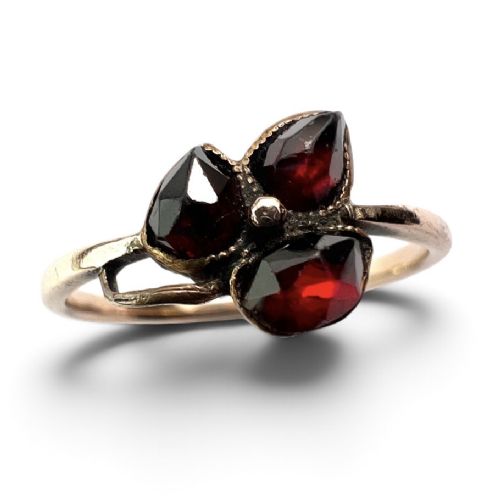
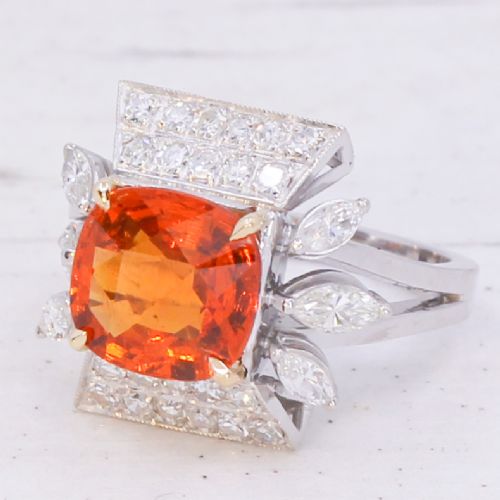
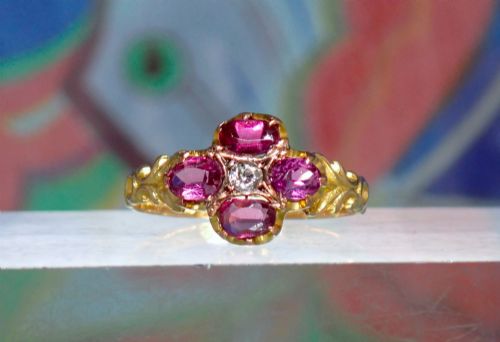
A gold garnet ring brings deep crimson warmth to the hand, offering centuries of rich stones set in yellow, white, and rose gold.
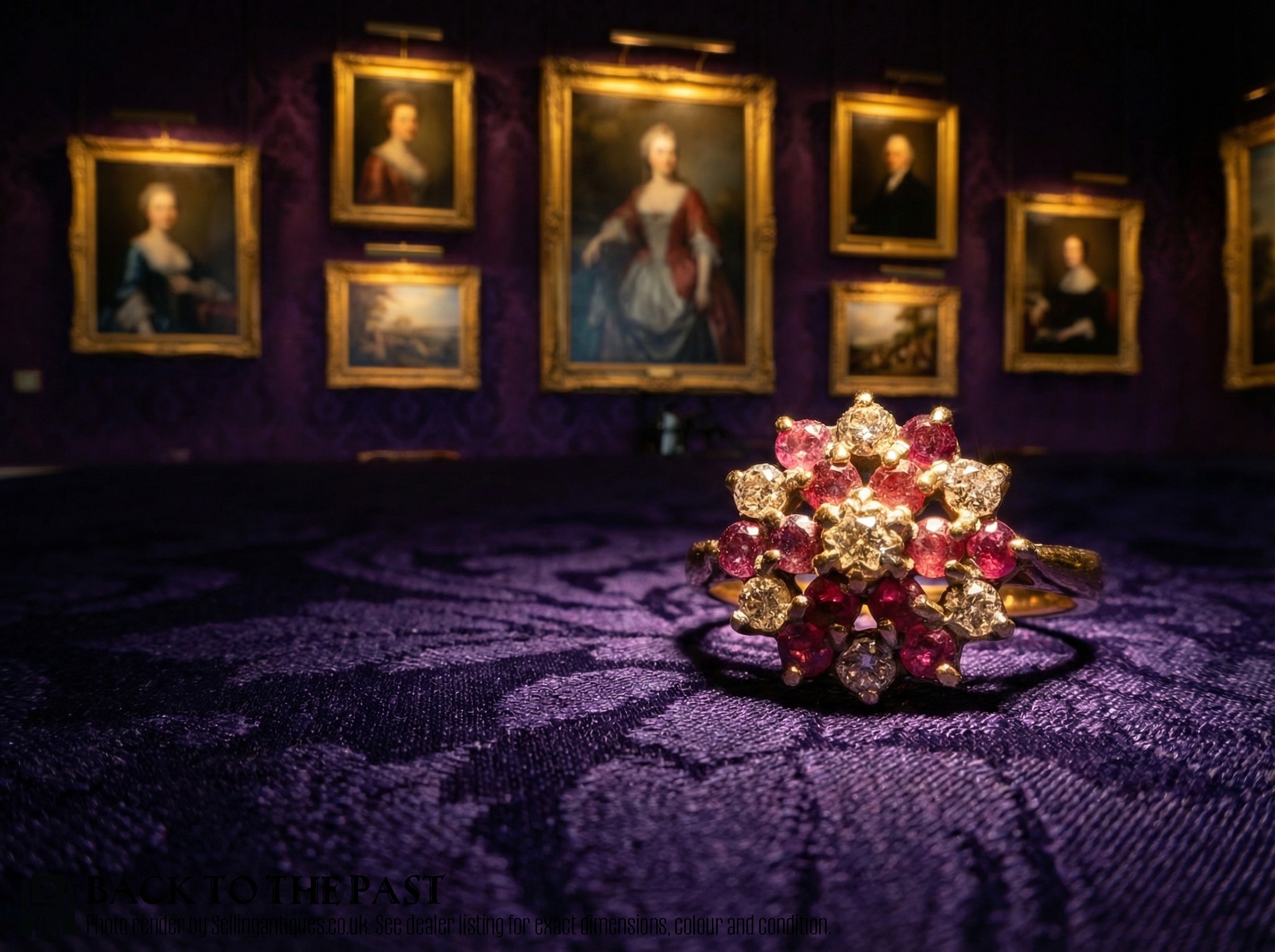
Gold Garnet Ring
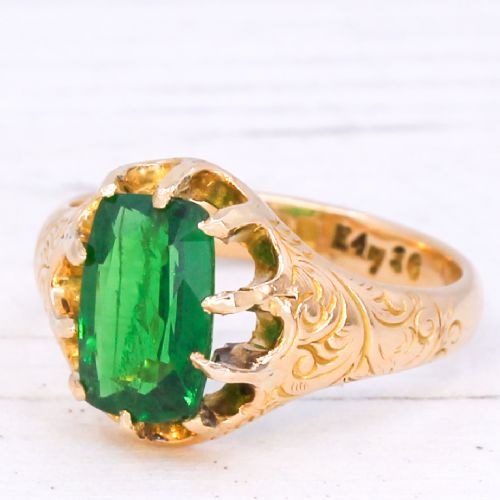
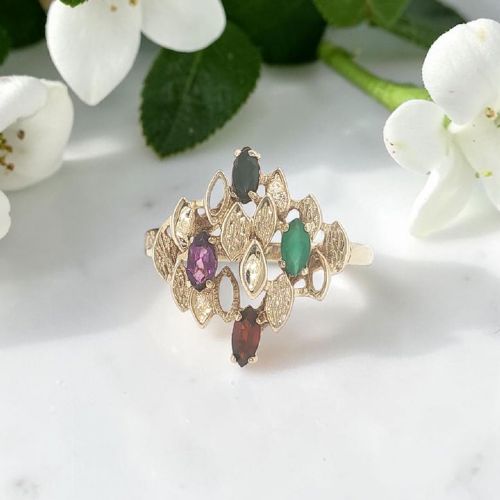
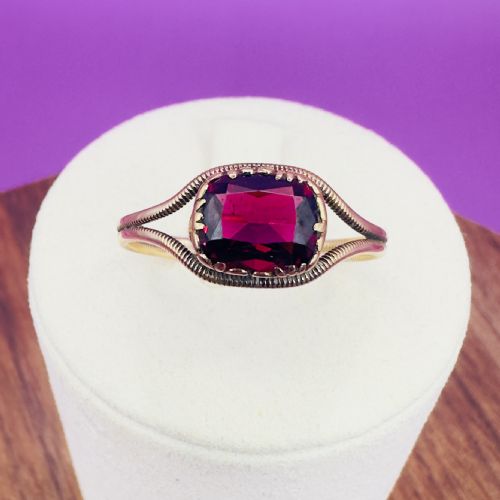
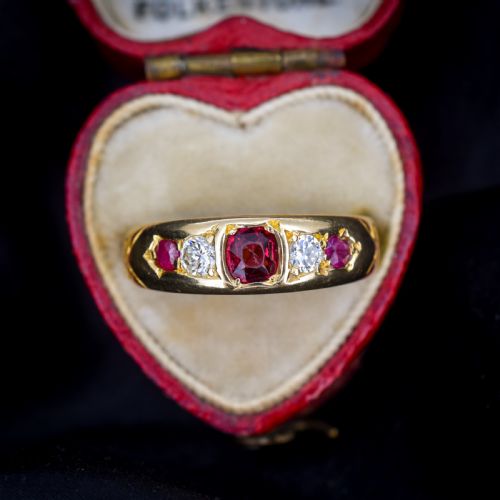
Makers utilised deep red almandine stones alongside greener varieties like demantoid and tsavorite, often pairing them with diamonds or seed pearls. These rings range from delicate solitaire and three-stone trilogy settings to substantial dress and cocktail forms.
Materials and construction
Goldsmiths worked primarily in nine carat, fifteen carat, and eighteen carat gold, moving from warmer rose and yellow tones in earlier centuries toward white gold in later decades. Stones were secured in claw, collet, or closed-back foil settings depending on the period of origin.
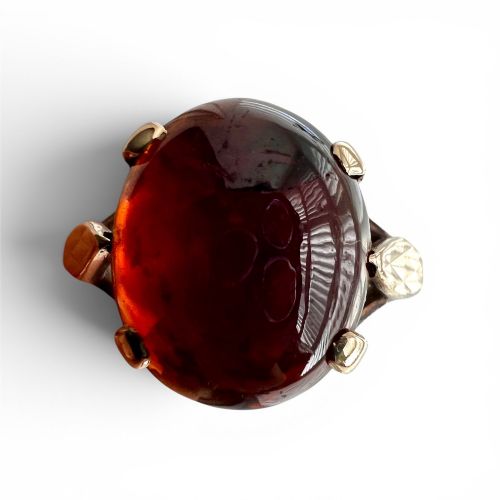
Cluster and flower designs built up concentric layers of gems around a central garnet, while cabochon cuts displayed smooth, rounded domes instead of faceted faces. Details like seed pearls and small diamonds provided textural contrast to the dominant red or green stones.
Gold Garnet Ring Retail Price Guide 2026
Typical asking prices for gold garnet ring among the pieces listed under this phrase on Sellingantiques today, from the lower quarter to the upper quarter. They describe what is for sale here now, not the wider market.
Listings feature gold garnet rings spanning the Georgian, Victorian, Edwardian, and mid-century eras, utilising yellow, white, and rose gold alongside green tsavorite and demantoid varieties.
Assessing quality and craftsmanship
The standard of a piece rests on the depth of colour and clarity within the garnet, alongside the precision of the surrounding metalwork. Early hand-cut stones and intact foil-backings in Georgian examples show distinct craftsmanship compared to mass-produced mid-century settings.
The integrity of the gold claws and the secure matching of accent stones, such as pearls or diamonds, dictate the overall durability and finish of the jewellery. Finer specimens maintain original proportions without heavy resizing marks or replacement gems.
The Gold Garnet Ring Glossary
- Almandine garnet
- A dense variety of garnet known for its deep, dark red hue. It appears frequently in Victorian cluster and solitaire rings.
- Cabochon
- A gemstone cut with a smooth, convex domed surface rather than faceted edges. This technique highlights the natural depth of opaque or richly coloured garnets.
- Old mine cut
- An early diamond cutting style characterised by a cushion shape, high crown, and large culet facet. It is commonly found alongside garnets in antique pieces.
- Seed pearl
- A very small natural or saltwater pearl used as delicate border decoration in cluster rings. They bring subtle luminescence next to dark red garnets.
Gold Garnet Ring: Frequently Asked Questions
How do I date a gold garnet ring?
Dating relies on examining the gold carat mark, the cut of the stones, and the overall mounting style. Georgian and Victorian pieces often feature closed-back settings or hand-carved shanks, whereas mid-century examples utilise brighter white gold and standardised faceted stones.
Hallmarks stamped inside the band provide official assay office symbols and date letters. Comparing these specific stamps against historical records narrows down the exact year of creation.
Are garnets durable for daily wear?
Garnets rate between six point five and seven point five on the Mohs hardness scale, making them reasonably resilient for regular use. However, antique rings with delicate claws or seed pearl accents require more careful handling to avoid damage.
Removing the ring during heavy manual tasks prevents scratching the soft gold or fracturing the stone. Proper storage away from harder gems protects the polished surface over time.
What is a cluster ring?
A cluster ring arranges a central gemstone surrounded by a geometric pattern of smaller accent stones. In antique pieces, this layout typically frames a large garnet with diamonds, pearls, or smaller garnets.
This design maximises the visual impact of the jewellery by creating a larger focal area on the finger. It remains one of the most prevalent configurations found across Victorian and Edwardian styles.
Can I resize an antique gold garnet ring?
Most gold rings can be adjusted by a skilled jeweller who can add or remove metal from the shank. The feasibility depends on the band's thickness and whether gemstones extend all the way around the finger.
Solid gold shanks from the Victorian and Edwardian eras generally tolerate resizing well. Care must be taken not to apply excessive heat near heat-sensitive stones like pearls or certain treated garnets.