
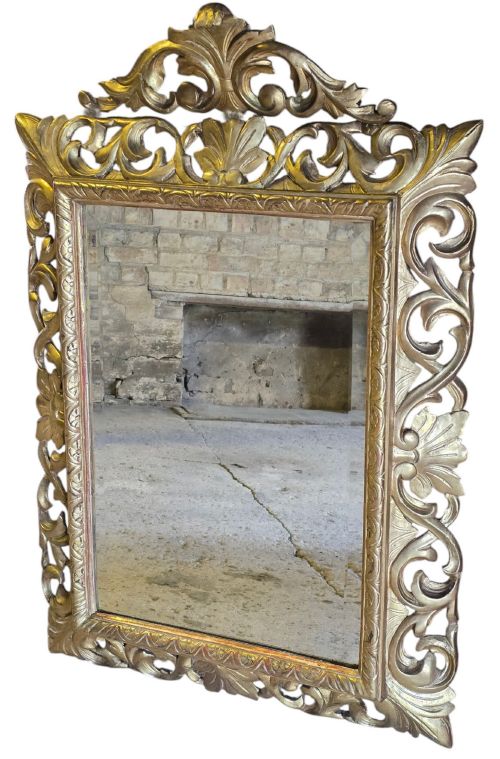
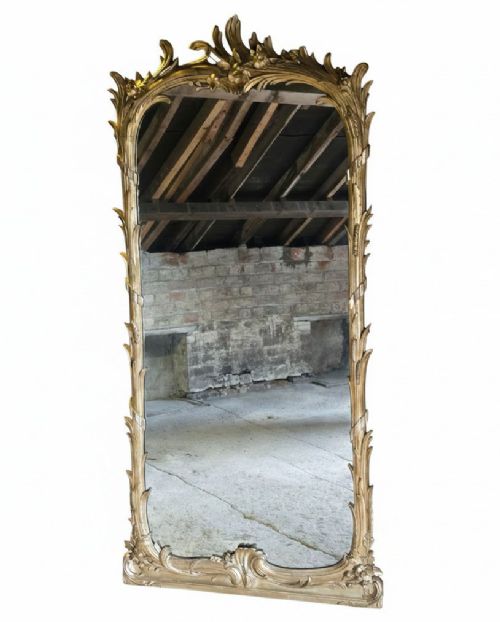


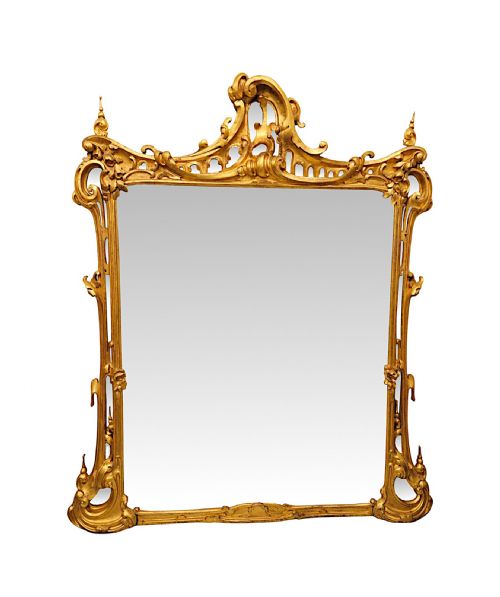
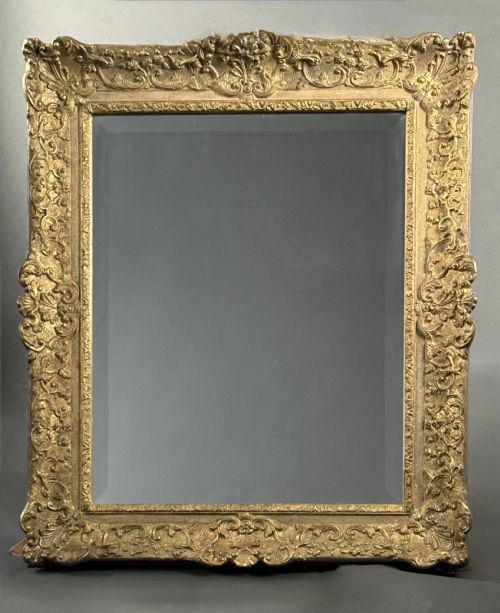
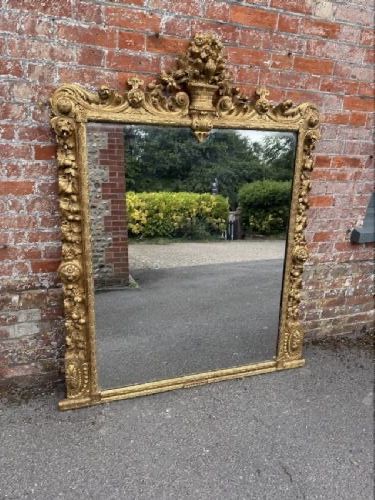
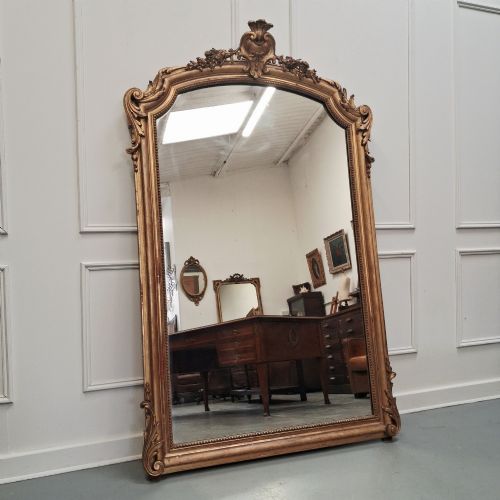
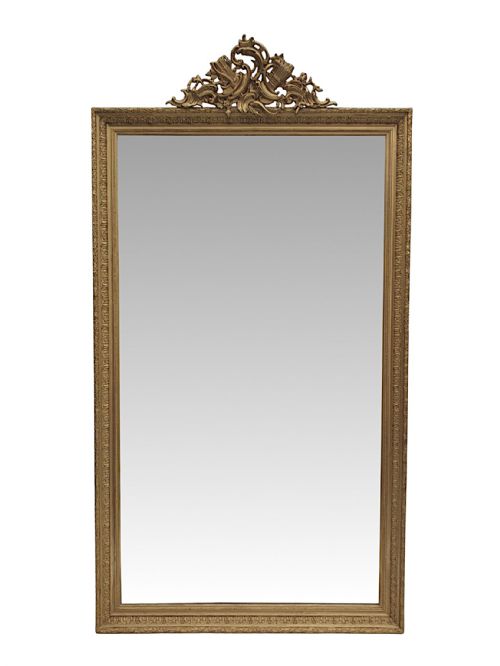
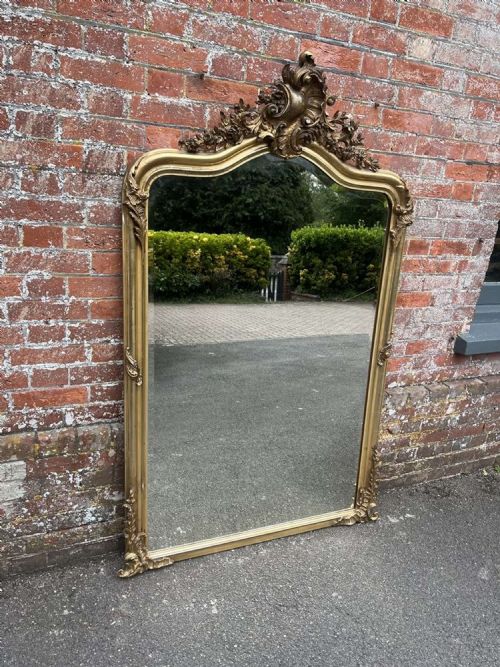
Victorian Rococo Overmantel Mirror
A victorian rococo overmantel mirror brings sweeping, scroll-heavy ornamentation and immense reflective scale directly to a fireplace wall.
Victorian Rococo Overmantel Mirror
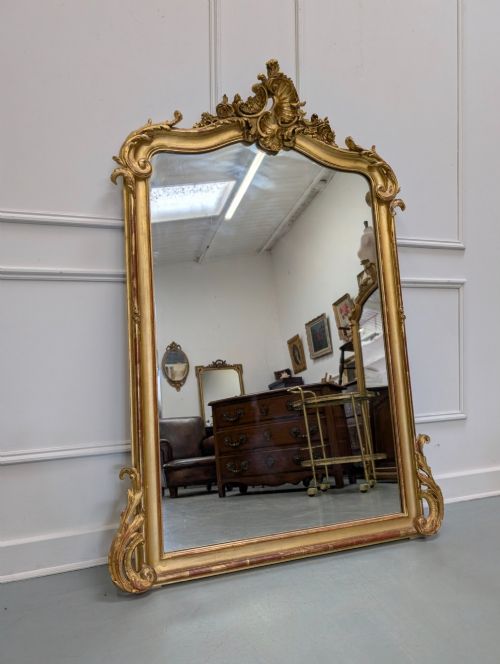
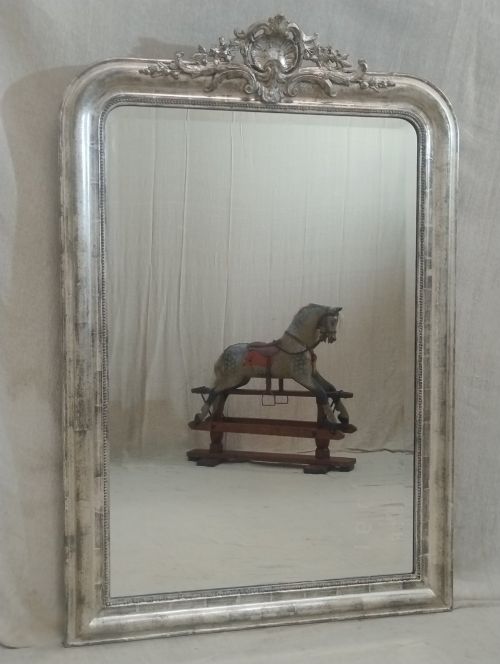
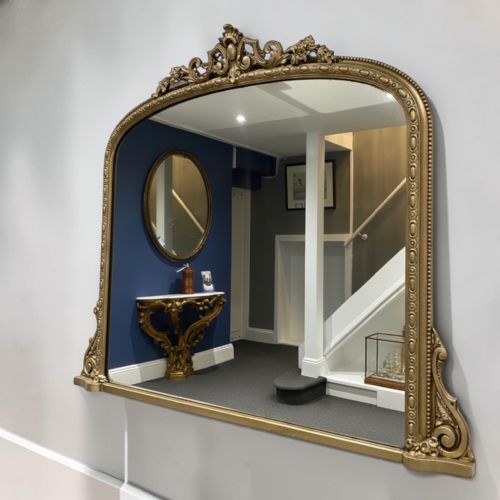
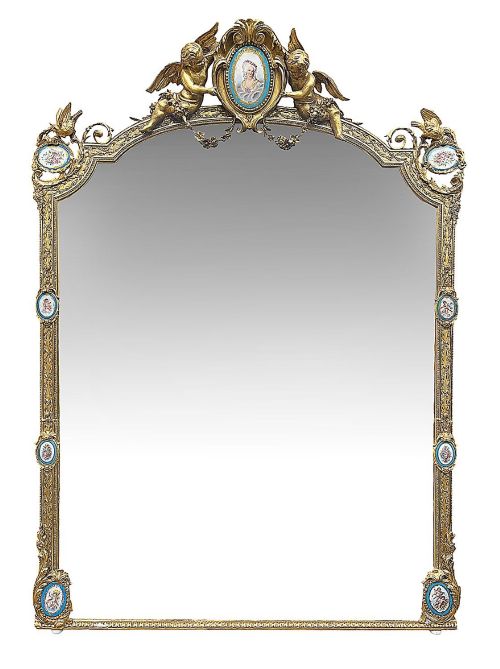
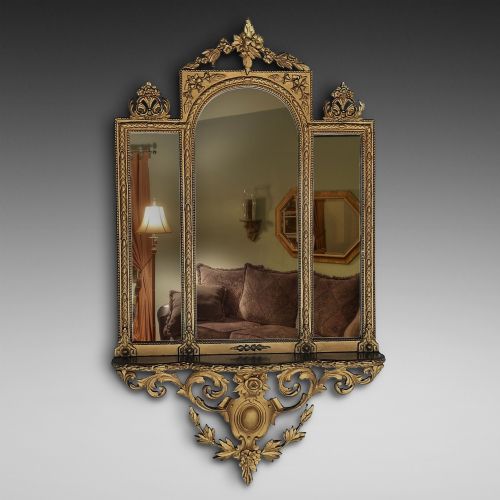
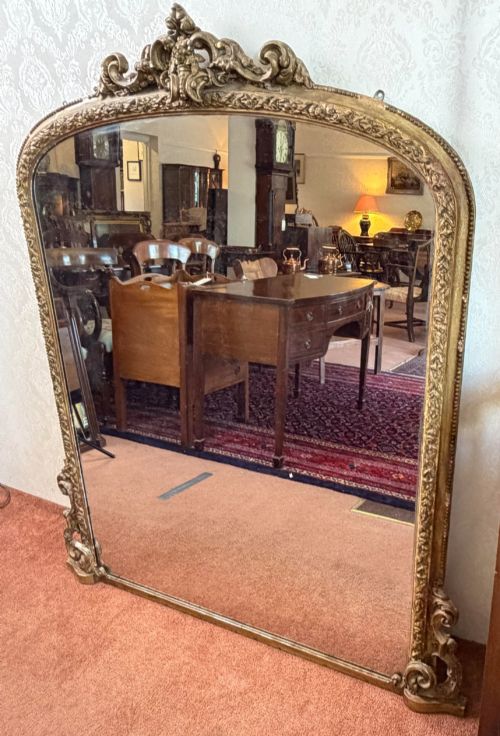
A victorian rococo overmantel mirror is designed specifically to sit above a mantelpiece, drawing upon nineteenth-century revival styles and French influences. The listings show substantial forms including arched tops, shaped frames, and central cartouches intended to dominate a principal room.
The most common versions encountered here date from the nineteenth century, spanning periods from the eighteen-fifties through the eighteen-eighties, alongside occasional Edwardian examples. These pieces frequently manifest as large giltwood statement pieces or leaner mirrors featuring elaborate crestings and triple plates.
Materials and Construction
Makers utilised carved wood, gesso, and composition applied over wooden frames to build up intricate asymmetrical scrolls, foliage, and crests. These ornamental elements were then finished with gold leaf or gilding to achieve a brilliant metallic sheen.
Mirror glass plates, sometimes bevelled, were fitted into large structural housings constructed from oak, mahogany, or pine. Plaster and giltwood details were meticulously moulded or hand-carved to support the heavy framing necessary for substantial overmantel dimensions.
Listings feature materials including giltwood, gesso, mirror glass, and composition, spanning the nineteenth century through the Edwardian period.
Assessing Craftsmanship and Depth
Quality rests in the crispness and depth of the carved woodwork and the applied gesso ornaments. Finer examples display hand-carved details with sharp relief and fluid asymmetry, whereas lesser pieces rely heavily on mass-produced composition mouldings that lack organic definition.
The structural integrity of the heavy wooden carcass and the preservation of the original gilt surface dictate the upper tier of the range. Original mirror glass plates retaining their historical foxing and depth contribute significantly to the character of a superior piece.
The Victorian Rococo Overmantel Mirror Glossary
- Overmantel
- A mirror specifically shaped and scaled to hang upon the wall directly above a fireplace mantel. These pieces often feature wide horizontal or tall arched formats.
- Gesso
- A plaster-like mixture applied to wooden frames and carved or moulded into ornamental scrollwork before gilding. It provides the smooth base necessary for fine metallic leaf application.
- Giltwood
- Timber carved and subsequently covered with thin sheets of gold leaf or metallic paint. This finish creates the characteristic bright appearance seen on nineteenth-century revival frames.
- Cartouche
- An ornamental tablet or frame resembling a rolled-up scroll, frequently placed centrally on the crest of a mirror. It serves as a focal point for asymmetrical rococo designs.
- Pier Mirror
- A tall mirror designed to hang on the wall space between two windows. In these listings, they share similar giltwood construction methods with overmantel mirrors.
- Cushion Mirror
- A frame profile where the outer moulding slopes gently inwards towards the glass plate like a pillow. This style appears in Louis Revival pieces from the mid-nineteenth century.
Victorian Rococo Overmantel Mirror: Frequently Asked Questions
Where should an overmantel mirror be hung?
These mirrors are traditionally positioned directly above a fireplace mantelpiece, anchored securely to the wall to bear the substantial weight of the timber and glass. Their generous vertical or horizontal scale allows them to anchor the room's main reception wall.
Alternatively, many large examples function effectively as leaner mirrors placed directly on the floor against a blank wall. This placement maximises their reflective capacity and emphasises the height of the carved cresting.
How do I identify a rococo revival mirror?
Rococo revival pieces are characterised by asymmetrical C-scrolls, S-scrolls, shell motifs, and naturalistic foliage rather than strict geometric symmetry. Look for shaped tops, central cartouches, and fluid, plant-like ornamentation across the frame.
Nineteenth-century makers drew heavily upon French eighteenth-century designs, incorporating carved wood and gesso to recreate this exuberant aesthetic. The presence of swept frames and giltwood finish further confirms this stylistic lineage.
What is the difference between gesso and carved wood?
Carved wood refers to the structural timber base that has been physically shaped by hand tools into decorative forms. It represents a more labour-intensive and higher-quality method of frame construction.
Gesso is a fluid mixture applied over a simpler wood base and moulded to create intricate relief details. Many nineteenth-century mirrors combine both techniques, using carved wood for the main structure and gesso for the fine surface ornamentation.
Are these mirrors suitable for modern interiors?
The grand scale and reflective glass plates of nineteenth-century overmantels make them effective tools for bouncing light into contemporary rooms. Their ornate giltwood frames provide a striking contrast against minimalist walls.
Hanging one securely above a modern fireplace or leaning it in a hallway introduces historic texture and visual weight. The diverse stylistic influences, from French Chateau to Chinese Chippendale, integrate easily into varied design schemes.