
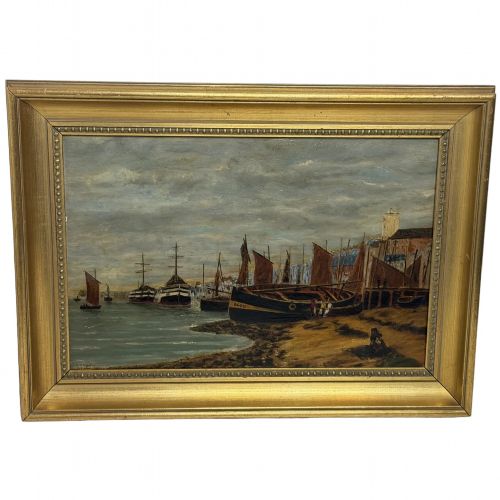
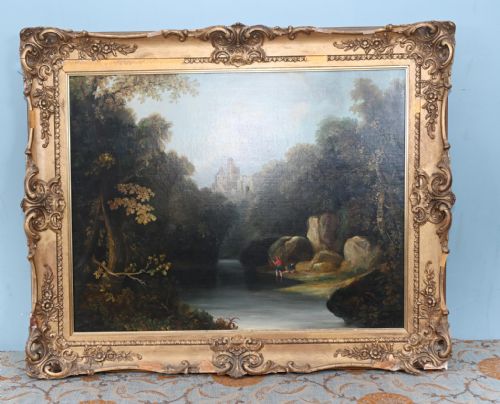

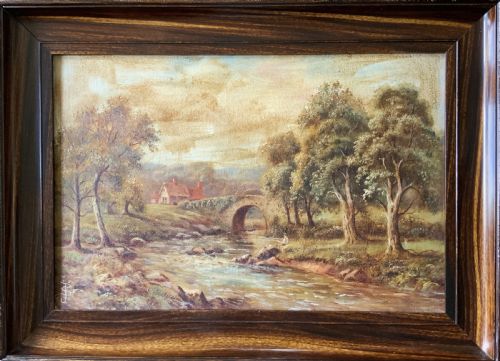


Victorian River Oil Painting
A victorian river oil painting brings nineteenth-century waterways, pastoral banks and bustling townscapes into focus through period brushwork.
Victorian River Oil Painting
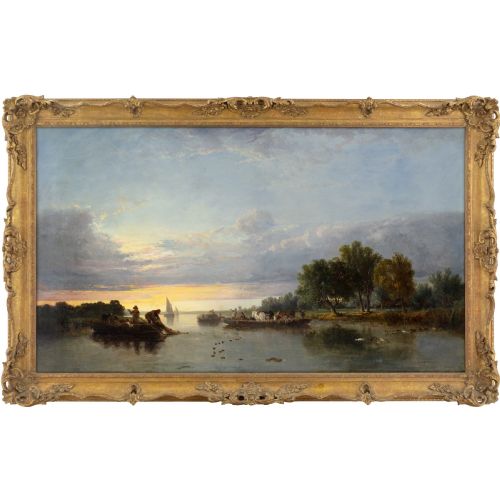
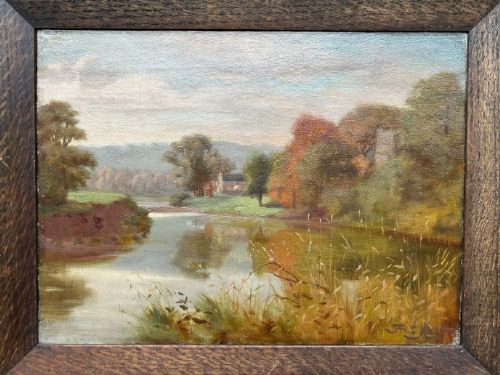
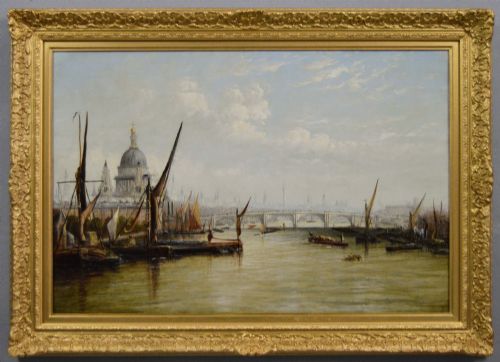
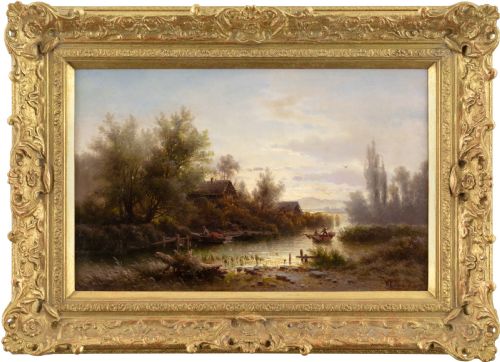
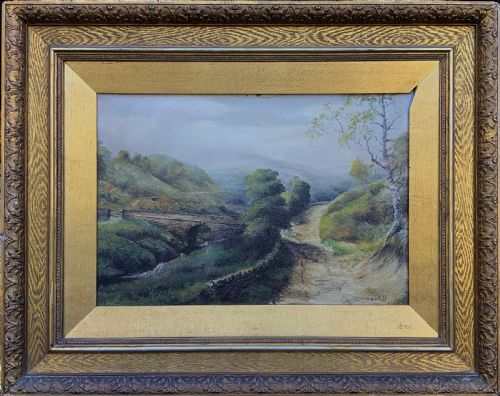
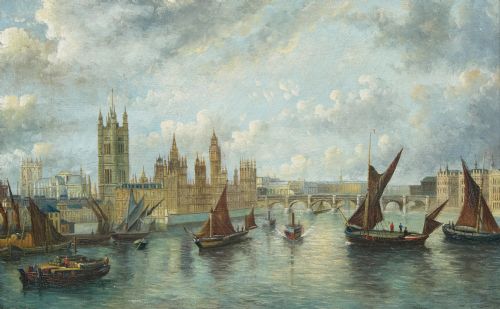
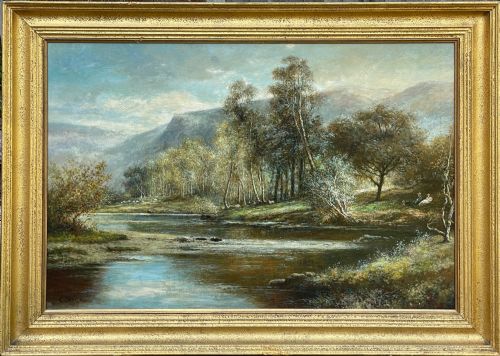
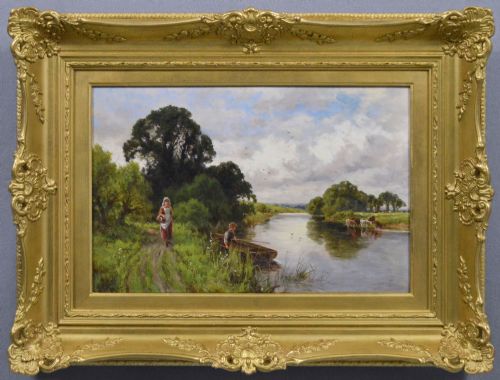
A victorian river oil painting captures nineteenth-century British and European waterways, featuring rural streams, pastoral valleys and tidal Thames scenes. These works range from intimate studies on wood panel to large canvases depicting Welsh mountain rivers and northern harbours.
Most pieces date from the mid-to-late nineteenth century, reflecting periods such as the Victorian era and the Edwardian transition. Common formats include pastoral landscapes with figures or cattle, industrial townscapes with bridges, and quiet woodland streams.
Makers recorded in the evidence include named nineteenth-century artists such as Francis Moltino, Albert Rieger, Henry H Parker and William Mellor. Many canvases arrive housed in original giltwood or plaster frames.
How They Were Made
Paintings are executed in oil paint upon woven canvas stretched over wooden frames, or occasionally on wood panels and milk glass. The pigment is built up with brushes to render water reflections, skies and foliage.
Frames are constructed from wood with gesso mouldings, finished with gold leaf or gilt paint. Elaborate carved and gilded surrounds complement the landscape subjects.
Listings feature works spanning the nineteenth century, including pieces dated to the 1850s, 1860s, 1870s, 1880s and the Edwardian era.
What Varies in Quality
Quality rests upon the skill of the brushwork in handling light on water, atmospheric depth in distant hills, and the structural integrity of the canvas and stretcher. Listed works by established Victorian Royal Academicians and noted regional painters show finer detail in figures, architecture and naturalism.
The preservation of the original surface, alongside the matching giltwood frame, influences the character of the piece. Works retaining their nineteenth-century frames provide a complete historical context.
Francis Moltino·Albert Rieger·Henry H Parker·John Ferneley Senior·Charles William Wyllie·Alexandre Le Bihan·Thomas Baker of Leamington·Alfred Augustus Glendening Jnr·George Vicat Cole·Thomas Spinks·Sidney Richard Percy·William Mellor·James Edward Grace·Julius Hare
The Victorian River Oil Painting Glossary
- Canvas
- A heavy woven fabric stretched across a wooden frame to serve as a support for oil painting. It forms the primary base for nineteenth-century landscape works.
- Gesso
- A plaster-like mixture applied to wooden frames before gilding to create smooth surfaces for decorative mouldings. It provides the foundation for ornate Victorian frame details.
- Giltwood
- Wood carved and coated with gold leaf or metallic paint to create a lustrous golden finish. These frames frequently accompany period paintings.
- Tondo
- A circular work of art, whether a painting or relief. Listed examples include mid-nineteenth-century landscape pairs on board.
- Pastoral
- A genre of art depicting country life, rural scenery, rivers and livestock in an idealized or peaceful manner. Such scenes dominate Victorian landscape painting.
Victorian River Oil Painting: Frequently Asked Questions
Were these paintings always framed in gold?
Many nineteenth-century landscapes were housed in giltwood, gesso or plaster frames designed to complement the tones of the oil paint. Original frames often display patination consistent with age.
Later framings do occur when owners updated the presentation of the artwork over the decades.
Where were these river scenes painted?
Artists worked along major waterways including the River Thames in London, the River Tyne, the River Conwy in North Wales, and various Scottish streams. Many depict specific locations noted in the titles.
Painters travelled extensively through rural valleys and coastal harbours to capture naturalistic light and topography.
How should I care for an oil painting on canvas?
Keep the canvas away from direct sunlight, high humidity and dramatic temperature swings to prevent paint cracking or warping. Dust the surface gently with a soft, dry brush.
Avoid touching the painted surface directly, and ensure the reverse remains protected from moisture.