




19th Century River Stream Art
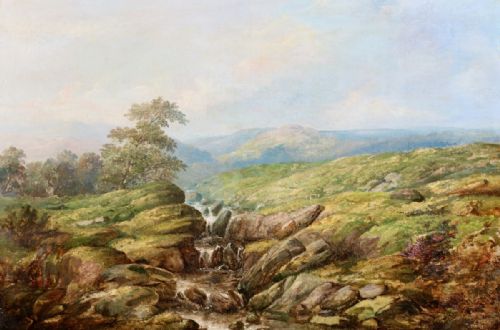
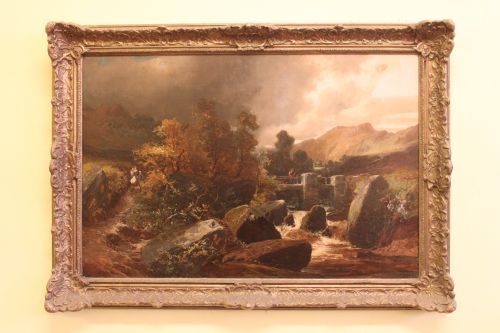
These 19th century river stream art pieces capture rural waterways in oil paint, canvas, wood and giltwood frames.
19th Century River Stream Art
When you search for 19th century river stream art, you encounter oil paintings, watercolours and wall art depicting British countryside scenes, Scottish landscapes and pastoral settings. The examples on this page span the Victorian era, the nineteenth century and the early twentieth century.
The most common format you meet is an oil painting on canvas or wood panel, often housed in a giltwood or gesso frame. These works focus on waterways, streams, rivers and pastoral landscapes painted by British artists.
How these artworks were made
Artists applied oil paint onto stretched canvas, wooden panels or paper boards, utilising traditional brushes and pigments to capture natural light on water. Many pieces utilise oil on canvas, while others employ oil on wood panel.
Frames play a structural role in presentation, constructed from wood and finished with gesso and gilt. These surrounds provide both protection and visual definition for the paintings within.
What varies in quality
The degree of realism and atmospheric depth distinguishes one painting from another, particularly in the rendering of flowing water, foliage and animal life such as cattle by a stream. Finer works display confident brushwork and a balanced composition that draws the eye naturally along the riverbank.
The physical preservation of the canvas, board and giltwood frame also influences the overall standard. Original frames with intact gesso and gilding hold greater visual harmony with the paintings they enclose.
William George Tennick·Frederick Richard Lee·William Sidney Cooper·George F. Wetherbee·Benjamin Callow·Yeend King·William Greaves·Clarence Roe
The 19th Century River Stream Art Glossary
- Oil paint
- A slow-drying paint made by combining pigment particles with a drying oil, typically linseed oil. This medium allows for rich colour blending and textured application on canvas.
- Giltwood
- Wood that has been treated with a thin layer of gold leaf or gold powder. It frequently appears on traditional nineteenth-century picture frames.
- Gesso
- A paint mixture consisting of a binder mixed with chalk, gypsum or pigment. It serves as a prepared surface for painting or as a base for gilding on wooden frames.
- Wood panel
- A flat piece of timber used as a rigid support for painting instead of stretched canvas. Artists often utilised panels for smaller landscape works.
- Pastoral
- A genre of art depicting rural life, shepherds, cattle and tranquil countryside scenery. These subjects reflect a romanticised view of the natural world.
19th Century River Stream Art: Frequently Asked Questions
What periods do these artworks cover?
The listings encompass Victorian works, nineteenth-century pieces and early twentieth-century examples up to nineteen-forty. Most originate from British schools and artists working during the Victorian and Edwardian eras.
Dates are established through signatures, dates inscribed on the works, stylistic evidence and framing methods typical of those decades.
Are these paintings on canvas or wood?
Artists used multiple supports, predominantly oil paint on stretched canvas or wooden panels, alongside watercolours on paper. Some boards and panels were specifically prepared for landscape painting in the field.
Each support type offers a different texture and weight, influencing how the paint has survived over the decades.
How should I frame and display them?
Many pieces retain their original giltwood or gesso frames, which complement the traditional subject matter of rivers and streams. Displaying them away from direct sunlight and excessive moisture protects both the paint surface and the wooden frame.
Ensure wall fixings are secure, as antique frames incorporating gesso and wood can carry a substantial weight.
Who are the notable artists represented?
The selection includes signed works by British painters such as Frederick Richard Lee, William Sidney Cooper, George F. Wetherbee, Benjamin Callow, Yeend King, William Greaves and Clarence Roe. These painters specialised in landscape realism, pastoral scenes and river views.
Signatures, inscriptions and historical records help attribute these watercolours and oil paintings to their original creators.