



Antique Valley Landscape Painting
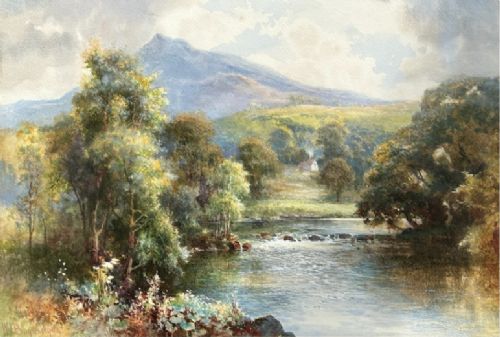
These antique valley landscape painting examples capture river bends, steep hillsides and quiet waters from the nineteenth and early twentieth centuries.
Antique Valley Landscape Painting
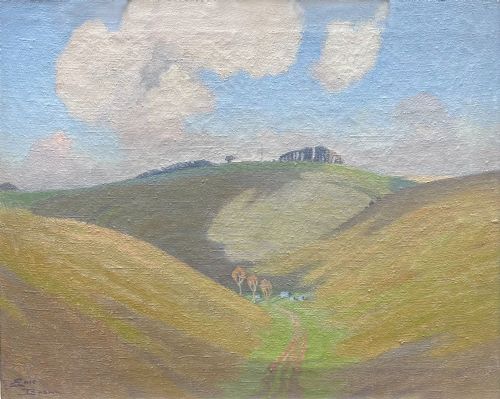
An antique valley landscape painting depicts rural river systems, mountain gorges and pastoral basins across Britain and continental Europe. The selection relies heavily upon nineteenth-century and early twentieth-century works, spanning Victorian naturalism through to early British impressionism.
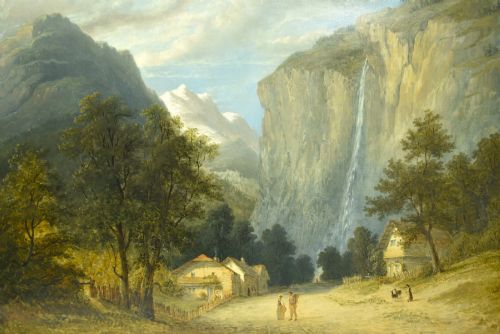
Most pieces focus on specific named regions, including Welsh river basins, Yorkshire dales and Swiss alpine valleys. Painters recorded these locations in both oil on canvas and delicate watercolour on paper, often framing the topography with wooded glens and winding rivers.
Materials and methods
Artists worked primarily in oil paint or watercolour, applying pigments to stretched canvas, prepared wood panels, heavy card or paper. Oil paintings often utilised thick brushwork to render the texture of northern fells and wooded valleys.
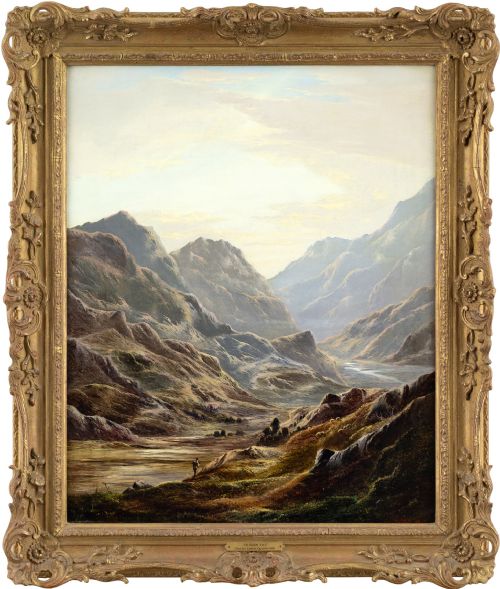
Watercolour pieces demonstrate controlled washes and fine line work to capture the hazy distance of Welsh and Cumbrian river views. Many surviving examples retain their original gilt wood frames, which complement the tonal range of the landscape.
Geese occasionally wander into river scenes, oblivious to the artistic commotion unfolding on the bank.
Distinctions in quality
The strength of a composition rests on the artist's handling of atmospheric perspective and natural light, particularly in the rendering of evening sun or valley mist. Superior works manage depth through precise colour modulation rather than heavy outlines.
The preservation of the pigment surface and the condition of the paper or canvas dictate the visual impact of each piece. Signed works by established regional painters demonstrate confident brushwork that distinguishes them from anonymous studio output.
Alfred Young Nutt·William Joseph Boyes·Charles Leslie·William George Tennick·Hubert Wellington·Reginald Grange Brundrit·Clarence Henry Roe·William Mellor·J Barclay·John Syer·Harold Lawes·Fred Stead·Stephen Enoch Hogley·Herbert Royle·George Melvin Rennie·Edmond Defonte·Henry Sykes·Frederick Richard Lee·Ernest Higgins Rigg·Cornelius Pearson·Charles Branwhite·Owen Bowen·Lester Sutcliffe·John J Hamer·Willie Stephenson
The Antique Valley Landscape Painting Glossary
- Watercolour
- A paint consisting of water-soluble pigment applied to paper. It allows for transparent washes that capture changing light over river valleys.
- Plein air
- Painting outdoors directly from nature to capture transient light effects. This French term became central to late nineteenth-century landscape practice.
- British Impressionism
- A painting style adopting loose brushwork and vibrant light representation. It emerged in the late nineteenth century as artists moved away from strict academic finish.
- Oil on panel
- A painting executed on a wooden board rather than stretched fabric. Panels provided a rigid and stable support for detailed landscape studies.
Antique Valley Landscape Painting: Frequently Asked Questions
Where were these valley scenes usually painted?
Painters concentrated heavily on upland regions and river valleys across Wales, Yorkshire, Scotland and the English Lake District. Continental locations such as Swiss alpine valleys and French riverbanks also appear frequently.
Artists favoured places with dramatic topography, where steep hills, rivers and woodlands created natural compositional boundaries.
How should I hang an oil painting?
Select a wall away from direct sunlight, heating vents and damp areas to protect both the canvas and the original wooden frame. Stable indoor humidity prevents the paint surface and gesso from cracking.
Ensure the wall fixings match the weight of the frame, particularly for large nineteenth-century oils on canvas.
What is the difference between oil and watercolour landscapes?
Oil paintings use suspended pigments in a drying oil, allowing for thick impasto texture and deep tonal layering on canvas or wood panel. Watercolours use gum-based pigments on paper, creating luminous and transparent effects.
Watercolours require protective glazing under glass, whereas traditional oil paintings on canvas remain unglazed.
How do I identify a Victorian landscape?
Victorian landscapes often display detailed naturalism, earthy palettes and careful observation of regional topography. Signatures, exhibition labels on the reverse and framing styles help confirm the period.
Subject matter frequently centres on identifiable British rivers, mountains and rural homesteads popular during the nineteenth century.