


Victorian Repousse Platter
A victorian repousse platter brings heavy metalwork relief into a room, offering rich historical decoration for a wall or sideboard.
Victorian Repousse Platter
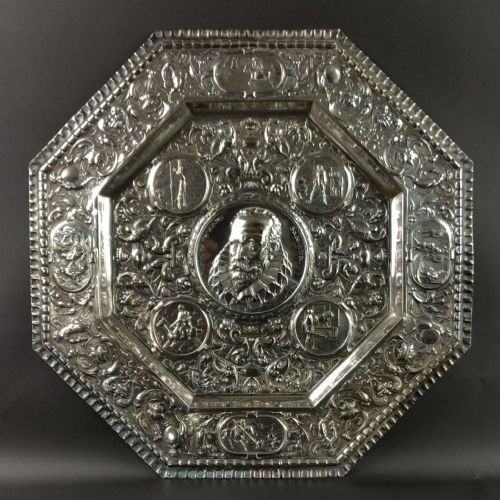
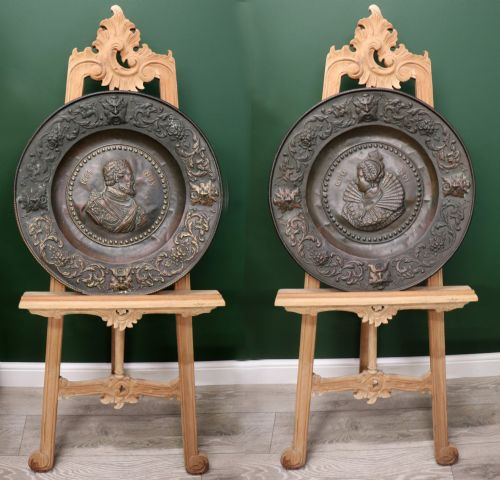
A victorian repousse platter encompasses large wall chargers, display plaques, and serving dishes created primarily during the nineteenth century. These items display raised metallic decoration hammered from the reverse side to form figures, portraits, and scenes.
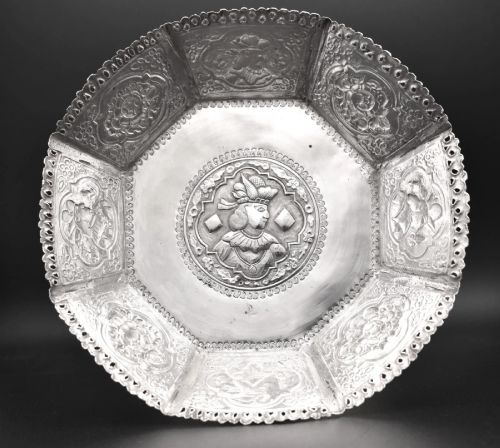
The pieces on this page span several stylistic revivals, including Gothic, Renaissance, and Classical, alongside Anglo-Indian and Indo-Persian designs. Formats range from circular brass trays and copper wall plaques to solid silver gilt sideboard dishes.
Buyers will most frequently encounter nineteenth-century copper, brass, and silver-plated examples decorated with mythological figures, historic monarchs, and intricate floral motifs. Many function equally well as wall-hanging display pieces or tabletop serving vessels.
How they were made
Makers utilised malleable metals such as copper, brass, and bronze, working the material primarily through hammering and chasing from the reverse to create raised repousse relief. Some items incorporate electrotyping techniques to deposit metal onto a form, while others feature hand-pierced detailing alongside the hammered surfaces.
Finishes vary from silver plating and silver gilt to unpolished copper and bronze, occasionally accented with chased or engraved lines. Certain workshops applied dark patination to highlight the dimensional depth of figural battle scenes and portraits.
One copper plaque captures Diana the Huntress, proving that even 19th-century metal bashers appreciated a good goddess with a bow.
What varies in quality
Material substance and weight also divide the range, with heavy solid silver or thick bronze and copper items offering greater rigidity than thin silver-plated sheets. Furthermore, the intricacy of secondary hand-piercing or chased borders determines the overall refinement of the metalwork.
Elkington and Co
The Victorian Repousse Platter Glossary
- Repoussé
- A metalworking technique where the artisan hammers the design from the reverse side to form a raised relief on the front. This method allows for considerable sculptural depth in decorative metal objects.
- Charger
- A large ornamental or serving plate, typically larger than a standard dinner plate. These were frequently hung on walls or displayed upright on sideboards during the Victorian period.
- Electrotype
- A metal object produced by electrodepositing silver or copper onto a mould. This technique gained popularity in the nineteenth century for replicating intricate historical metalwork.
- Tazza
- A shallow bowl or cup elevated on a stem and foot. They appear in nineteenth-century metalwork often decorated with repoussé or pierced ornamentation.
- Gilt
- Covered with a thin layer of gold, silver, or gold-coloured metal. Solid silver gilt items combine a precious metal base with a rich gold surface coating.
Victorian Repousse Platter: Frequently Asked Questions
How were victorian repousse platters displayed?
Many of these metal platters and chargers were designed specifically for wall display, featuring integrated hanging loops or rims suited for plate hangers. On sideboards, large chargers stood upright against the back panel to showcase their figural repousse scenes.
Heavier serving dishes and tazzas also functioned on dining tables for presentation purposes rather than everyday use. Their rich surface decoration made them focal points in Victorian interior schemes.
What metals are most common?
Copper and brass form the majority of the available wall chargers and trays, often displaying warm natural or patinated metallic tones. Silver-plated bronze and standard silver plate also appear frequently across nineteenth-century examples.
Less common materials include solid silver gilt and electrotype metal, which allowed makers to achieve complex historical reproductions. Each metal responds differently to cleaning, so understanding the base material is essential for care.
How do I distinguish between different design styles?
Gothic and Renaissance revival pieces often feature historical portraits of monarchs or literary figures like Miguel de Cervantes within heavy architectural borders. Classical and Grand Tour items lean towards mythological scenes featuring deities such as Neptune or Diana.
Anglo-Indian and Indo-Persian pieces distinguish themselves through dense, intricate floral patterns and hand-pierced borders. Recognising these motifs helps place a platter within its specific nineteenth-century design context.
Are these platters suitable for serving food?
Most of these items function primarily as decorative art objects, wall chargers, or display pieces rather than practical tableware. Silver-plated or solid silver serving dishes were historically used for presentation, but older patinated copper and brass are best kept for display.
Using unsealed copper or brass for acidic foods can react with the metal surface. Preserving the original nineteenth-century finish usually takes precedence over modern utility.