


Victorian Religious Art
Victorian religious art brings devotion into the interior through paintings, textiles and plaques that capture nineteenth-century faith.
Victorian Religious Art
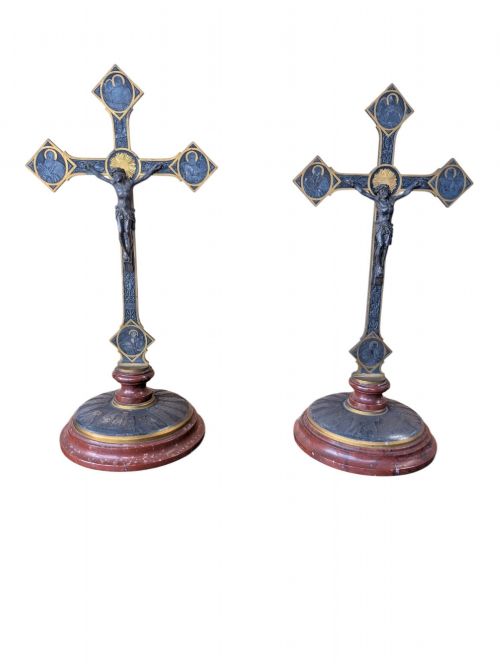
Victorian religious art encompasses wall art, oil paintings, wall plaques, textile art, miniature portraits, crucifixes and framed prints from the nineteenth century. These objects reflect personal devotion and ecclesiastical decoration across the period.
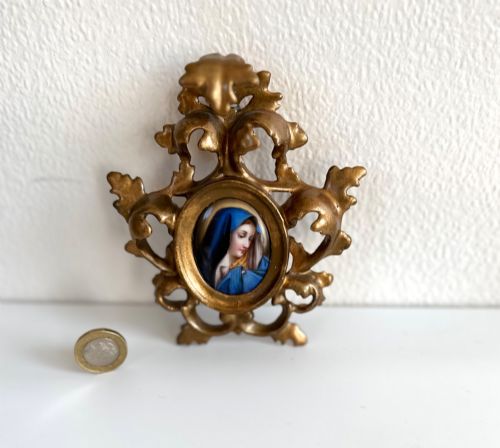
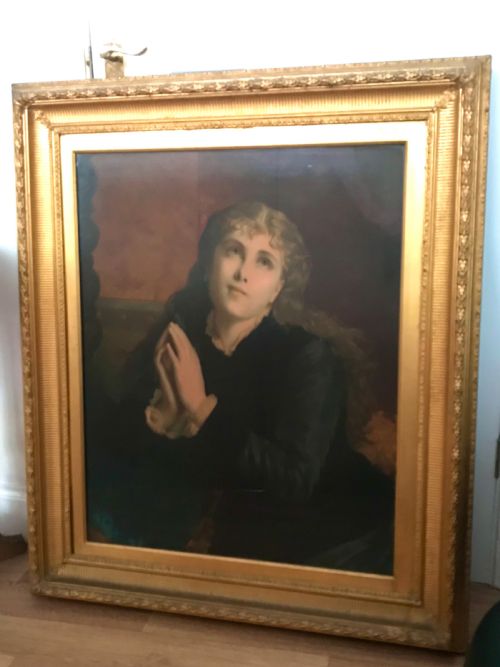
The selections include oil paintings of biblical narratives, needlepoint pictures of saints, engraved paper signs and porcelain plaques after Renaissance masters. Buyers encounter diverse European Continental works alongside English pieces.
Revival styles heavily shape these items, with Gothic Revival, Victorian Gothic Revival and Victorian Rococo Revival appearing frequently alongside Art Nouveau and Edwardian examples.
Materials and Technique
Makers utilised traditional supports such as wood, oak, canvas, paper and glass for paintings and prints. Oil on canvas, pen and ink, and hand-painted porcelain deliver depth to religious subjects.
Textile works employ needlepoint and tapestry techniques, while other pieces incorporate brass, mother-of-pearl, horn and silver relief. Painted pine and illuminated designs reflect the craftsmanship of domestic and chapel pieces.
Styles range from Georgian and Victorian Gothic Revival through to Art Nouveau and Edwardian periods.
Quality and Execution
The distinction between ordinary devotional pieces and finer works lies in the execution of the painting, engraving or needlework. Masterly brushwork on oil paintings and careful detail in hand-painted porcelain separate superior examples from standard prints.
Materials also dictate the tier of a piece, where solid oak framing, mother-of-pearl inlay or silver relief elevate the status of wall plaques and signs above basic paper items.
The Victorian Religious Art Glossary
- Oleograph
- A colour lithograph textured to imitate an oil painting. This technique became popular in the nineteenth century for reproducing religious portraits.
- Needlepoint
- A type of canvas work embroidery stitched with yarn. Antique religious pictures used this method to render figures of saints and biblical scenes.
- Gothic Revival
- An architectural and decorative style drawing inspiration from medieval forms. It heavily influences Victorian ecclesiastical art and architecture.
- Globe de Mariage
- A French glass dome used to display marriage mementos and religious keepsakes. These decorative domes protect delicate interior arrangements.
- Porcelain Plaque
- A flat ceramic panel painted with enamel colours and fired. Continental examples often copied Renaissance masterpieces.
Victorian Religious Art: Frequently Asked Questions
What is a tin tabernacle text?
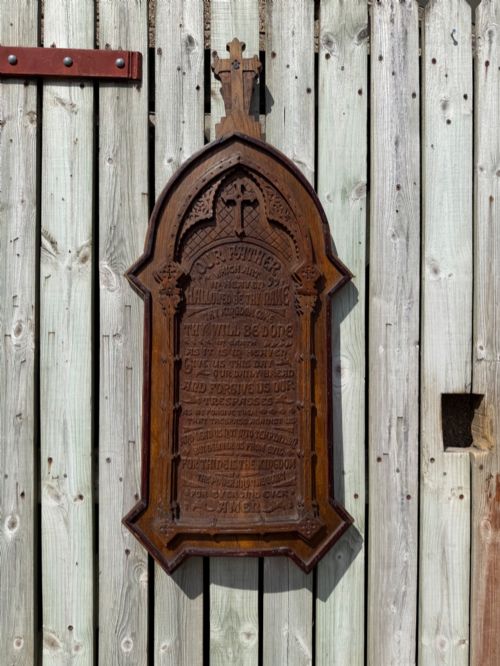
Tin tabernacles were prefabricated corrugated iron churches erected during the Victorian era. Wall-mounting illuminated religious texts were often hung inside these corrugated iron buildings to guide the congregation.
These painted texts bring a direct connection to nineteenth-century chapel interiors and mission halls. They serve as striking wall hanging pieces due to their scale and lettering.
How are devotional oil paintings dated?
Dating relies on stylistic markers, canvas types and framing methods characteristic of the nineteenth century. Many works carry specific dates or reflect the revival aesthetics popular between the Georgian and Edwardian periods.
Artists sometimes signed their work or painted after established masters like Guido Renis or Raphael. Comparing the subject matter to known nineteenth-century prints helps narrow down the decade.
Where were these devotional pieces displayed?
Victorian religious art hung in both private homes and ecclesiastical spaces such as churches and chapel mission rooms. Smaller items like miniature portraits and framed prayers found places in domestic parlours for daily reflection.
Larger oil paintings and painted windows served communal devotional functions. Today, collectors display them on walls to anchor historical interior schemes.
What subjects are most common?
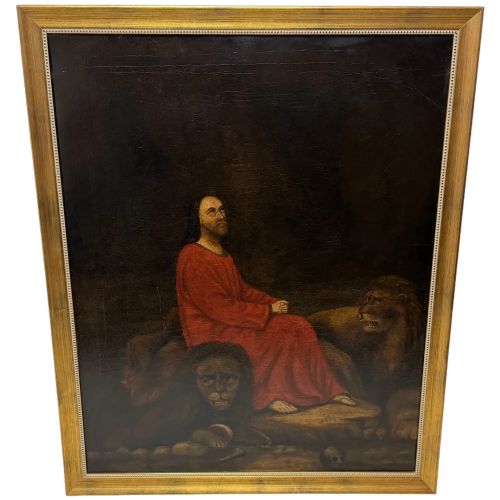
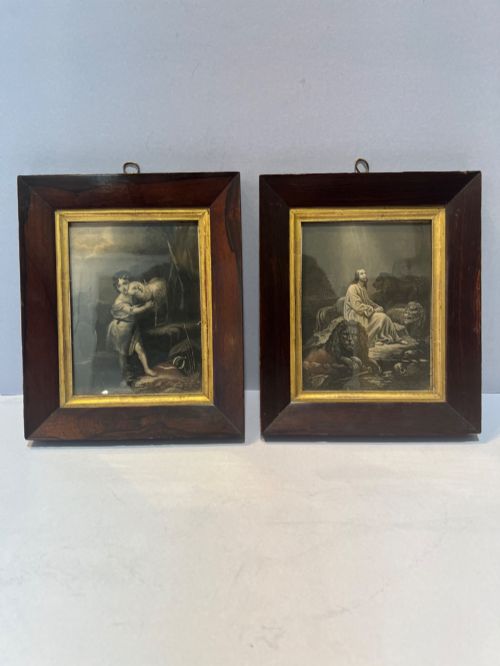
Common subjects include biblical narratives such as Daniel in the lions' den, alongside portraits of Christ, the Madonna and various saints. Devotional phrases, scripture signs and the Lord's Prayer also appear frequently.
Depictions of the Penitent Mary Magdalene and the Veil of Veronica reflect deep Victorian interest in solemn religious iconography. These themes mirror the moral and spiritual concerns of the century.