




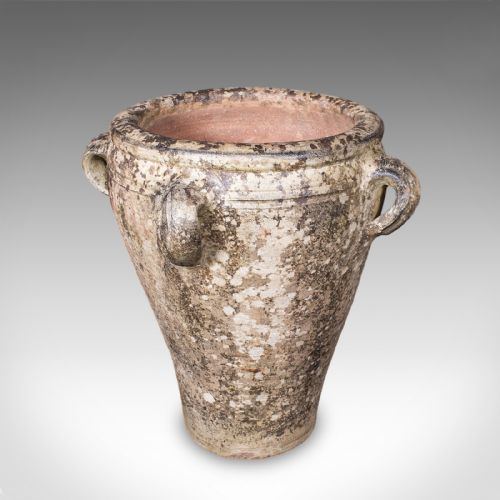
Victorian Pottery
Victorian pottery brings tangible narrative and rich colour to interiors through figures, majolica, and transferware produced across the nineteenth century.
Victorian Pottery
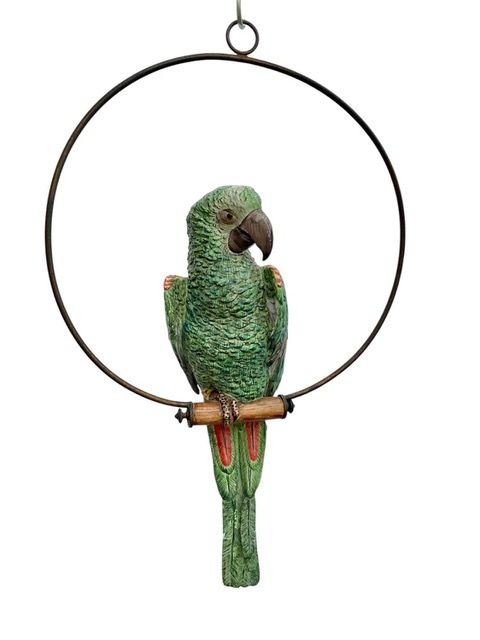
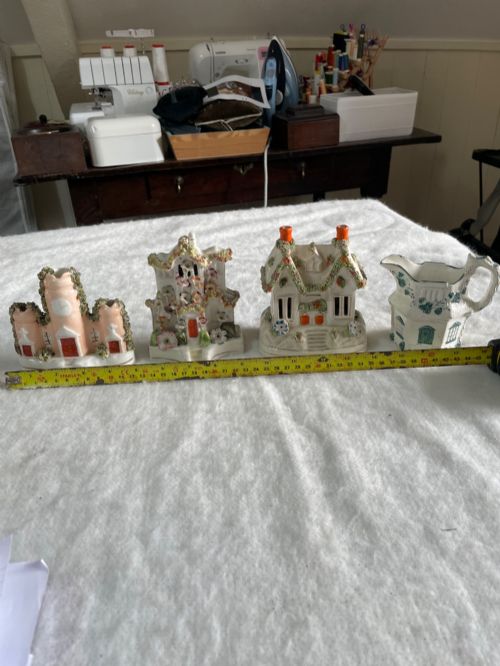
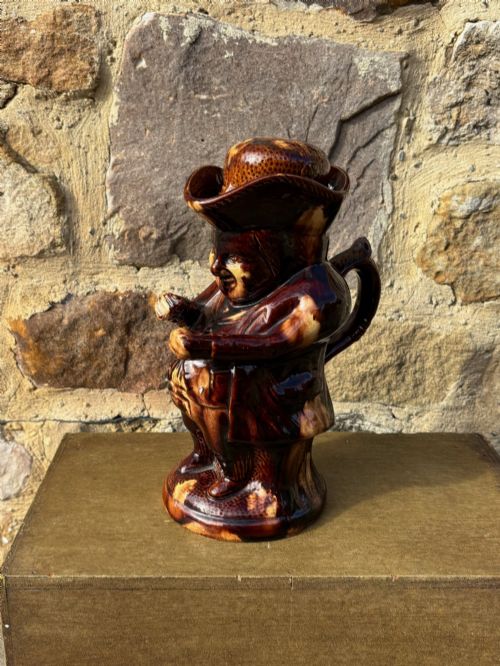
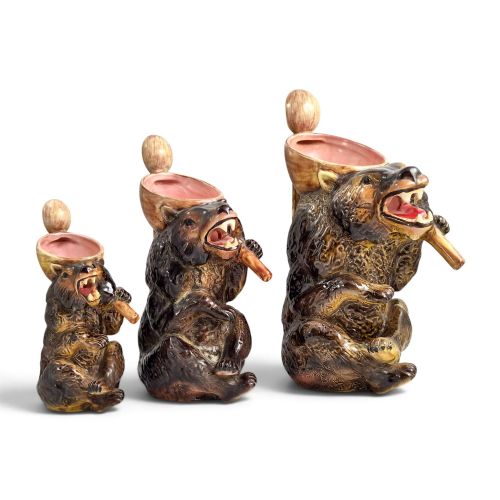
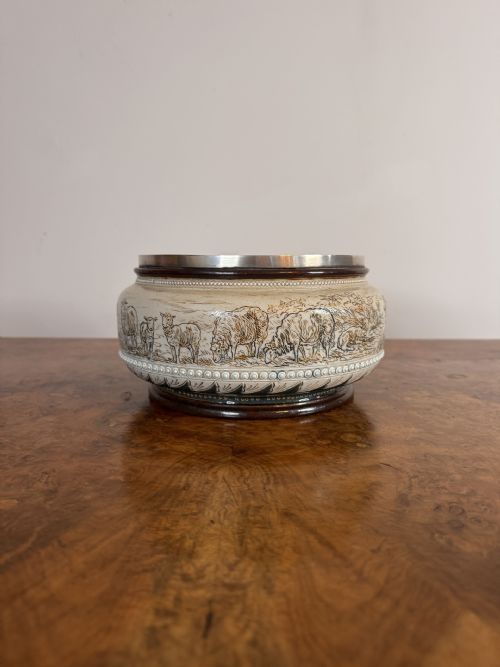
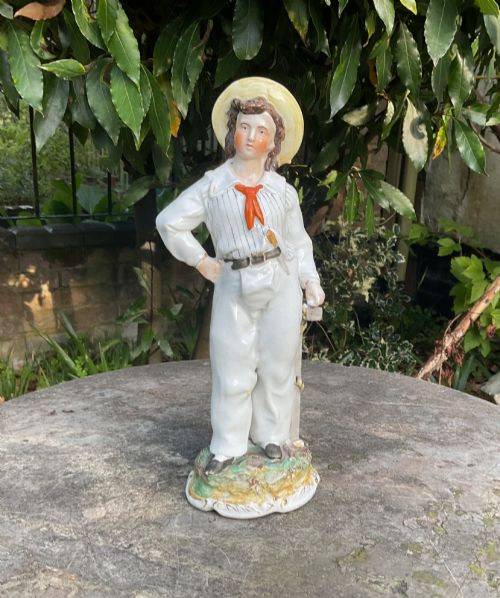
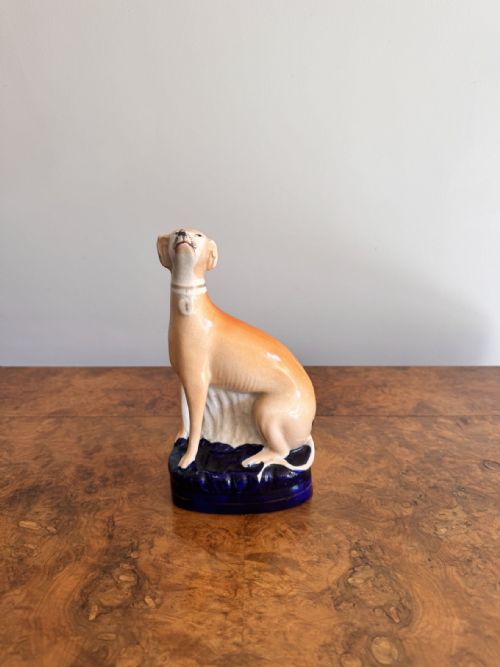
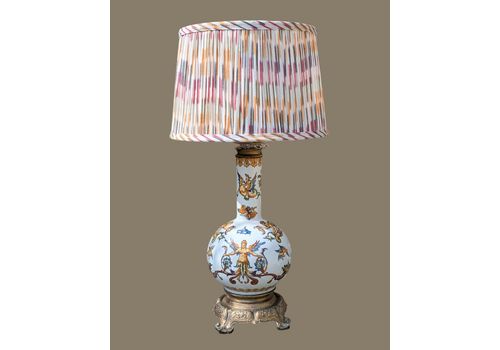
Victorian pottery encompasses functional vessels, garden ornaments, and decorative figures produced across the nineteenth century. The selection leans heavily towards Staffordshire animal figures, transferware jugs, majolica jardinières, and earthenware vases originating from British potteries.
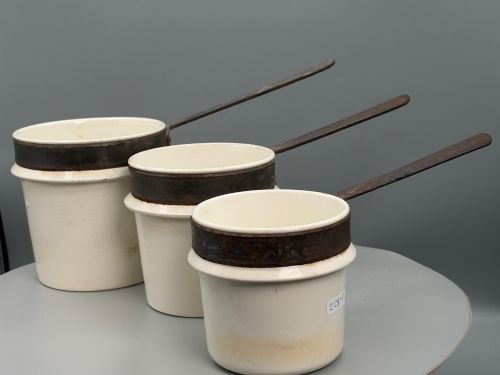
Buyers encounter utilitarian wares like ironstone cheese domes and salt-glazed flagons alongside ornamental spill vases, portrait figures, and architectural garden seats. These objects capture the changing domestic tastes of the period, moving from utilitarian kitchenware to highly decorative parlour pieces.
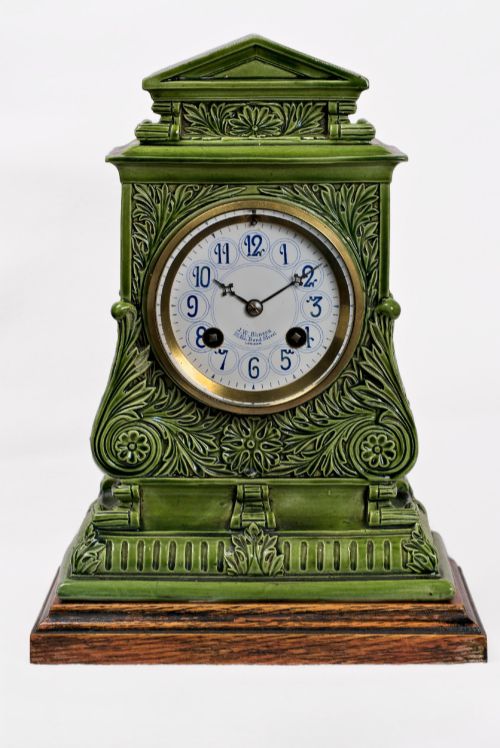
The objects stem predominantly from major British ceramic hubs, including Staffordshire factories, Yorkshire potteries, and artistic potteries associated with the Aesthetic Movement. Pieces range from mid-century moulded animal pairs to late nineteenth-century faience and art pottery.
Materials and Technique
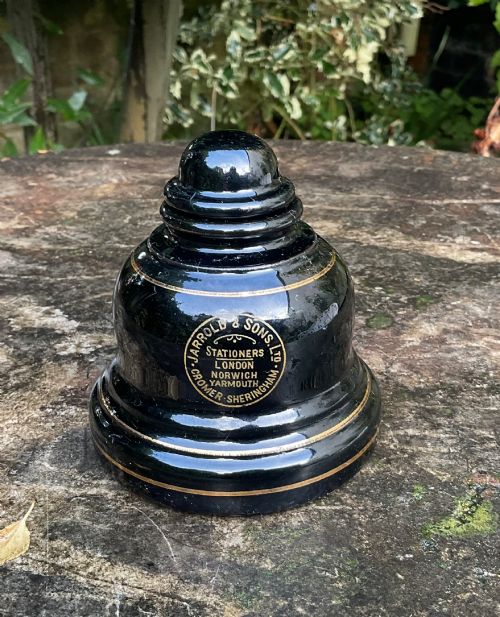
Makers utilised earthenware, ironstone, and heavy stoneware as bodies, applying lead glazes, enamel colours, and occasional gold leaf for surface decoration. Stoneware pieces relied on salt-glazing techniques to produce durable, textured finishes suitable for flagons and filtration fountains.
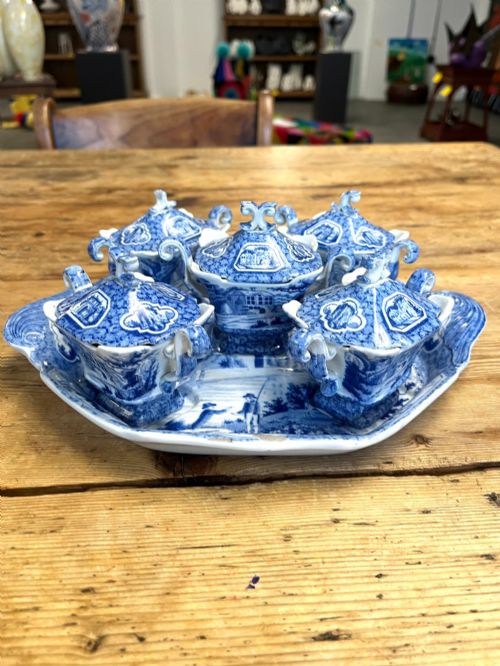
Moulding and slip-casting shaped the figures, animals, and architectural jardinieres, allowing workshops to produce consistent forms rapidly. Hand-painting and transfer printing subsequently applied the detailed polychrome patterns, maritime scenes, and botanical motifs seen across the inventory.
Victorian Pottery Retail Price Guide 2026
Typical asking prices for victorian pottery among the pieces listed under this phrase on Sellingantiques today, from the lower quarter to the upper quarter. They describe what is for sale here now, not the wider market.
Listings feature periods from the early nineteenth century through the Edwardian era, including pieces dated explicitly to the 1840s, 1860s, and 1890s.
Evaluating Execution
Weight and balance dictate the integrity of utilitarian forms such as ironstone cheese domes, wash basins, and heavy stoneware flagons. Finer art pottery relies on the intentional richness of the faience glaze and the ambition of the aesthetic movement forms.
Royal Doulton·Thomas Parr factory·Burmantofts Faience·William Smith and Co·Doulton Lambeth
The Victorian Pottery Glossary
- Staffordshire
- A major English pottery-producing region responsible for the vast output of nineteenth-century dogs, figures, and spill vases. It designates both the geographic origin and a distinct genre of domestic ceramic folk art.
- Majolica
- A colourful lead-glazed earthenware characterised by vibrant botanical and animal relief modeling. Popularised in the mid-nineteenth century by factories such as Minton and Holdcroft.
- Ironstone
- A dense, durable type of earthenware patented in the nineteenth century for heavy-use domestic items. It bridges the gap between traditional earthenware and true porcelain.
- Transferware
- Pottery decorated by applying a printed paper design from an engraved copper plate onto the ceramic body. This technique allowed intricate pictorial scenes, such as Chinoiserie landscapes, to be reproduced consistently.
- Faience
- Tin-glazed earthenware, often associated with late nineteenth-century art pottery and aesthetic movement decorative objects. It provides an opaque canvas for rich, painterly surface decoration.
Victorian Pottery: Frequently Asked Questions
How do I identify genuine nineteenth-century Staffordshire dogs?
Authentic nineteenth-century Staffordshire figures typically feature hand-painted details, crazing within the glaze, and unglazed flat backs with vent holes. The modeling is often slightly rustic, reflecting the slip-casting and hand-finishing methods of the period.
Later reproductions often feel heavier, show uniform modern casting, and lack the soft patina accumulated over decades of display. Examining the base and the wear patterns helps confirm period origin.
How were majolica pieces used in Victorian homes?
Majolica served primarily as decorative and horticultural furnishings within the Victorian parlour, conservatory, or hallway. Items like jardinières, garden seats, and umbrella stands brought vivid colour and natural motifs indoors.
These brightly glazed pieces were designed to withstand moisture from plants while displaying sophisticated sculptural relief work inspired by nature.
How should I care for antique ceramic glaze and luster?
Antique ceramics require gentle maintenance, utilising only a soft, dry cloth to remove dust from the surface. Avoid using chemical cleaners, abrasive sponges, or immersion in water, which can damage delicate overglaze enamels, lustre finishes, and historic repairs.
Displaying pieces away from direct sunlight and dramatic temperature fluctuations protects the glaze from fading and further crazing over time.