


Victorian Pottery Dog Figures
Victorian pottery dog figures are the mantle ornaments of the nineteenth century, modelled as spaniels, greyhounds, poodles, and terriers to populate the domestic hearth.
Victorian Pottery Dog Figures
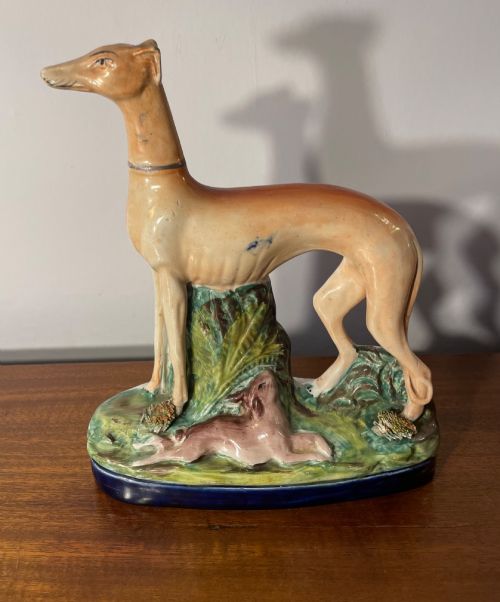
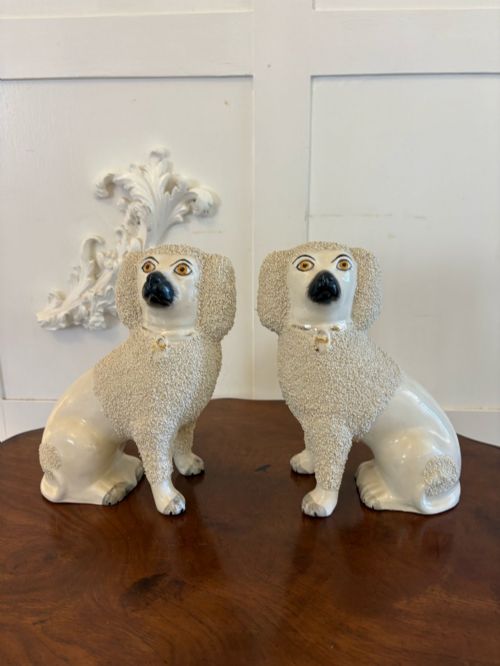
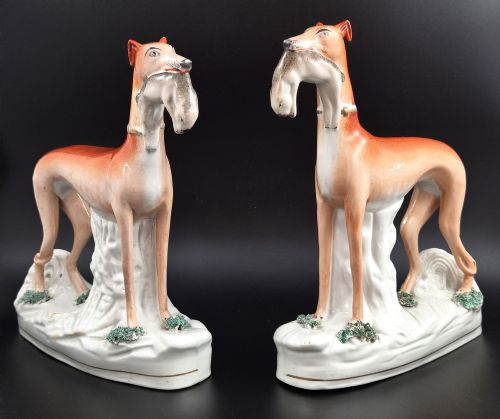
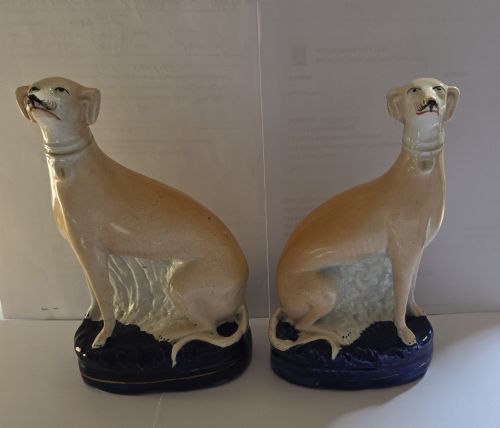
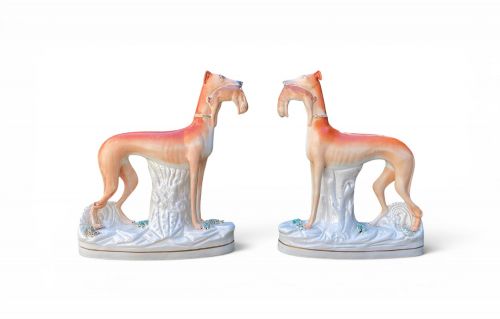
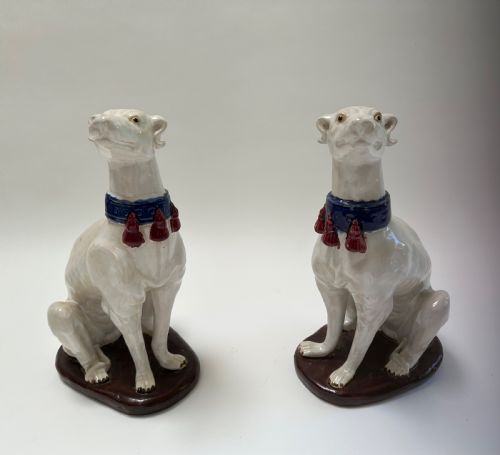
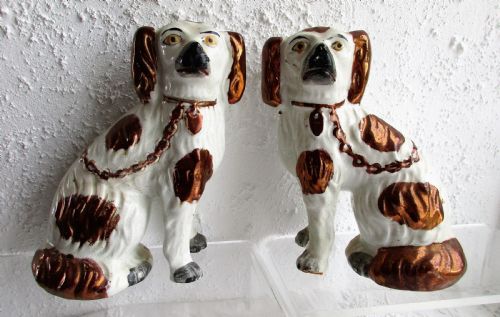
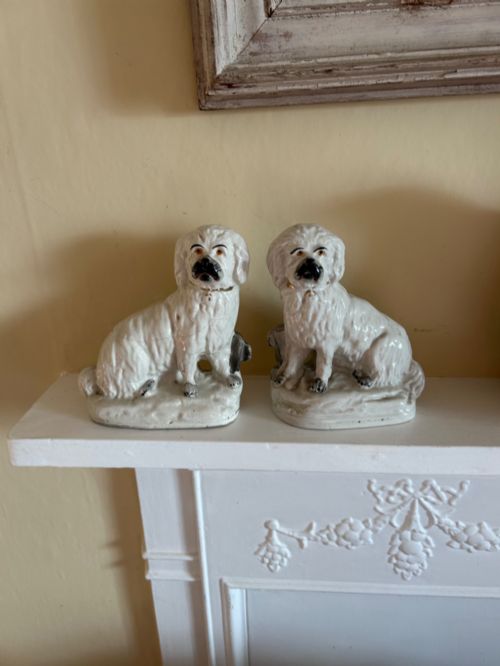
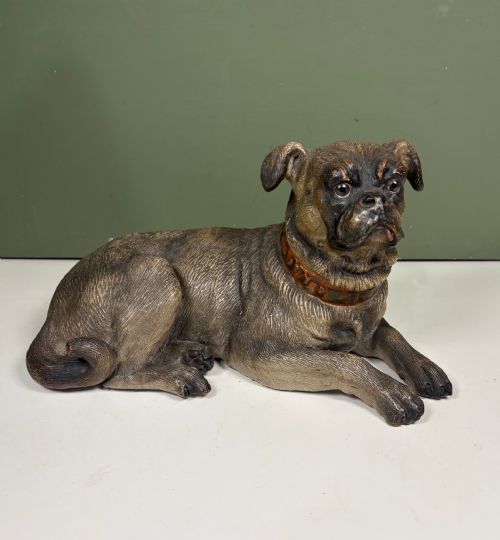
Victorian pottery dog figures comprise domestic animal ornaments produced across the nineteenth century, spanning spaniels, poodles, greyhounds, pugs, and terriers. These pieces frequently appear in matched pairs intended to sit facing each other upon a mantelpiece, though single figures, inkwells, money boxes, and quill holders also occur.
Most examples originate from Staffordshire potteries and adopt styles ranging from robust Victorian country pottery to refined Italian majolica and glazed earthenware. They record the period's fondness for domestic pets and sporting hounds, depicted either seated at attention or engaged with prey such hares.
Makers shaped these ornaments as decorative figurines, figure groups, and functional desk accessories, capturing specific breeds like Maltese terriers, Dalmatians, and King Charles spaniels. The output extends from Georgian precedents up to the turn of the twentieth century.
What Varies in Quality
The sophistication of the glaze and the complexity of the form dictate distinction, with utilitarian items like money boxes or inkwells demonstrating greater sculptural ambition than standard mantel ornaments. Clean firing with minimal kiln distortion distinguishes the best output of the potteries.
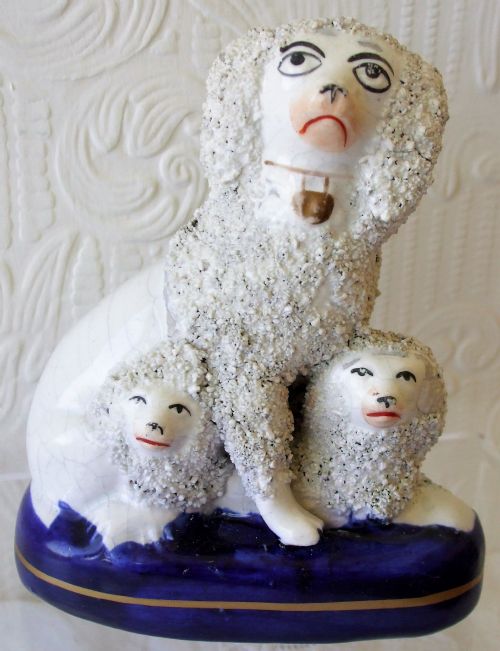
Some poodles wear serious expressions while carrying painted game in their mouths, bringing an earnest charm to nineteenth-century mantelpieces.
Thomas Parr·Wooley
The Victorian Pottery Dog Figures Glossary
- Comforter spaniels
- Staffordshire spaniels modelled as seated pairs, traditionally placed on mantelpieces to watch over the household. These figures typically feature copper lustre patches and gilded chains.
- Confetti dogs
- Poodle figures decorated with applied ceramic fragments or sand to simulate textured fur. This technique creates a distinct three-dimensional fleece effect across the body.
- Quill holder
- A desk accessory incorporating a modelled dog figure with a hollow base or tray designed to hold writing feathers. These functional pieces combine utilitarian purpose with decorative modelling.
- Majolica
- Pottery covered with an opaque tin glaze and painted with metallic oxide colours. This technique produces vibrant hues on earthenware bodies.
- Gravelware
- Ceramic pieces surfaced with small granules or crushed stone embedded in the glaze. The finish provides a rough texture imitating natural animal coats.
Victorian Pottery Dog Figures: Frequently Asked Questions
Why are Victorian pottery dog figures found in pairs?
Makers designed these ornaments to sit symmetrically at either end of a fireplace mantelpiece, facing inward toward the hearth.
This paired arrangement reflects domestic display conventions of the nineteenth century, where symmetry governed the styling of living spaces.
How were Staffordshire dog figures used in the home?
They served primarily as decorative mantel ornaments placed in parlours and drawing rooms to display domestic taste and affection for animals.
Certain variants fulfilled practical roles as inkwells, quill holders, or money boxes while maintaining their decorative function on desks and sideboards.
What materials make up antique pottery dog figures?
The pieces consist predominantly of earthenware or stoneware bodies shaped through moulding techniques and finished with lead glaze.
Surface decoration typically involves enamel paint, copper lustre, and occasional gold leaf highlights applied over the glaze.