



Victorian Staffordshire Whippet Pair
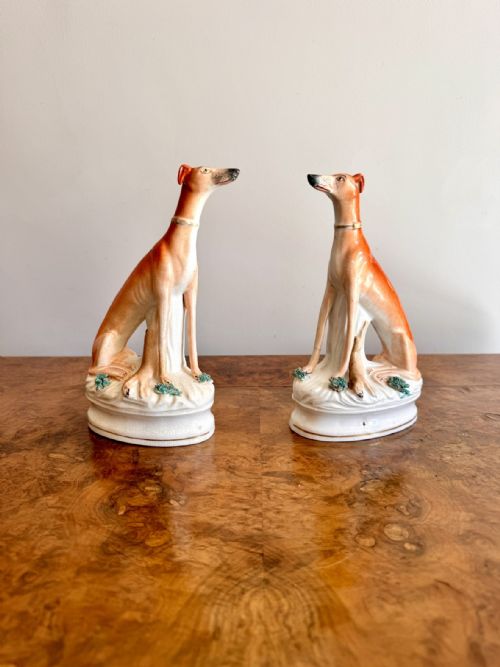
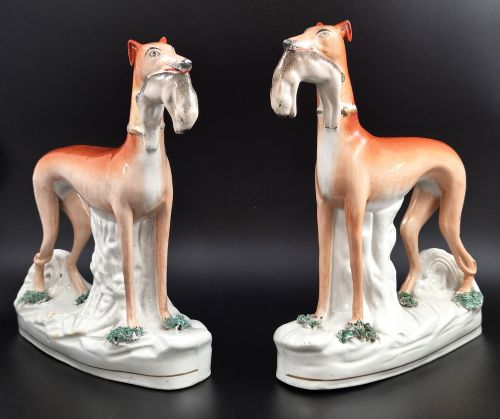
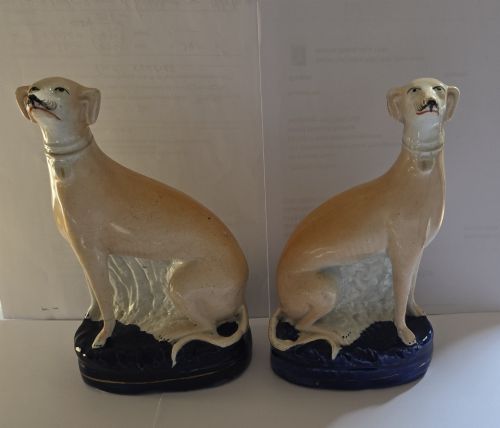
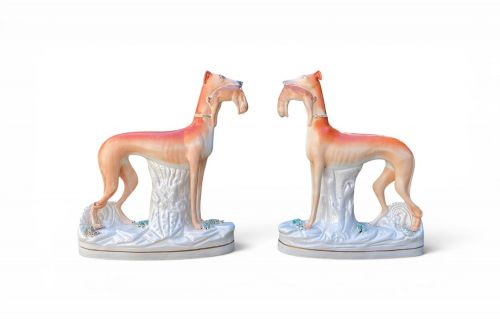
These Victorian Staffordshire whippet pair figures are pottery ornaments modelled as dogs that bring nineteenth-century domestic charm to any mantelpiece.
Victorian Staffordshire Whippet Pair
A Victorian Staffordshire whippet pair consists of pottery figurines modelled as seated or recumbent dogs, often accompanied by hares. These decorative ornaments appear across the nineteenth century, including specific periods like eighteen fifty, eighteen sixty, eighteen seventy, and eighteen eighty.
Buyers encounter matched pairs formed as decorative figurines, pottery figurines, and desk accessories. Many examples function as quill holders and inkwells, combining sculptural display with practical utility on a nineteenth-century desk.
How they were made
Potters shaped these figures from earthenware and glazed ceramic, applying lead glaze and cobalt glaze to seal the body. Kiln firing prepared the pottery base for subsequent surface decoration.
Victorian Staffordshire Whippet Pair Retail Price Guide 2026
Typical asking prices for victorian staffordshire whippet pair among the pieces listed under this phrase on Sellingantiques today, from the lower quarter to the upper quarter. They describe what is for sale here now, not the wider market.
Some nineteenth-century dogs sit patiently with hares while others double as inkwells, proving that even a Victorian hound had to earn its keep.
What varies in quality
The precision of the modelling and hand-painted enamel work separates finer figures from simpler production. Subtle facial expressions and careful delineation of the fur distinguish superior output.
The preservation of the original gold leaf and enamel paint influences the visual appeal of a pair. Crisp glaze coverage without excessive pooling marks the work of more careful potteries.
Thomas Parr
The Victorian Staffordshire Whippet Pair Glossary
- Earthenware
- A porous pottery body fired at lower temperatures, requiring a glaze to hold liquids. It forms the foundation for most nineteenth-century Staffordshire figures.
- Lead glaze
- A glossy coating containing lead oxide that vitrifies during firing, giving these pottery surfaces their smooth shine. It protects the painted enamel beneath.
- Cobalt glaze
- A rich blue colouring agent mixed into the glaze mixture, utilised for deep colour accents on ceramic bodies. It produces distinctive dark tones.
- Enamel paint
- Coloured glass powder fused to the ceramic surface during a secondary low-temperature firing. It provides the bright hues on nineteenth-century pottery.
- Quill holder
- A desk accessory featuring moulded slots designed to hold writing feathers. These practical pieces combine animal figures with functional stationery items.
Victorian Staffordshire Whippet Pair: Frequently Asked Questions
What are these pottery dogs?
These pieces are nineteenth-century ceramic figures modelled as whippets or greyhounds, frequently produced in matched pairs for mantelpiece display.
Potters created them using earthenware bodies decorated with enamel paint and gold leaf.
How were quill holders used?
Quill holders functioned as desk accessories designed to keep writing feathers close at hand while adding ornament to a study.
The moulded pottery dogs incorporate small rests for pens alongside the main sculptural figure.
How do I date these figures?
Dating relies on stylistic details, modelling characteristics, and the type of glaze applied to the earthenware body.
Pieces span the Victorian era, with specific examples attributed to decades from eighteen fifty through to eighteen eighty.
Why do some have hares?
Many whippet and greyhound figures incorporate hares beneath the dogs or at their feet to reflect contemporary hunting themes.
This imagery celebrates rural pursuits popular among nineteenth-century households.
Where should I display them?
These decorative ornaments suit placement on mantelpieces, bookshelves, or side tables where their pairs can face inward.
Their ceramic glazes catch room light effectively when positioned at eye level.