

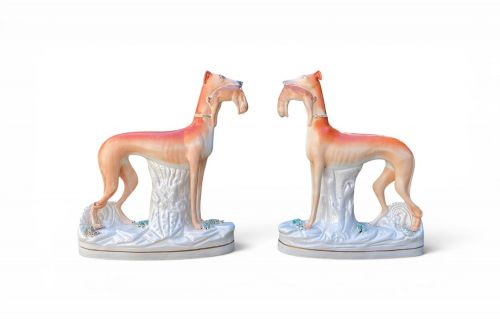


Ceramic Whippet Ornaments
These ceramic whippet ornaments capture the sleek lines of the breed in enduring clay, offering both decorative charm and a touch of domestic history.
Ceramic Whippet Ornaments
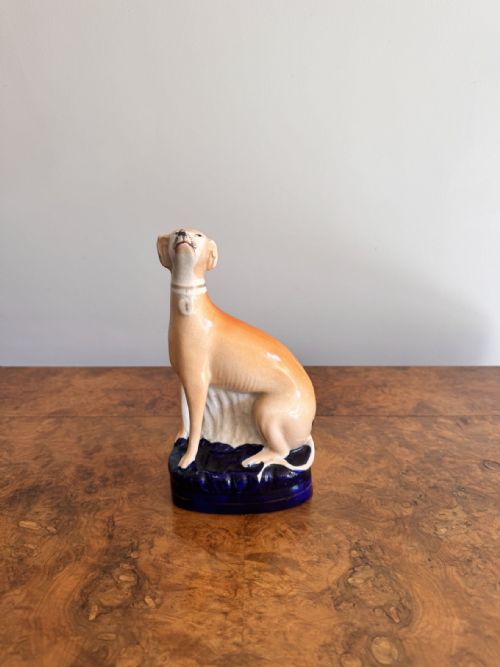
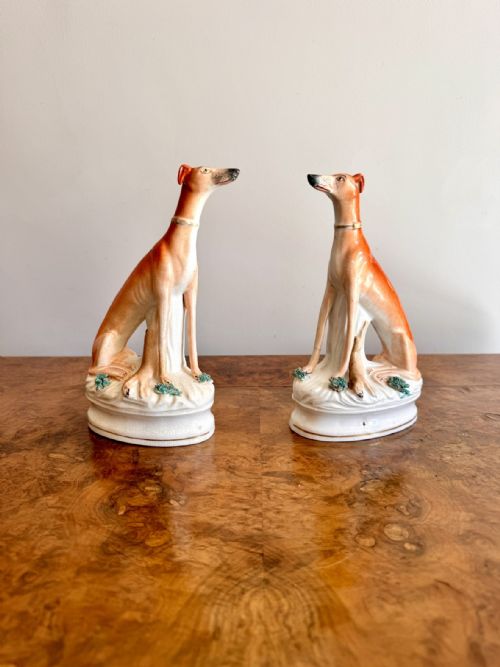
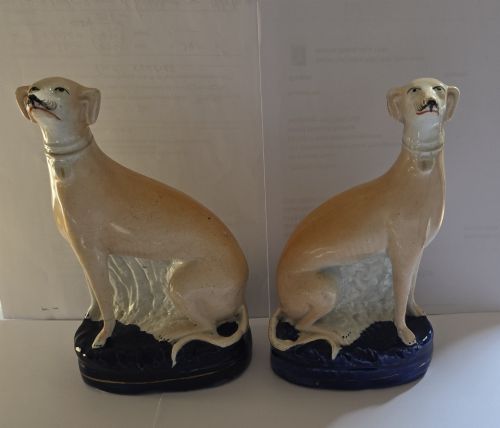
When you search for ceramic whippet ornaments, you encounter a specialised group of figures representing whippets and greyhounds. Most examples on this page hail from the Victorian era, shaped by Staffordshire potteries.
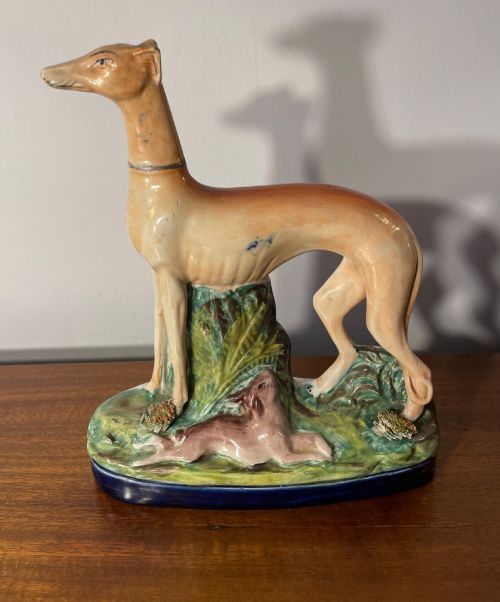
The selection ranges from solo figures and matched pairs to functional quill holders and hunting groups with hares. Alongside these Staffordshire pieces, occasional continental porcelain works from later decades appear.
The forms vary from grand, early nineteenth-century hounds to smaller decorative ornaments designed for mantelpieces and desks. Each piece reflects the enduring popularity of slender hounds in British and European homes.
How they were made
Potters shaped these figures using local earthenware or finer porcelain, capturing the muscular contours of the dogs through mould-pressing and hand-finishing. Artisans then applied lead glazes or enamel paint to render the coats, often highlighting collars with gold leaf.
Staffordshire potteries relied on traditional earthenware bodies finished with glossy lead glazes that accentuate the modelling. Later continental manufacturers utilised porcelain and precise enamel paint to achieve smoother, more refined surfaces.
Ceramic Whippet Ornaments Retail Price Guide 2026
Typical asking prices for ceramic whippet ornaments among the pieces listed under this phrase on Sellingantiques today, from the lower quarter to the upper quarter. They describe what is for sale here now, not the wider market.
Listings feature earthenware and porcelain materials spanning the Victorian era, the Art Deco period, and the mid-twentieth century.
What varies in quality
Matched pairs command greater appreciation when the kilning process has preserved symmetry in size and colouring. The application of gold leaf and the depth of the lead glaze also signal the original maker's ambition and skill.
Thomas Parr·Rosenthal
The Ceramic Whippet Ornaments Glossary
- Staffordshire
- A term for pottery produced in the towns and villages of North Staffordshire. This region dominated British figure production throughout the Victorian period.
- Lead glaze
- A glossy coating containing lead oxide applied to earthenware before firing. It produces a shiny, reflective surface that protects the painted decoration beneath.
- Quill holder
- A desk accessory featuring a modelled figure alongside a trough or rest for writing pens. These practical items combined utility with Victorian animal portraiture.
- Earthenware
- A porous pottery body fired at lower temperatures than stoneware or porcelain. It serves as the primary material for nineteenth-century Staffordshire figures.
- Enamel paint
- Coloured decoration applied over the fired glaze and fixed with a gentle secondary heat. It allowed potters to add rich details like collars and facial markings.
Ceramic Whippet Ornaments: Frequently Asked Questions
Are these figures always sold in pairs?
Many nineteenth-century whippet and greyhound figures were manufactured as symmetrical pairs to adorn mantelpieces.
However, single figures and functional items like quill holders also appear frequently among the listings.
How do I distinguish Staffordshire pottery from porcelain?
Staffordshire pieces typically utilise a heavier earthenware body with a glossy lead glaze.
Porcelain figures, such as those from later continental works, feel denser, whiter in the base fabric, and show finer enamel detail.
What was the purpose of a quill holder?
Quill holders served as functional desk accessories in Victorian studies and libraries.
The ceramic base incorporated small rests designed to hold writing feathers safely between uses.
How should I clean my ceramic ornament?
Dust these glazed surfaces gently with a soft, dry brush to prevent the accumulation of dirt.
Avoid immersing antique earthenware in water, as moisture can penetrate through tiny crazing lines in the glaze.