


Victorian Pottery Cheese Dish
These robust earthenware and ironstone vessels are victorian pottery cheese dish pieces designed to keep dairy cool on the dining table.
Victorian Pottery Cheese Dish
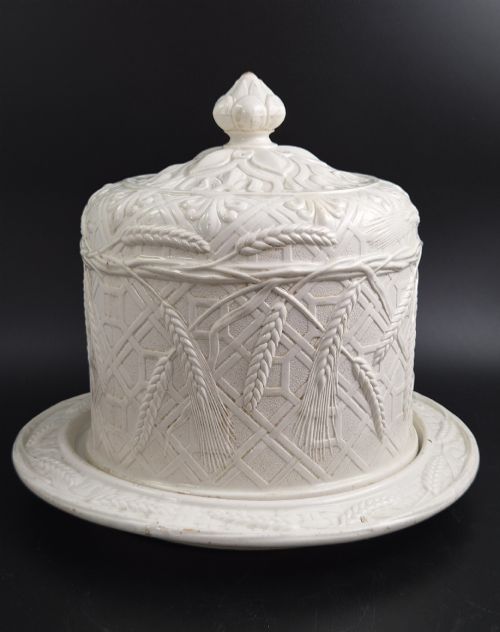
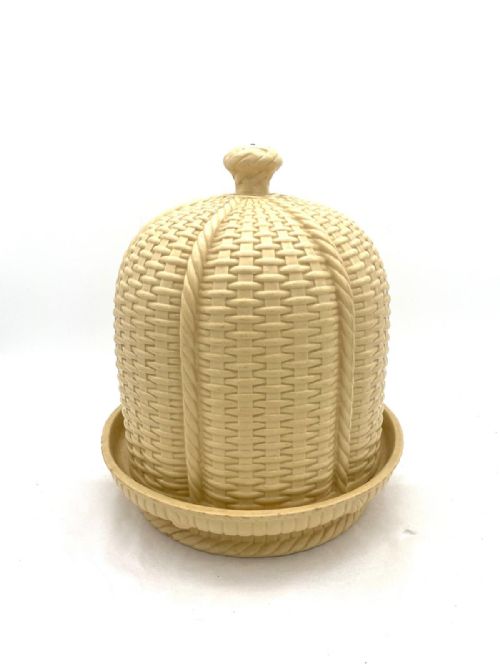
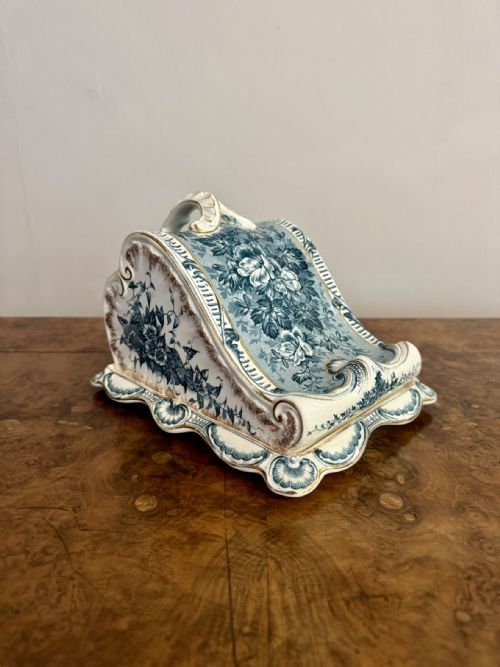
A victorian pottery cheese dish typically comprises a fitted cover, often called a cheese dome or bell, resting upon a matching flat stand or plate. These serving dishes appear in forms ranging from plain white ironstone to heavily decorated majolica and blue jasperware.
The pieces on this page span the nineteenth century, with specific examples originating around eighteen eighty and eighteen ninety. Collectors encounter both cylindrical wedges designed for Stilton and large round domes featuring traditional agricultural or exotic patterns.
Makers such as James Dudson, Mason's, and Burgess and Leigh produced these table wares during the Victorian period. The surviving examples demonstrate how households stored and presented cheese before mechanical refrigeration became common.
Materials and construction
Potters utilised earthenware, heavy ironstone, and dense stoneware to shape the large domes and bases required for storing cheese. These ceramic bodies were fired to withstand daily use in domestic kitchens and dining rooms.
Glaze finishes, including coloured majolica lead glazes and printed ceramic transfers, provided decorative surfaces and sealed the porous clay. Some pieces incorporated gilt highlights or moulded details such as basket weave textures and wheat motifs.
Dairy maids and nineteenth-century cheese lovers relied on these heavy domes to keep mice at bay from the Stilton.
Factors that distinguish better examples
The clarity and depth of moulded details, such as the crispness of a basket weave or a pagoda pattern, separate finer vessels from standard production. Potters who invested time in careful modelling produced pieces with sharp relief and well-balanced proportions.
The richness of the glaze application also defines the standard of a piece, particularly in majolica wares where colours pool evenly across the moulded surfaces. Well-preserved surfaces retain their glossy sheen without extensive crazing or dull patches from heavy kitchen use.
James Dudson·Burgess and Leigh
The Victorian Pottery Cheese Dish Glossary
- Ironstone
- A dense, durable type of earthenware patented in the nineteenth century. It offered a strong alternative to porcelain for heavy tableware.
- Jasperware
- A fine-grained, unglazed stoneware developed in the eighteenth century and continued through the Victorian period. It typically displays white moulded reliefs against a coloured clay background.
- Cheese Dome
- The tall, usually domed cover designed to fit over a plate or stand. It trapped humidity and protected the cheese from insects.
- Drabware
- A style of unglazed or salt-glazed stoneware characterised by its muted greyish-brown or olive body colour. It was widely used for practical domestic vessels.
Victorian Pottery Cheese Dish: Frequently Asked Questions
What were victorian pottery cheese dish covers used for?
These domed covers protected large wheels and wedges of cheese from dust and drying out on the dining table. They helped maintain the moisture and flavour of the dairy between meals.
Households placed the cheese on the matching ceramic stand, covered it with the bell, and stored it in the pantry or sideboard until serving time.
How do you date a victorian pottery cheese dish?
Dating relies on stylistic clues, ceramic bodies, and any impressed maker marks found on the base of the stand or inside the dome. Ironstone and heavy earthenware were particularly common during the middle and late nineteenth century.
Records show makers producing these wares through the eighteen eighties and nineties, often incorporating distinct decorative styles like Victorian Chinoiserie or majolica glazing.
Can you still use these antique cheese dishes?
Many collectors prefer to display these pieces as decorative items rather than using them for daily food service. Older ceramics can be sensitive to thermal shock and modern dishwashing methods.
If used for serving, they require gentle hand washing in warm water to preserve the antique glazes and any delicate gilt details.
What is the difference between ironstone and majolica cheese dishes?
Ironstone versions usually feature a heavy, utilitarian white ceramic body with moulded patterns like wheat and lattice or printed transfer designs. They prioritise robust durability for everyday dining.
Majolica pieces utilise colourful, glossy lead glazes over elaborate moulded relief work, focusing on rich visual decoration rather than plain utility.