


Majolica Table Ceramics
These majolica table ceramics bring vibrant coloured glazes and figural forms to domestic surfaces.
Majolica Table Ceramics
Majolica table ceramics encompass functional and decorative objects designed for the interior, ranging from cheese domes and centrepiece bowls to lamp bases and vases. These pieces appear across several periods, including Victorian, Edwardian, and the early twentieth century.
The selection frequently includes table lamps mounted with brass and ceramic components alongside dining wares like cheese dishes. Italian workshops and English potteries provide the main origins for these items.
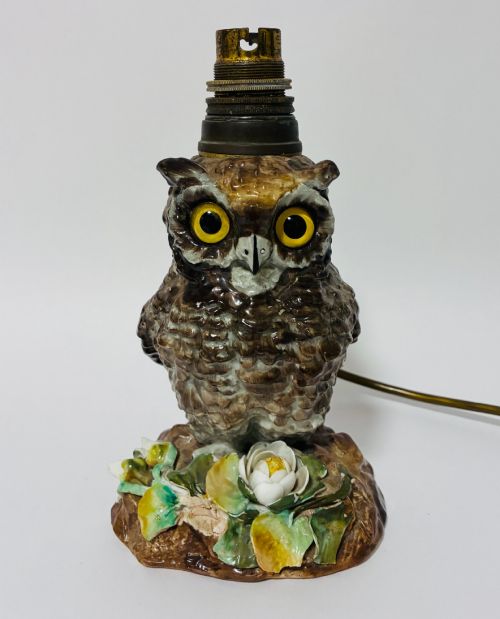
Forms vary from figural owl lamp bases to large centrepiece jardinière planters, reflecting both Renaissance Revival and Art Nouveau influences. Buyers encounter diverse decorative treatments spanning plain earthenware structures to intricate hand-painted designs.
How they were made
Makers utilised earthenware, porcelain, and pottery bodies shaped into utilitarian or ornamental forms, occasionally incorporating brass and glass elements. Potters applied heavy coloured glazes to achieve the characteristic glossy finish seen across the items.
Techniques involved hand painting directly onto the ceramic surface before firing, producing layered tones and pictorial details. Metal mounts were fitted to lamp bases to secure electrical or oil mechanisms.
An observant owl lamp base stands ready to watch over the evening room.
What varies in quality
Quality rests in the crispness of the moulded relief and the richness of the glaze application across the ceramic body. Pieces demonstrating finer hand painting and more complex figural modelling stand apart from simpler production items.
The integration of mixed materials, such as brass fittings combined with ceramic bases, dictates the overall execution standard. Original pairing of components and well-preserved glaze surfaces define the upper tier of these wares.
Bretby
The Majolica Table Ceramics Glossary
- Majolica glaze
- An opaque tin-lead glaze applied over earthenware, producing deep coloured effects. It creates the glossy surface characteristic of these table ceramics.
- Cheese dome
- A domed cover with a matching dish used for storing and serving cheese at the table. These pieces often feature elaborate moulded decoration.
- Centrepiece bowl
- A large decorative vessel placed in the middle of a dining table or sideboard. They frequently take the form of jardinières or planters.
- Renaissance Revival
- A nineteenth-century design style drawing inspiration from classical Italian art and architecture. It informs the ornamentation on many period ceramic items.
- Lamp base
- The structural support portion of a lighting fixture, adapted here from ceramic vases and figural sculptures. They are often fitted with brass hardware.
Majolica Table Ceramics: Frequently Asked Questions
What are majolica table ceramics?
These pieces are glazed ceramic items intended for interior display and dining use, produced in various forms during the nineteenth and twentieth centuries.
They combine heavy coloured glazes with sculptural or painted ornamentation, reflecting specific period styles such as Victorian and Art Nouveau.
How were cheese domes used?
Cheese domes served to keep cheese fresh on the dining table while presenting an ornamental centrepiece for the meal.
The matching dish beneath caught crumbs and contained the cheese safely during serving.
How do I identify a lamp base?
Lamp bases feature structural alterations or integrated brass hardware designed to hold lighting components securely.
Many examples adapt existing ceramic vessel forms, such as vases or figural sculptures, for functional illumination.
Where were these ceramics made?
Production centres include both English potteries and Italian workshops, each contributing distinct decorative traditions and glazing techniques.
Italian makers often focused on hand-painted porcelain and majolica compositions.