




Victorian Porcelain Relief
These Victorian porcelain relief pieces combine sculpted surface modelling with fine ceramic bodies, offering tactile depth that flat decoration simply cannot match.
Victorian Porcelain Relief
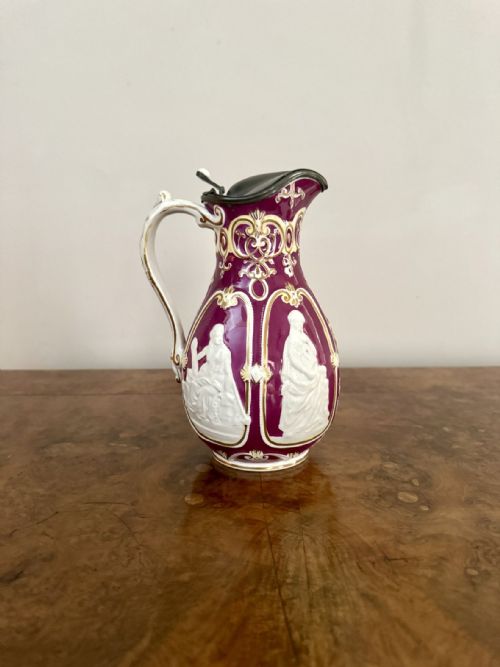
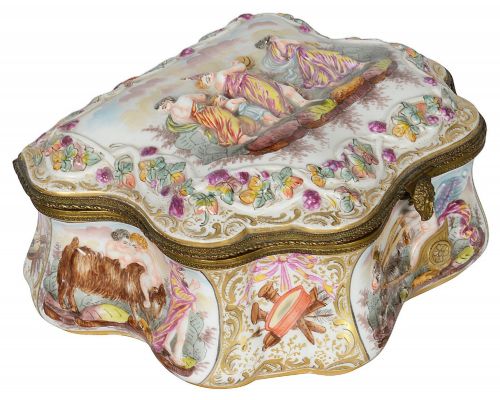
Victorian porcelain relief items encompass a range of decorative and functional objects produced during the nineteenth century, including table caskets, vases, tea sets, and wall plaques. These pieces showcase raised ornamental designs applied directly to the ceramic body, creating a distinct three-dimensional surface effect.
The selection on this page includes items originating from English potteries and continental European makers, alongside Japanese export wares of the Meiji period. Forms vary from small jewellery boxes mounted with metal fittings to large campana urns and cabinet plaques.
Buyers will find domestic wares and ornamental objects spanning several decades of the nineteenth century, reflecting both classical revivals and later aesthetic movements. Each piece demonstrates the characteristic moulding or slip-application techniques typical of its maker.
Materials and manufacture
The objects combine standard ceramic bodies such as porcelain, Parian ware, and jasperware with specialised surface decoration including enamel, gold leaf, and applied white bas-reliefs. Makers utilised traditional moulding techniques to raise figures and floral motifs from the background.
Pâte-sur-pâte work involves painting successive layers of liquid white porcelain slip onto a tinted clay body until a translucent relief image builds up. Other pieces employ applied sprigged reliefs, where separately pressed clay figures are fixed to the main vessel before firing.
Victorian Porcelain Relief Retail Price Guide 2026
Typical asking prices for victorian porcelain relief among the pieces listed under this phrase on Sellingantiques today, from the lower quarter to the upper quarter. They describe what is for sale here now, not the wider market.
Some nineteenth-century tea sets were designated specifically as bachelor sets, designed for solitary enjoyment rather than large gatherings.
Assessing quality
The choice of materials and the skill required for techniques like pâte-sur-pâte dictate the standing of a piece within its type. Hand-applied gilding and well-fitted metal mounts on caskets further distinguish the finest examples.
The Victorian Porcelain Relief Glossary
- Bas-relief
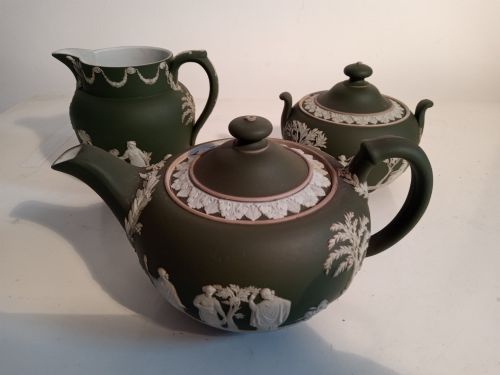
- A sculptural technique where the figures project only slightly from the background plane. This method defines the applied white ornaments found on jasperware pieces.
- Parian ware
- A type of fine-grained unglazed biscuit porcelain developed in England to imitate marble. It was frequently used for portrait busts and sculptural jugs.
- Pâte-sur-pâte
- A French term meaning paste on paste, denoting a method of building up a white relief design using liquid porcelain slip on a darker body. This technique demands exceptional brushwork and control.
- Jasperware
- A fine stoneware developed by Wedgwood, characterised by its unglazed matte surface and contrasting white reliefs. It appears in various muted body colours.
- Campana urn
- A bell-shaped classical vessel form frequently produced in ceramics and metal during the nineteenth century. These pieces often feature decorative handles and pedestal bases.
Victorian Porcelain Relief: Frequently Asked Questions
What is Victorian porcelain relief?
These items are nineteenth-century ceramic objects featuring raised decorative motifs, figures, or patterns applied to the surface. They encompass functional tea wares, decorative vases, and framed cabinet plaques.
The raised elements are created through moulding, applied sprigged clay, or layered liquid slip techniques. This gives the pieces a distinct sculptural quality distinct from standard painted ceramics.
How do I care for these pieces?
Maintain these items by dusting them gently with a soft, dry cloth to prevent dirt accumulation on the raised relief surfaces. Avoid immersion in water, particularly for pieces with gilt highlights or delicate metal mounts.
Keep them away from direct sunlight and areas of high humidity to protect enamel colours and prevent any deterioration of glued components or hinges on caskets.
How do I identify a pâte-sur-pâte piece?
Examine the raised white decoration closely under a good light to check for layered translucency against the contrasting background. This technique builds up imagery through successive brushstrokes of liquid slip.
High-grade examples show subtle gradations of thickness in the white paste, allowing the tinted body beneath to show through the thinnest areas of the design.
How do I date these ceramics?
Look for impressed maker marks, registration diamonds, or hand-painted numbers on the underside of the base. These factory marks often correspond to specific decades or active working periods of the potteries.
Stylistic indicators such as neoclassical shapes, aesthetic movement motifs, or the presence of gilt decoration also help narrow down the period of manufacture.