
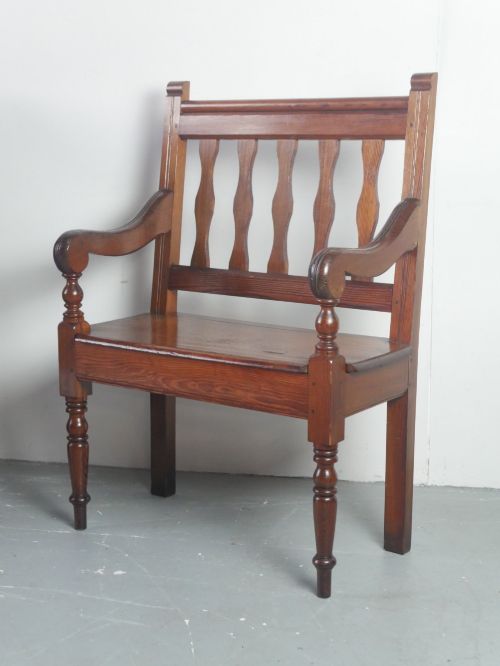
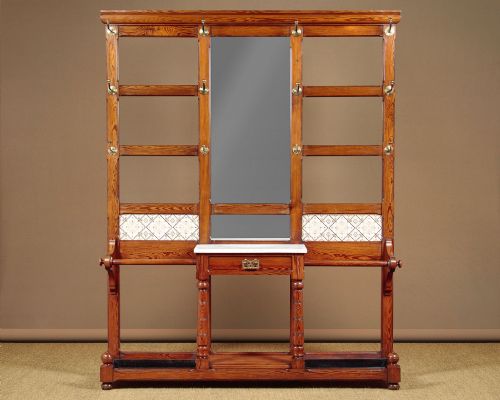
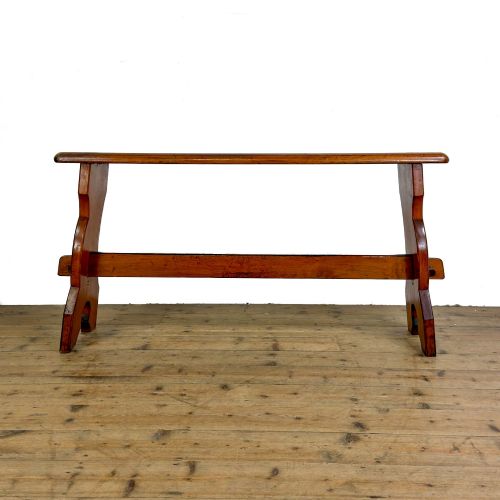
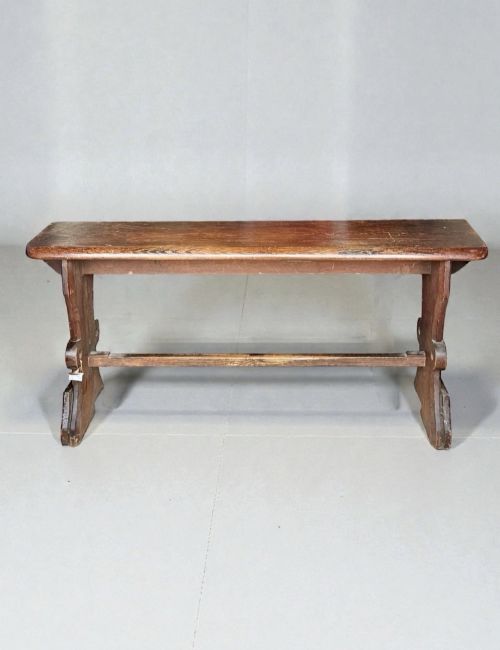


Victorian Pitch Pine Bench
A Victorian pitch pine bench brings robust timber grain and ecclesiastical or utilitarian utility into domestic hallways and kitchens.
Victorian Pitch Pine Bench
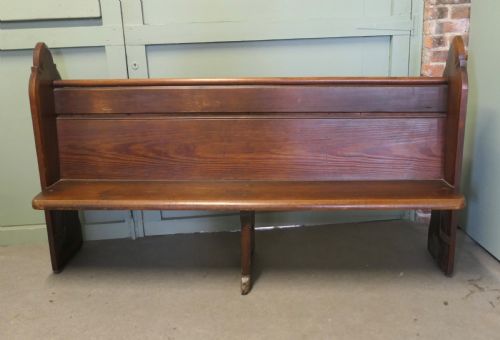
A Victorian pitch pine bench typically presents as a church pew, a railway station seat, or a utilitarian hall bench originating from the nineteenth century. These forms span from monumental ten-foot lengths down to compact hallway seating.
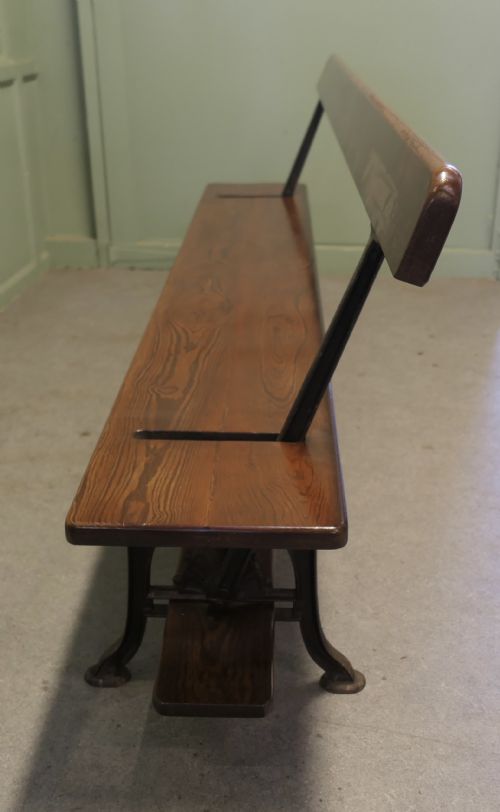
The most common iterations met here include ecclesiastical pews and sturdy railway or tram benches, often displaying the robust proportions typical of Victorian institutional and domestic furniture. Variants range from simple open-backed seating to box pews and adjustable designs.
Makers utilised these benches in diverse settings, including churches, railway stations, and domestic halls, producing forms that blend industrial utility with vernacular woodwork. The evidence shows styles extending from Victorian Country to Arts and Crafts and Gothic.
Judging quality and character
Quality rests in the grain density of the pitch pine and the crispness of the joinery, which dictate how well the timber holds its finish over generations. Benches retaining their original operational ironwork or clever flip-over mechanisms command higher regard among collectors.
Proportion and scale also separate the ordinary from the exceptional, as uncommon lengths or specialised forms like box pews and adjustable station seating demonstrate greater architectural ambition. The integrity of the surface patination reveals how sympathetically the timber has aged.
Some railway benches feature clever reversing backs, allowing weary Victorian commuters to change their minds about which direction to face.
The Victorian Pitch Pine Bench Glossary
- Pitch pine
- A resinous North American pine species prized during the nineteenth century for its durability and distinct, heavily figured grain. It forms the primary structural material for these benches.
- Pew
- A long wooden bench with a back, traditionally utilised in churches for congregational seating. Many survive adapted for domestic hallway or kitchen use.
- Settle
- A wooden bench with a high back, solid arms, and often a storage compartment beneath the seat. This form offered protection from draughts in period interiors.
- Box pew
- An enclosed wooden seating enclosure found in historic churches, providing privacy and warmth. In bench form, the base often incorporates a storage box.
- Vernacular
- Architecture and furniture built by local craftsmen using traditional methods and regional materials without academic design pretensions. These pieces reflect practical utility rather than high-style fashion.
Victorian Pitch Pine Bench: Frequently Asked Questions
Where did these benches come from?
The historical record indicates these pieces originated primarily in churches, railway stations, and institutional settings during the nineteenth century.
Craftsmen built them to withstand heavy daily use, which explains their durable construction and surviving structural integrity today.
How do I use a church pew at home?
A narrow pitch pine bench fits neatly against a hallway wall or serves as practical seating alongside a kitchen dining table.
Their substantial length and shallow depth make them particularly suitable for linear spaces where standard chairs would obstruct movement.
How can I date a pitch pine bench?
Dating relies on stylistic clues, construction methods, and period materials such as cast iron brackets or Gothic architectural details.
The surviving evidence spans the mid-nineteenth century through to the early twentieth century.