

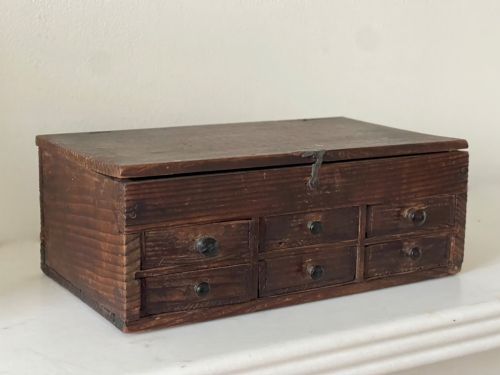

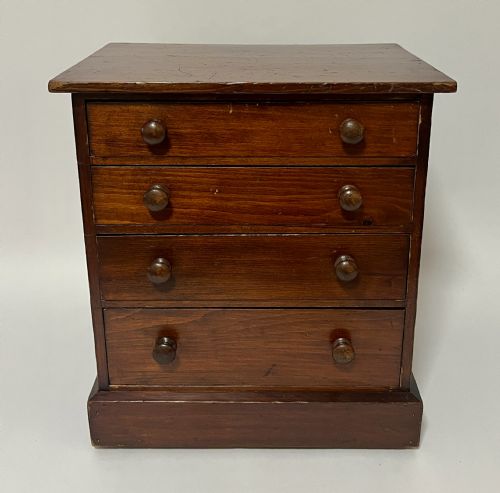
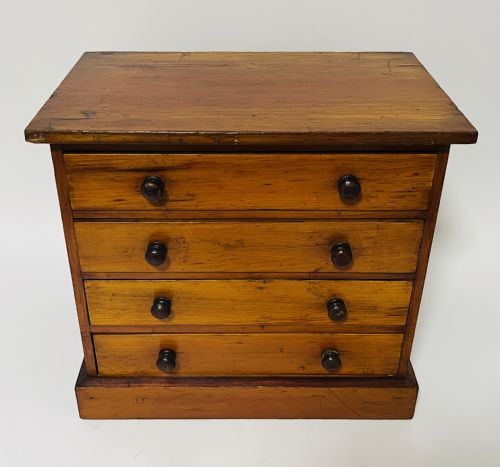
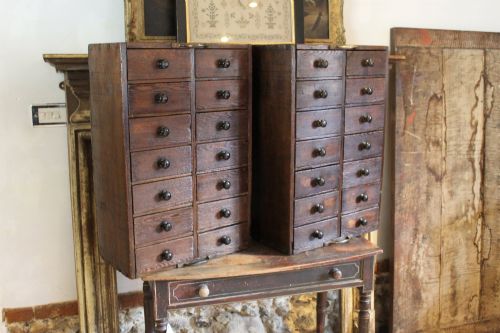


Victorian Pine Specimen Chest
These Victorian pine specimen chest pieces are honest, multi-drawer repositories designed for sorting small treasures, bringing practical historic storage into the modern room.
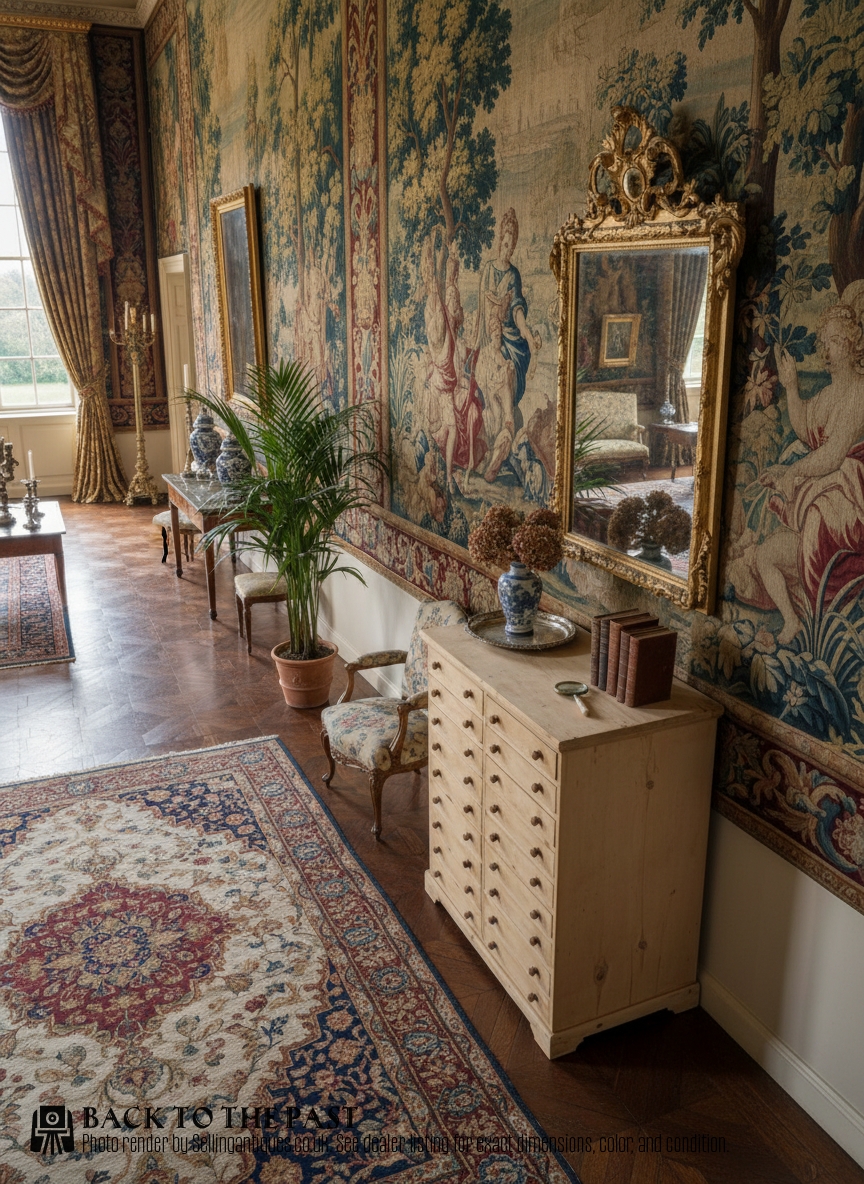
Victorian Pine Specimen Chest
When you search for a Victorian pine specimen chest, you encounter multi-drawer cabinetry originally built for natural history collections, botanical samples, and small artefacts. These pieces take the form of banks of drawers, collectors cabinets, and small storage units constructed for meticulous organisation.
The versions most commonly met on this page range from mid nineteenth century items through to Edwardian examples, spanning periods like the 1860s, 1870s, 1880s, and 1900s. They appear in styles such as Victorian, Edwardian utilitarian, Arts and Crafts, and industrial.
Makers and origins recorded in the evidence include pieces from Luxmore's of Ilfracombe and J.T. Crockett, alongside D Napier and Sons. Forms vary from watchmakers tall banks of drawers to florist seed chests and standard collectors chests.
How they were made
Makers utilised primary structural woods including pine, deal, and figured pitch pine, often treated with stained and polished finishes or original paint. These softwoods provided a stable, workable framework for housing numerous shallow drawers required by collectors.
Metal hardware such as brass and iron appears on handles, pulls, and fittings, while interiors occasionally incorporate velvet linings to protect delicate contents. Construction methods served functional storage needs, resulting in robust utilitarian and industrial builds.
Victorian Pine Specimen Chest Retail Price Guide 2026
Typical asking prices for victorian pine specimen chest among the pieces listed under this phrase on Sellingantiques today, from the lower quarter to the upper quarter. They describe what is for sale here now, not the wider market.
Design styles represented in the inventory span Victorian, Edwardian utilitarian, Arts and Crafts, and industrial forms.
What varies in quality
The distinction between tiers of work rests upon the selection of timber, such as figured pitch pine versus standard deal, and the complexity of the drawer configuration. Cabinets featuring specialised maker attributions or distinct regional provenances sit at a different level from anonymous workshop utility pieces.
Finish integrity and surface history dictate the character of each cabinet, with original painted surfaces or polished patination marking out pieces that retain their untouched period identity. The craftsmanship involved in constructing twenty or twenty-five tight-fitting drawers demonstrates the maker's skill.
Luxmore's of Ilfracombe·D Napier and Sons·J.T. Crockett
The Victorian Pine Specimen Chest Glossary
- Specimen cabinet
- A piece of furniture fitted with multiple shallow drawers designed to hold natural history specimens, coins, or small objects. They are often constructed from pine or deal.
- Deal
- A softwood timber commonly used in British cabinet making during the nineteenth century. It provided an accessible material for utilitarian and commercial storage furniture.
- Pitch pine
- A resinous pine variety known for distinctive grain patterns and durability. It was frequently selected for better quality nineteenth-century collectors cabinets.
- Bank of drawers
- An arrangement of numerous small drawers stacked vertically or horizontally in a single housing. These units served trade, watchmaking, and botanical collection purposes.
- Arts and Crafts
- A design movement emphasising handcraftsmanship and simple utility over mass production. Pieces from this style focus on honest construction and straightforward materials.
Victorian Pine Specimen Chest: Frequently Asked Questions
What were specimen chests originally used for?
These multi-drawer chests were built to house botanical samples, insects, fossils, and small natural history specimens. Naturalists and collectors relied on the shallow drawers to organise and protect delicate items.
Over time, similar drawer banks found use among watchmakers, florists for seeds, and tradespeople who needed systematic storage for small components.
How do I identify a Victorian piece?
Dating relies on timber characteristics, construction methods, and hardware styles typical of the nineteenth century. Records often point to decades such as the 1860s, 1870s, or 1880s through maker marks or construction traits.
Pine and deal framing combined with iron or brass pulls provides a clear material signature of the period.
Where do I place one at home?
A multi-drawer chest functions well in a study, hallway, or living space as a surface for display with practical storage underneath. The narrow profile of many banks makes them adaptable to smaller rooms.
Drawers provide space for stationery, collections, or everyday items while keeping surfaces clear.