
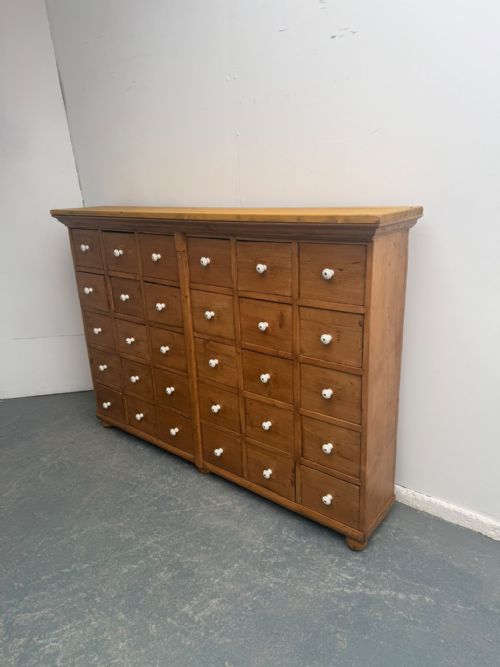


Victorian Multi Drawer Chest
A victorian multi drawer chest is a hardworking utilitarian storage piece built for a shop, office or collector, prized for its sheer capacity and honeycombed facade.
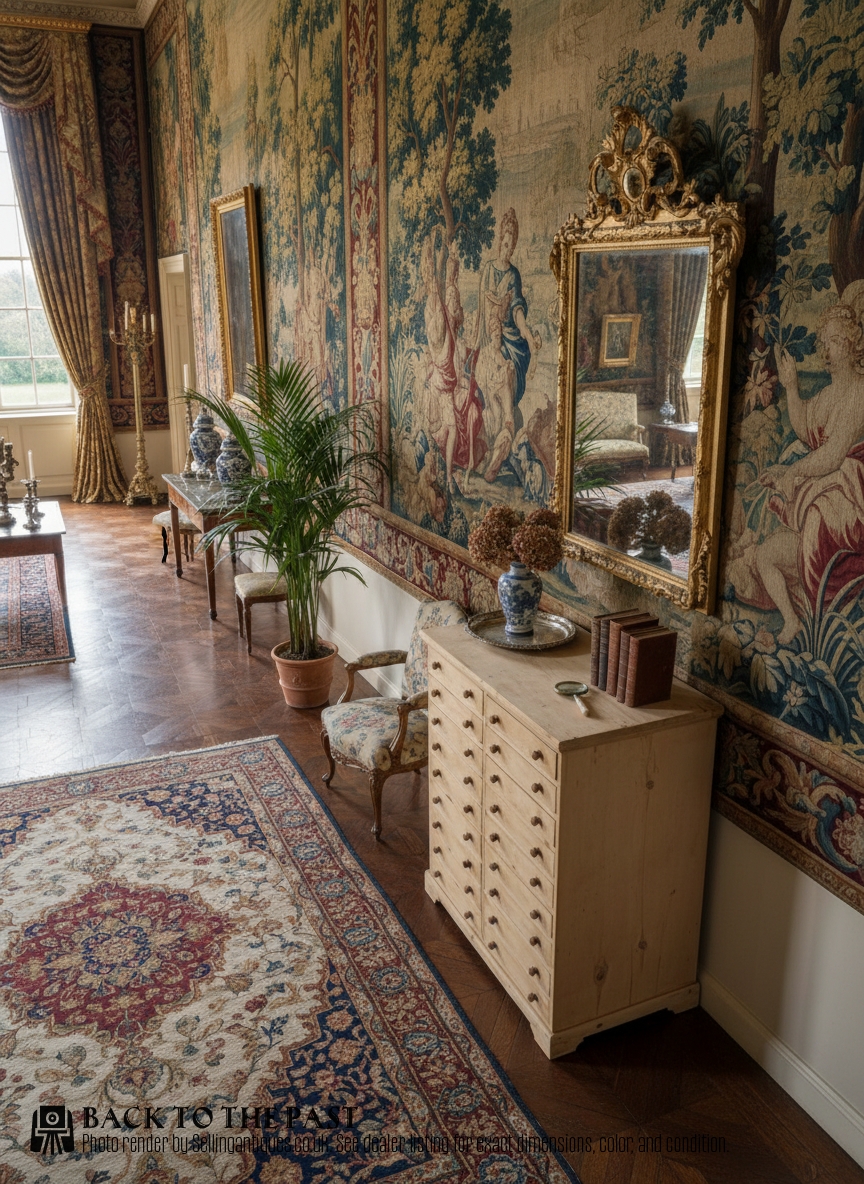
Victorian Multi Drawer Chest
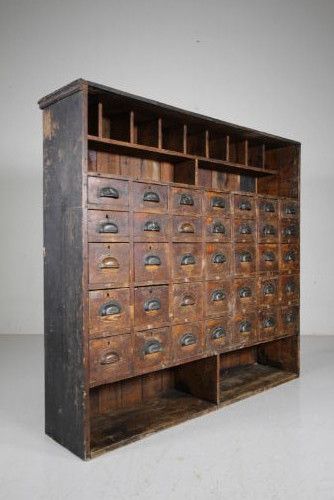
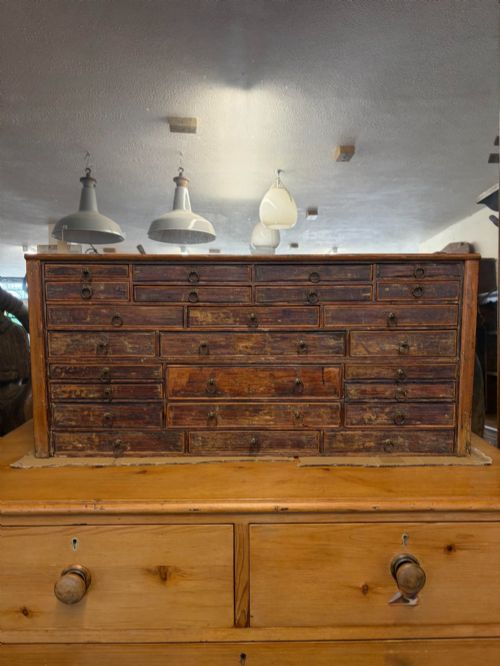
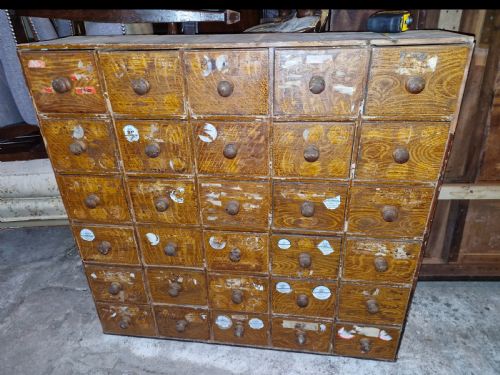
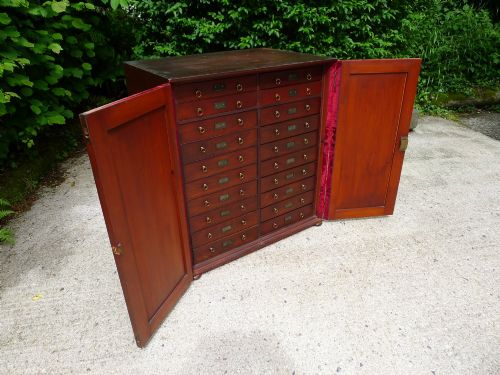
A victorian multi drawer chest groups numerous small compartments into a single upright carcass, designed originally for trade, filing or natural history collections rather than domestic clothing. The examples on this page span banks of drawers, shop fittings, haberdashery cabinets and specimen chests from the nineteenth century.
Most pieces encountered here are constructed from timber like pine or mahogany, featuring configurations ranging from twenty up to fifty individual drawers. These are functional items built to hold everything from drapery to botanical samples.
Origins stretch from English workshops to Hungarian shop fittings, alongside pieces finished in painted cream, black and gold, or left as polished deal. Buyers select them to bring industrial organisation and massive compartmentalised storage into modern residential or commercial interiors.
How they were made
Makers utilised solid timbers such as mahogany, pine, walnut and teak for the main carcases and drawer boxes, ensuring the heavy framework could bear the weight of numerous loaded compartments. Brass pulls, handles and card frames were fitted to the drawer fronts to identify contents in busy retail or study environments.
Surface finishes varied widely according to use, ranging from stained and polished deal to painted pine surfaces in cream or black with gold detailing. Joinery focused on robust utility, employing tight carcass construction to withstand the daily friction of dozens of sliding drawers.
Some fifty-drawer shop fittings require an afternoon just to open every compartment.
What varies in quality
The distinction between standard utility storage and exceptional cabinetmaking lies in the density of the drawer arrangement and the selection of timber. Solid mahogany and walnut pieces built as bespoke collectors cabinets sit at the upper end, contrasted against pine shop fittings intended for hard commercial service.
Original hardware, untouched painted surfaces, and documented provenance elevate certain pieces far beyond standard workshop furniture. The crispness of the multiple drawer runners and the survival of matching brass pulls determine the overall integrity of the build.
Luxmore's of Ilfracombe·J.C. Dale
The Victorian Multi Drawer Chest Glossary
- Bank of drawers
- A tall or wide cabinet containing a high density of small, uniform drawers designed for systematic storage. These units were standard fixtures in nineteenth-century offices and commercial premises.
- Haberdashery cabinet
- A shop display and storage unit featuring glass-fronted or shallow wooden drawers used originally for ribbons, threads and small drapery goods. They are heavily sought after for domestic clothing and accessory storage.
- Specimen cabinet
- A precision-built piece designed to house natural history collections, fossils or botanical samples in shallow, dust-sealed drawers. They represent the finest tier of nineteenth-century multi-drawer cabinetmaking.
- Deal
- An old term for fir or pine timber commonly used in British cabinetmaking for secondary woods and utilitarian furniture. It provides a pale, straight-grained base that takes paint or stain readily.
- Shop fitting
- Furniture built specifically for commercial retail spaces, ranging from counter bases to multi-drawer back-wall units. These pieces prioritize maximum utility and robust construction over delicate domestic styling.
Victorian Multi Drawer Chest: Frequently Asked Questions
What were multi drawer chests used for?
These cabinets served commercial, scientific and domestic functions where strict organisation of small items was required. Merchants used them for drapery and haberdashery, while collectors stored natural history specimens and documents.
Over time, their sheer utility made them adaptable for offices and workshops before transitioning into prominent interior storage furniture today.
How do I live with a multi drawer chest?
Living with these pieces involves placing them where their scale and numerous compartments can be appreciated without overcrowding a room. They function effectively as sideboards, hallway organisers or studio storage.
Ensure the floor space can accommodate the footprint and that the drawers have adequate clearance to pull out fully in your chosen layout.
How do I tell nineteenth century pieces apart?
Dating relies on timber selection, construction methods and hardware choices. Earlier nineteenth-century examples often utilise solid mahogany with hand-cut dovetails and heavy brass card pulls, reflecting bespoke cabinetmaking.
Later Victorian and turn-of-the-century pieces lean towards pine carcases and industrial shop fittings, marked by painted finishes or simpler joinery intended for commercial wear.
Are painted finishes original?
Many shop fittings and utilitarian pine cabinets received coats of paint during their working lives to protect the wood or match trade premises. Cream, black and gold schemes often date from the period of active commercial use.
Examining the wear patterns and underlying layers helps determine whether a painted surface belongs to the original working life of the furniture.