
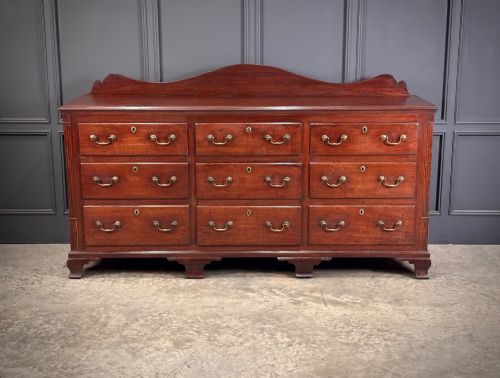
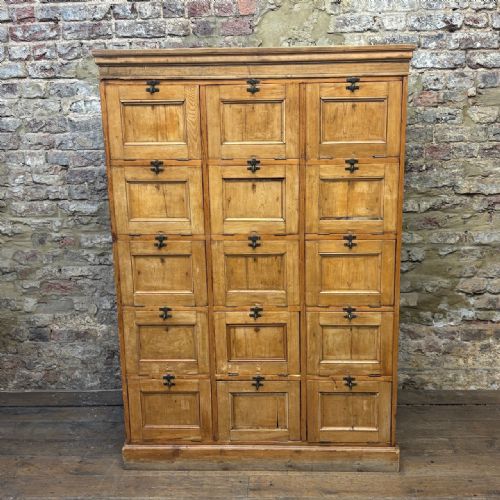
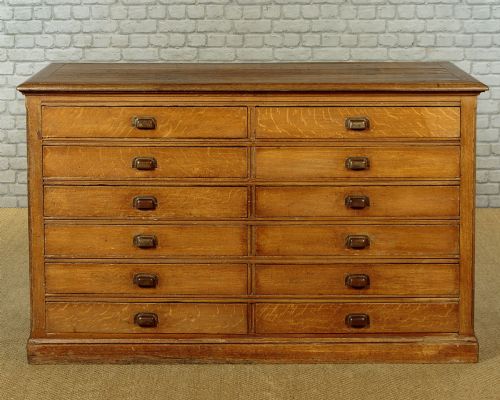
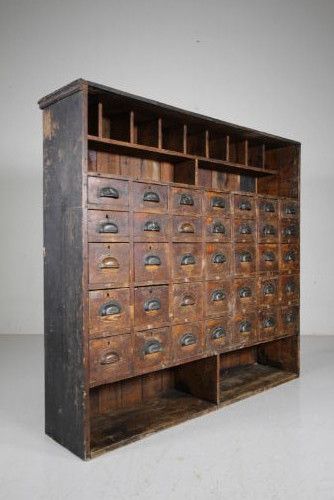
Bank of Drawers Cabinet
A bank of drawers cabinet provides heavy-duty storage with numerous compartments, bringing functional utility and striking form into domestic spaces.
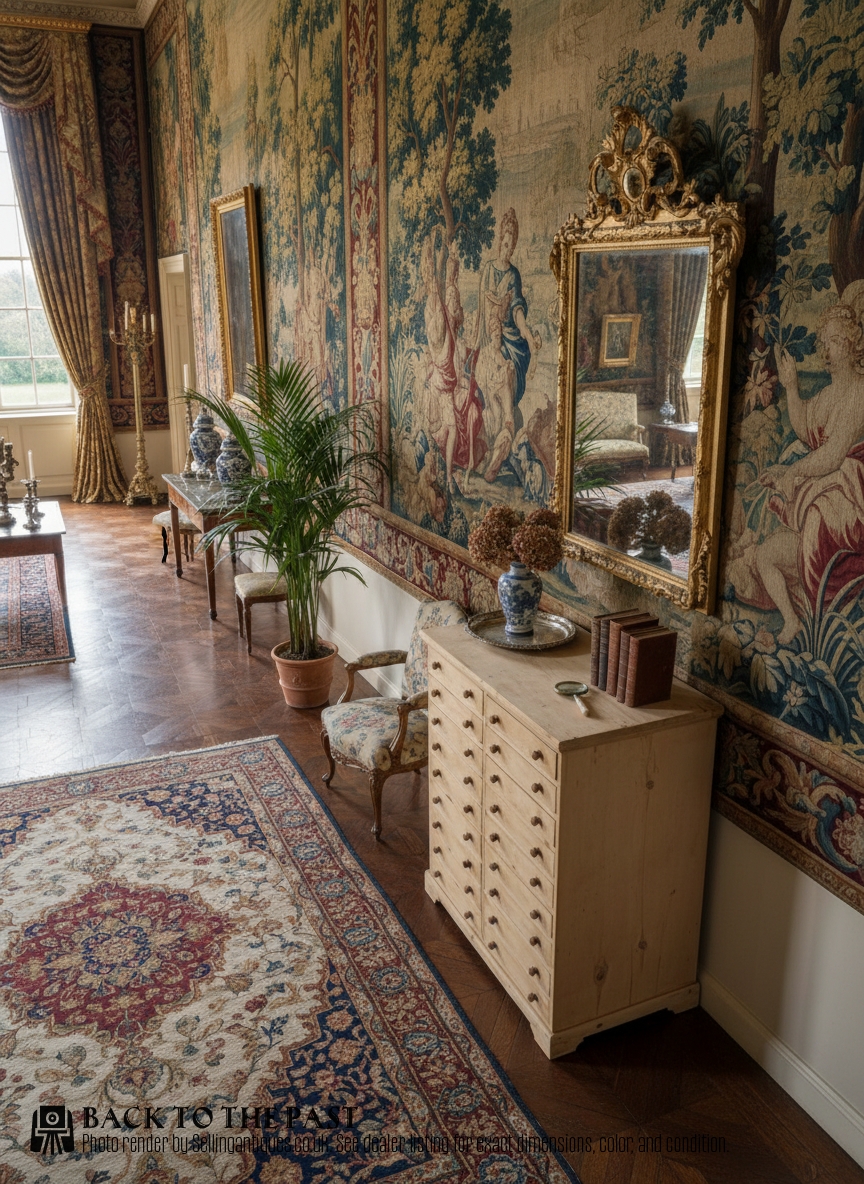
Bank of Drawers Cabinet
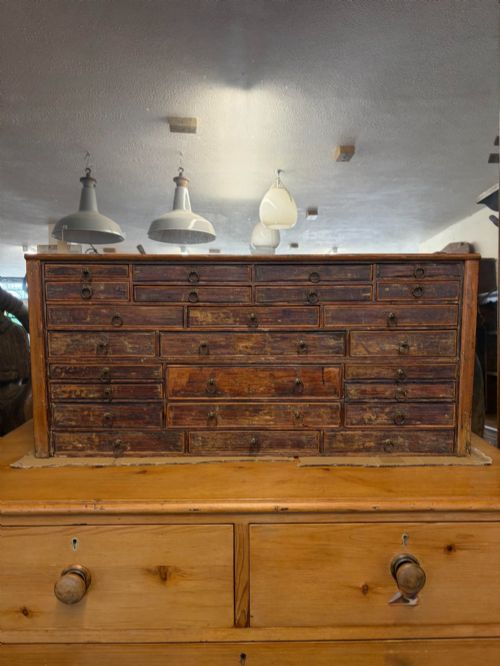
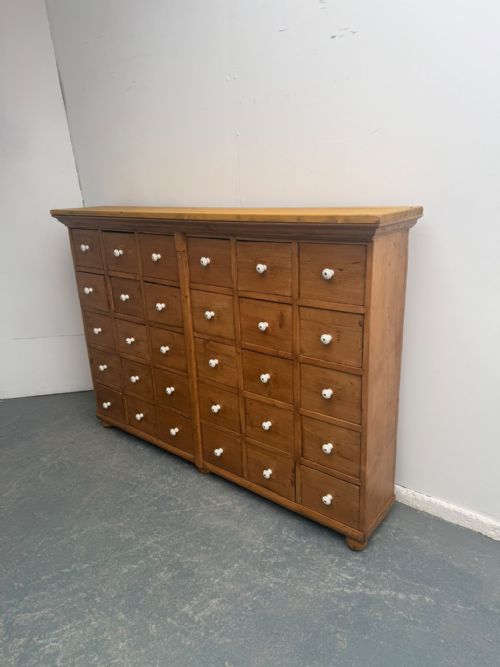
A bank of drawers cabinet originates from commercial, industrial and domestic settings, including chemist shops, workshops, offices and drapery stores. These multi-drawer units span periods from the 18th century through the Victorian era and into the early 20th century.
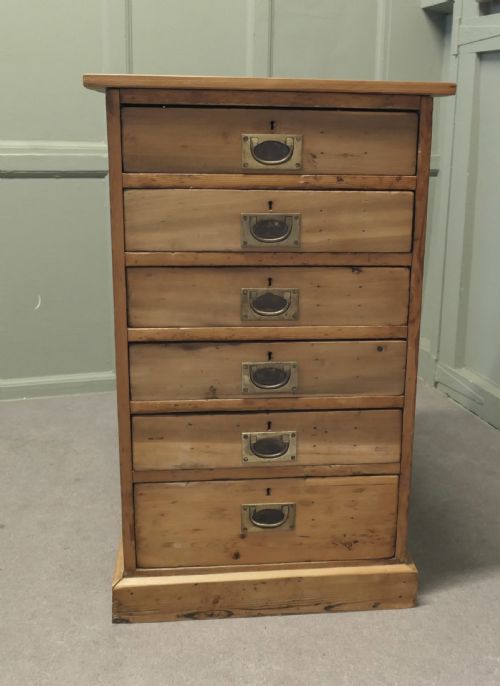
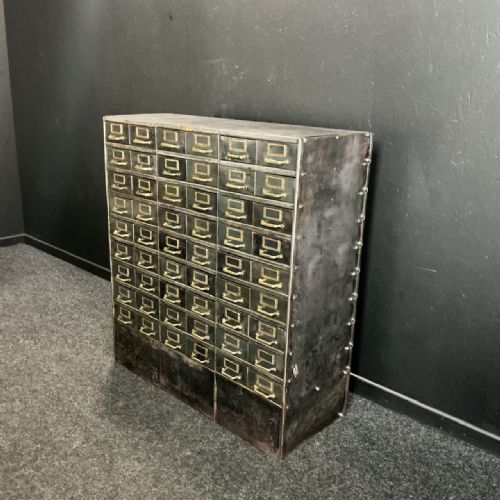
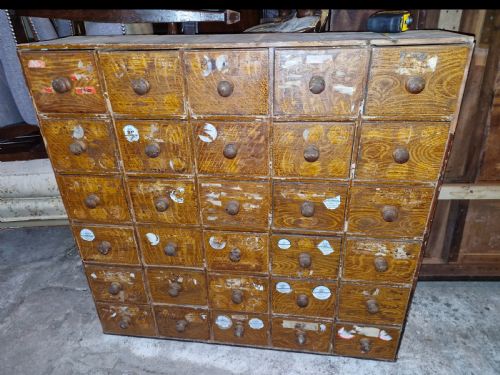
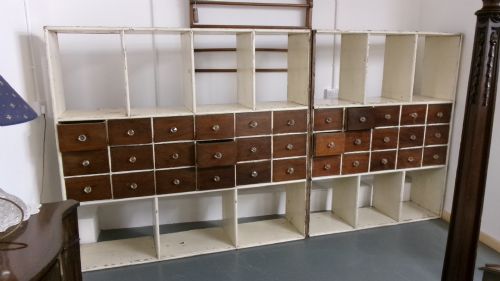
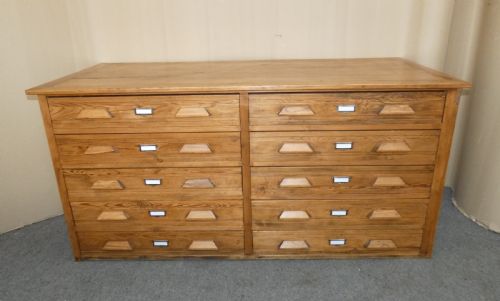
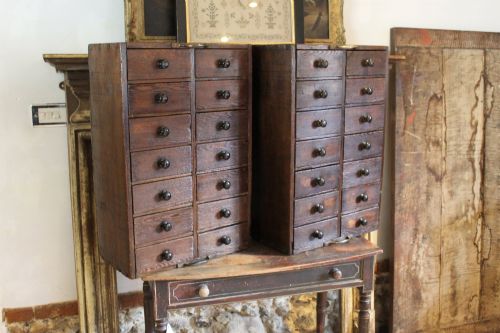
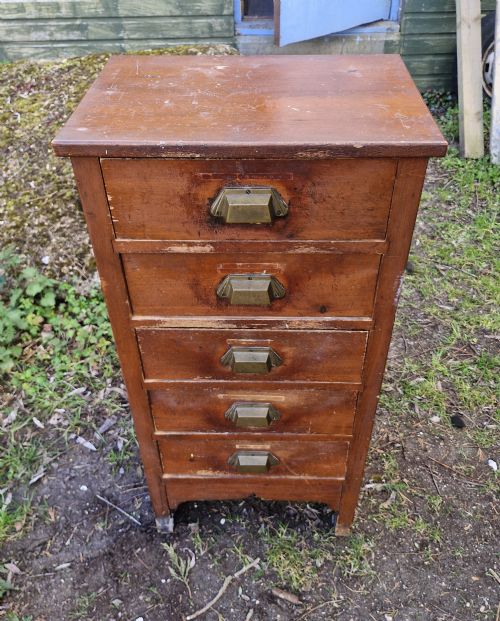
The pieces on this page appear in various timber varieties and industrial forms, serving as filing cabinets, haberdashery units, apothecary chests and collectors cabinets. Buyers encounter substantial pine shop fittings alongside compact mahogany and walnut storage options.
Evaluating Quality
Quality rests upon the integrity of the original hardware, the retention of painted or polished surfaces, and the internal condition of the numerous drawers. Surviving label holders and original pulls elevate the historical character of a piece.
Proportion and scale dictate desirability, with larger shop fittings and multi-drawer chemist cabinets demonstrating superior craftsmanship compared to standard office utility pieces. The complexity of the drawer configuration influences the overall visual impact.
Listings feature pieces spanning from the 18th century through the Victorian era up to the 1930s, constructed in pine, mahogany, oak, walnut and metal.
The Bank of Drawers Cabinet Glossary
- Bank of Drawers
- A large cabinet containing a high quantity of small, uniform drawers designed for systematic organisation. These units originate from commercial and industrial environments.
- Haberdashery Cabinet
- A glass-fronted or multi-drawer display unit used originally in drapery shops to store textiles and small garments. They are prized for their shallow drawer depths and visual rhythm.
- Apothecary Cabinet
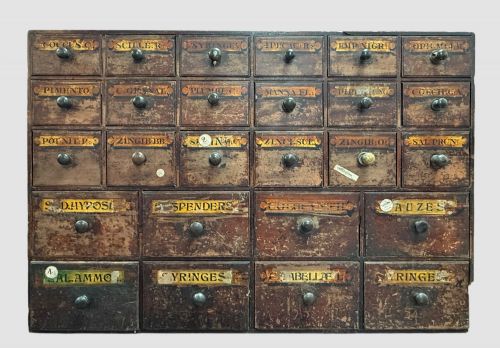
- A specialised set of drawers utilised by chemists and pharmacists for botanical ingredients and medicines. They often feature numerous small compartments and original brass label holders.
- Shell Pull
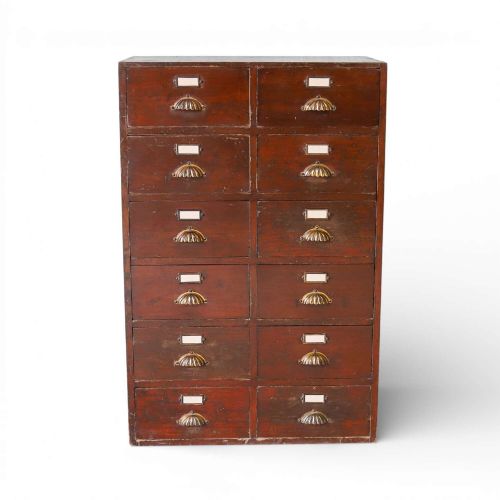
- A pressed metal or brass handle shaped like a semi-circular shell, frequently incorporating a slot for a paper label. They are characteristic of industrial and office storage furniture.
- Collectors Cabinet
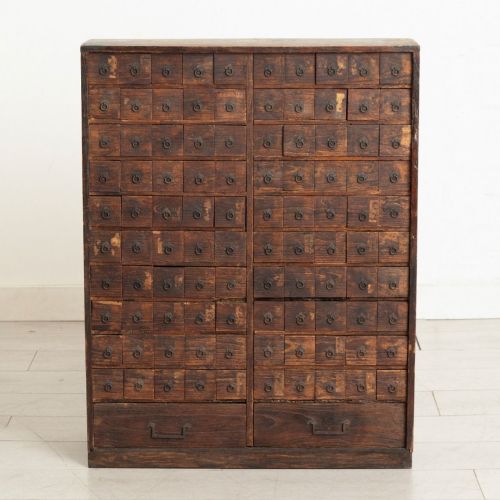
- A specialised piece designed for organising specimens, coins or documents in shallow drawers. These items emphasise precision joinery and compact proportions.
Bank of Drawers Cabinet: Frequently Asked Questions
What is a bank of drawers cabinet used for?
These cabinets serve as practical storage solutions for organising small items, documents and collections within modern rooms. The numerous compartments allow for systematic sorting while providing a distinct visual focal point.
Originally built for commercial, apothecary and workshop environments, today they function effectively in studies, kitchens and living spaces for everyday organisation.
How do I date an antique bank of drawers?
Dating relies on examining the timber species, construction techniques, and hardware styles present on the cabinet. Victorian and 19th-century pieces often display hand-cut dovetails and heavy timber carcasses.
Later pieces from the 1920s and 1930s frequently incorporate industrial metal elements or patent filing mechanisms. Comparing handles, locks, and labels helps narrow down the manufacturing decade.
Are these cabinets suitable for small spaces?
While many examples are large shop fittings with numerous drawers, smaller variants exist for domestic interiors. Compact mahogany and shallow pine filing drawers offer the aesthetic without overwhelming the floor area.
Buyers should measure available wall space and consider vertical height versus depth before selecting a specific multi-drawer configuration.
How do I care for a wooden bank of drawers?
Maintenance involves dusting the exterior surfaces regularly and applying a microcrystalline wax periodically to nourish the wood. Avoid placing these cabinets near direct heat sources to prevent timber splitting.
Drawer interiors should be kept clean and dry, particularly when storing textiles or paper items inside antique pine and mahogany compartments.