


Victorian Pietra Dura
Victorian pietra dura brings hardstone mosaics and specimen marbles into nineteenth-century rooms, offering collectors intricate floral inlays and enduring mineral surfaces.

Victorian Pietra Dura
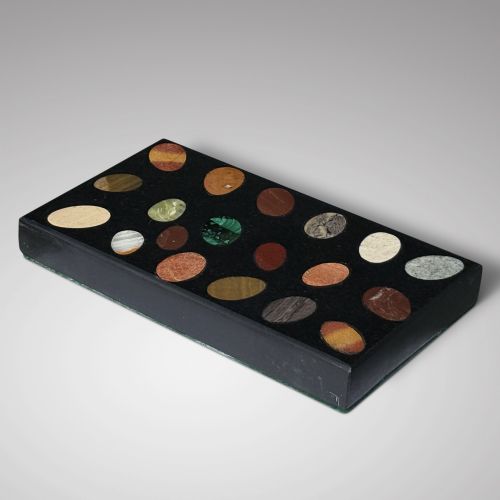
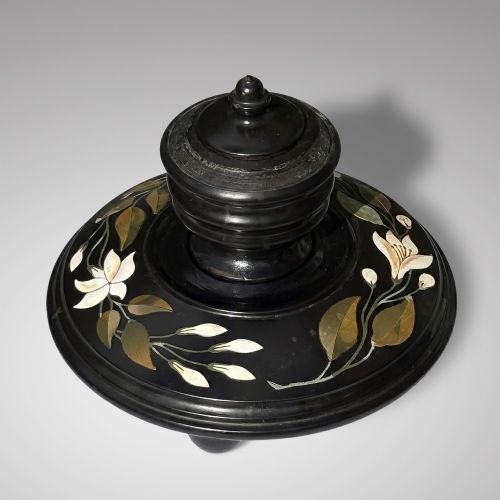
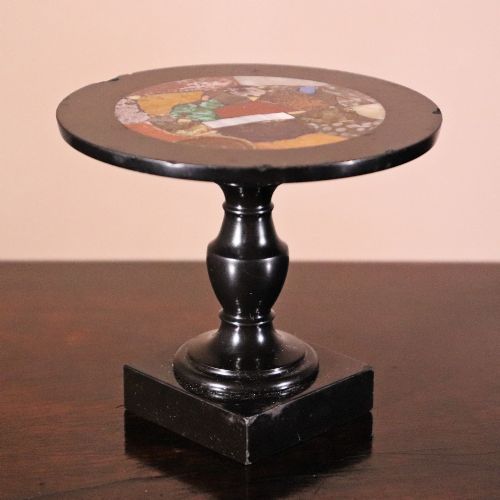
When searching for victorian pietra dura, collectors encounter a wide variety of items spanning occasional tables, desks, paperweights, and jewellery. The forms range from grand centre tables and side cabinets down to small desk accessories like inkwells and book slides.
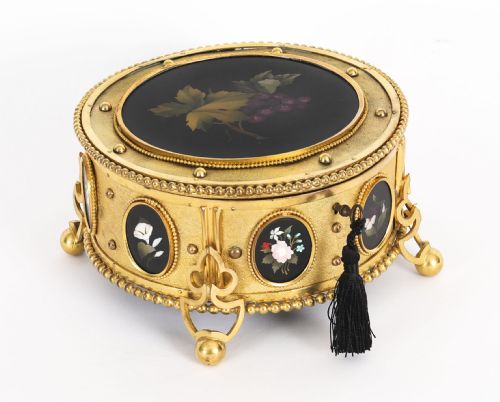
The objects originate primarily from nineteenth-century British workshops utilising local marbles alongside Italian ateliers producing grand tour souvenirs. Tables and larger cabinets dominate the architectural end of the scale, while smaller boxes and pendants preserve intimate hardstone panels.
What varies in quality
Quality rests upon the tightness of the stone joints and the variety of mineral specimens utilised in the mosaic. Superior panels display natural colour variations without visible mortar lines between individual tesserae.
The secondary framing elevates the piece further, distinguishing standard production items from examples housed in solid coromandel cabinets with heavy brass binding or fine ormolu mounts.
Listings feature nineteen-century occasional tables, obelisks, and paperweights utilising marble, brass, ebonised wood, and mahogany.
James Shoolbred·C.G. Hope Hastings
The Victorian Pietra Dura Glossary
- Pietra dura
- An Italian term for hardstone inlay using cut and fitted polished stones to create pictorial designs. This technique forms the central decorative element of nineteenth-century tables and small desk items.
- Ashford marble
- A dark, fossiliferous limestone quarried in Derbyshire and used extensively for English hardstone inlays and obelisks. Artisans polished this local material to serve as a deep black background for floral mosaics.
- Specimen marble
- Multi-coloured geological samples collected during travels and incorporated into table tops and paperweights. These pieces showcase a diverse palette of natural minerals gathered from various European quarries.
- Grand tour
- The traditional trip of Europe undertaken by upper-class young men to absorb classical art and culture. Souvenirs from this journey frequently included micro-mosaics and hardstone plaques.
- Book slide
- An expanding desk accessory designed to hold volumes upright between two decorative ends. Victorian examples often integrated pietra dura panels into brass-mounted coromandel or walnut frames.
Victorian Pietra Dura: Frequently Asked Questions
What is pietra dura?
Pietra dura is an inlay technique where sliced hardstones are fitted tightly together into a stone base to form pictorial designs.
Craftsmen polished the assembled minerals to create smooth surfaces depicting flowers, landscapes, and geometric patterns.
How do I care for marble and stone inlays?
Stone surfaces require gentle dusting with a soft cloth and should remain safe from acidic liquids that etch polished marble.
Keeping timber frames and brass mounts clean helps preserve the overall integrity of nineteenth-century boxes and tables.
Where were these pieces made?
Production centred in Italian workshops producing grand tour souvenirs alongside specialised English hubs like Derbyshire and London.
Local stones were worked into obelisks and inkwells domestically, while delicate floral plaques often arrived directly from Italy.
How are English and Italian pieces told apart?
English items frequently employ Derbyshire black marble paired with native timbers like coromandel and walnut for practical desk objects.
Italian pieces lean toward pictorial landscapes, classical architectural motifs, and comprehensive specimen marble table tops.