







Grand Tour Specimen Marble
Grand tour specimen marble pieces bring home the classical architecture and geological variety of European travels, offering inlaid stone souvenirs from centuries past.

Grand Tour Specimen Marble
When you search for grand tour specimen marble, you encounter objects collected by travellers on European journeys during the eighteenth and nineteenth centuries. These pieces translate classical architecture and geological finds into decorative items, table tops and desk accessories.
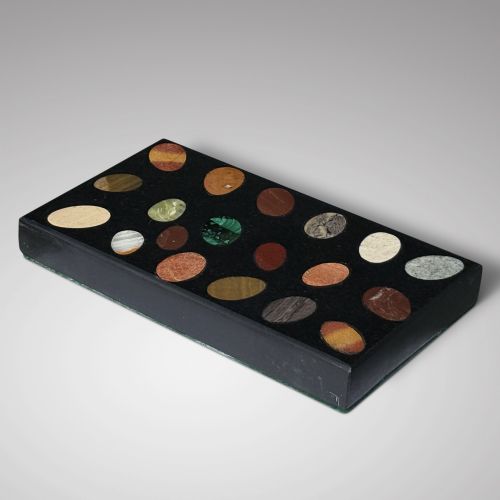
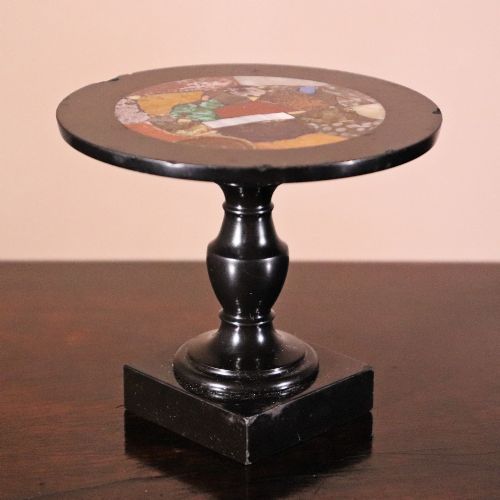
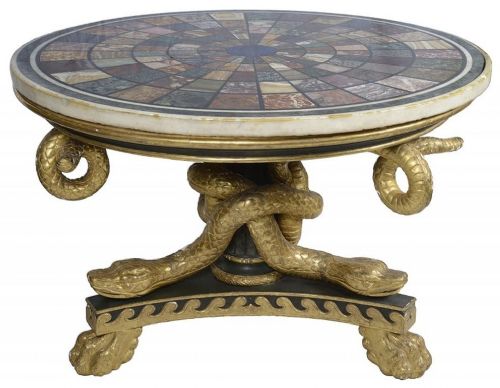
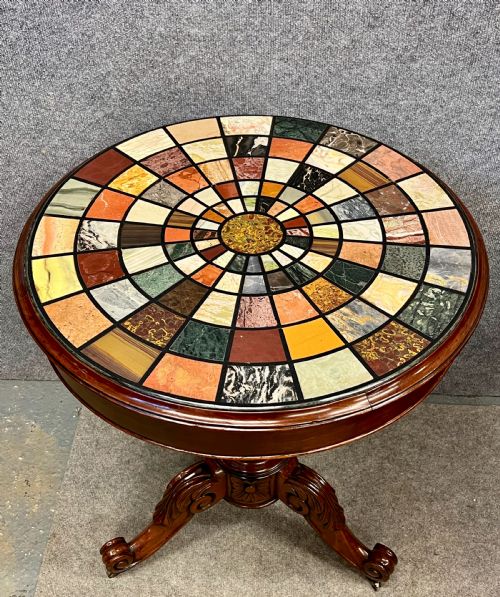
The version you are most likely to meet on this page is the nineteenth-century paperweight or circular table top. These examples range from modest desk pieces inlaid with various coloured stones to larger centre tables bearing complex pietra dura work.
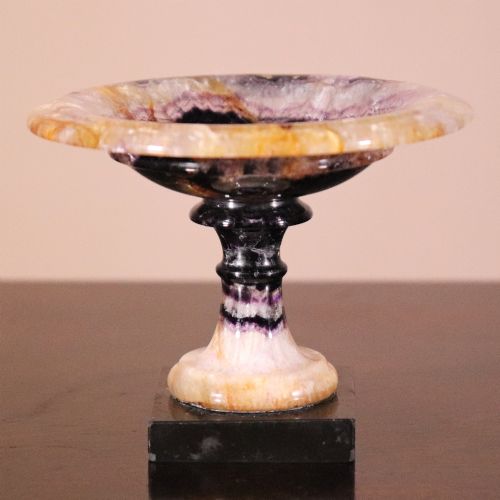
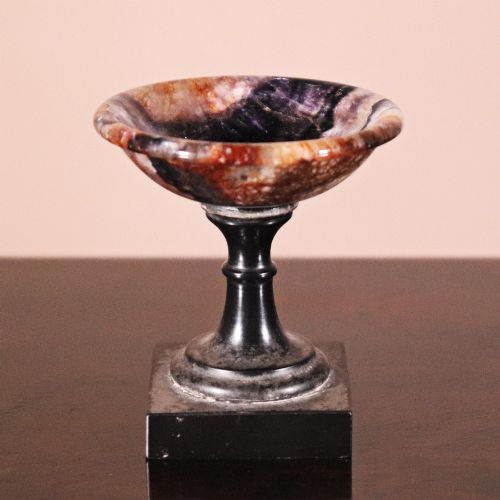
Beyond small souvenirs and tables, the selection includes tazzas, urns, obelisks and architectural columns. These items draw on Italian and English workshops, particularly from centres like Derbyshire and Rome.
How they were made
Craftsmen built these pieces using solid marble, slate or mahogany as a base, applying precision-cut stones to form geometric or pictorial mosaics. Stones such as black marble, malachite and Blue John provide distinct colour contrasts within the designs.
The technique of pietra dura involves fitting thin slices of hardstone flush into a marble ground to create precise images like birds or floral motifs. Workshops relied on hand saws, abrasive powders and steady patience to achieve tight joints between each mineral specimen.
Object forms range from miniature obelisks and paperweights to large centre tables, occasional tables and decorative tazzas.
What varies in quality
Execution of the inlay work defines the superior examples on the market. Tighter joints between individual stones and finer pictorial detail in pietra dura panels separate master stonemasons from routine souvenir producers.
The Grand Tour Specimen Marble Glossary
- Pietra dura
- An Italian technique of inlaying cut and fitted polished coloured stones into a base to create decorative designs. This method produces smooth, picture-like panels for table tops and plaques.
- Tazza
- A shallow bowl mounted on a stem and foot, often carved from solid marble or black marble. These decorative vessels emulate classical forms brought back from Mediterranean sites.
- Ashford Black Marble
- A dark, fine-grained limestone from Derbyshire that takes a high polish and serves as a background for inlaid specimen stones. It forms the foundation for many English tables and obelisks.
- Obelisk
- A tall, four-sided tapering monument ending in a pyramid-shaped top, produced as a decorative souvenir. These miniature stonework pieces reflect the ancient monuments observed during travels.
Grand Tour Specimen Marble: Frequently Asked Questions
What is a grand tour specimen marble piece?
These items are decorative objects, furniture tops and souvenirs created from numerous varieties of polished stone. Travellers collected them during cultural expeditions across Europe, particularly Italy and England, from the eighteenth through the nineteenth centuries.
The materials include local marbles, black limestone, malachite and fluorspar, assembled to celebrate classical history and geology. They serve as tactile reminders of historic travels and sophisticated stonemasonry.
How were these stone pieces used historically?
Travellers used them to furnish libraries, studies and drawing rooms as tangible proof of their education and journeys abroad. Table tops displayed geological collections, while smaller items ornamented desks and mantels.
Papers weights held correspondence in place, and obelisks or columns functioned purely as decorative sculpture. Each item brought classical antiquity and natural science into domestic spaces.
How do I care for a specimen marble surface?
Dust the polished stone regularly with a soft, dry cloth to prevent abrasion from grit. Avoid chemical cleaners, acidic liquids and excessive moisture, which can etch marble or dissolve the adhesives holding inlaid specimens.
Place protective felt pads under any objects resting on a table top to prevent scratching. Professional wax can occasionally maintain the lustre of the stone without building up residue.
How can I tell the difference between periods?
Eighteenth-century examples often lean towards austere architectural forms and Italian manufacture, while nineteenth-century pieces expand into vibrant pictorial pietra dura and British regional stones like Ashford black marble. Art Deco revivals from the twentieth century introduce stylised geometries.
The choice of base wood, assembly techniques and the specific mineral specimens help anchor pieces to particular decades. Examining the underside and edge construction reveals the manufacturing methods of the era.