
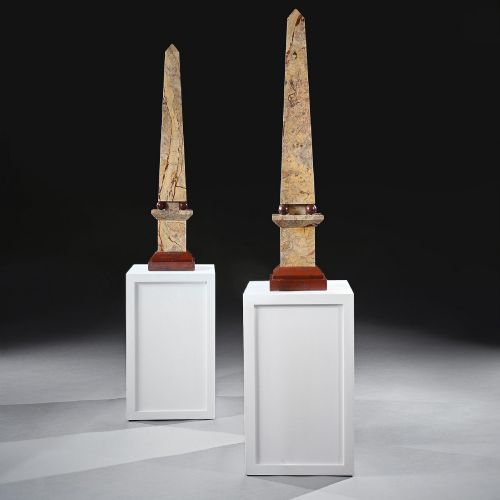
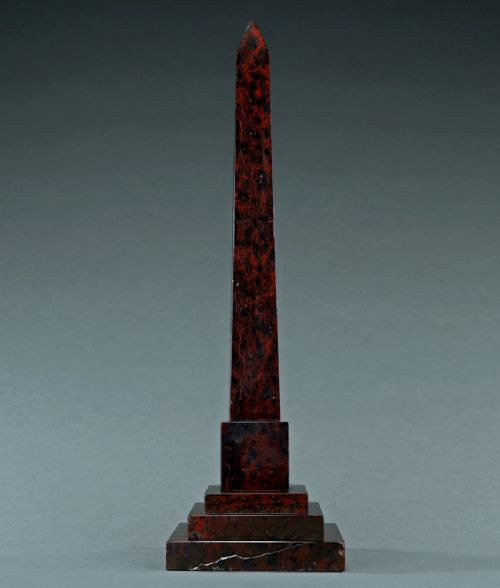
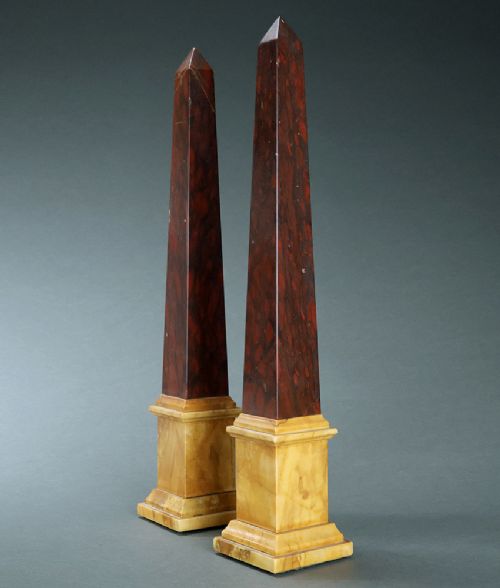


Antique Desk Obelisk
These antique desk obelisk pieces bring architectural drama and classical form to a study.
Antique Desk Obelisk
An antique desk obelisk is a tapering, four-sided stone or metal pillar designed to sit upon a writing table or mantelpiece. These decorative objects range from modest ink-stand ornaments to monumental pairs intended for display on larger surfaces.
The pieces listed on this page span the Victorian, Edwardian, and early twentieth century periods, reflecting the enduring popularity of classical and revivalist aesthetics. Visitors are most likely to encounter marble, onyx, and brass iterations shaped by Grand Tour influences or domestic manufacturing.
Makers produced these forms as desk accessories, paperweights, thermometers, and table lamps, combining utility with sculptural presence. Such items often served as souvenirs of European travel or expressions of archaeological enthusiasm.
How they were made
Craftsmen shaped hard stones like marble, malachite, serpentine, and Ashford black marble using precision cutting and polishing techniques to achieve smooth, geometric facets. Some examples incorporate intricate pietra dura inlay work, setting contrasting mineral specimens into the stone surface.
Metal versions utilised cast and polished brass, creating hollow or solid structures that capture the crisp, linear geometry of ancient Egyptian monuments. Workshops occasionally combined these materials, mounting stone shafts upon brass or fabric-lined bases.
Makers integrated functional elements such as mercury thermometer tubes or lamp fittings directly into the stone or metal bodies, merging ornamental sculpture with practical desk equipment.
Listings feature items spanning the 1860s to the 1930s, constructed from materials including marble, malachite, serpentine, and brass.
What varies in quality
Quality rests in the selection and preparation of the mineral materials, where uniform grain, rich natural colour variation, and flawless polishing distinguish superior specimens. Stone surfaces should display crisp, sharp apexes and precise corner bevels without chipping or filler repair.
In brass and composite examples, the weight of the metal and the tightness of joints determine the overall caliber of construction. Matching pairs demand even greater precision, requiring identical dimensions and balanced mineral patterns across both pillars.
The Antique Desk Obelisk Glossary
- Ashford Black Marble
- A dark limestone from Derbyshire that takes a high polish and serves as a base for inlay work. It formed the foundation for many nineteenth century desk ornaments.
- Pietra Dura
- An artistic technique utilising cut and fitted finely polished coloured stones to create geometric or pictorial images. Craftsmen applied this method to decorate the surfaces of specific nineteenth century obelisks.
- Grand Tour
- A traditional trip of Europe undertaken by upper-class young European men of means flourishing from about the seventeenth landmark through the nineteenth century. Travellers frequently purchased specimen marble obelisks as souvenirs of these journeys.
- Portasanta Marble
- A colourful decorative Italian marble featuring reddish-brown and grey brecciated tones. This material appears in early twentieth century Italian decorative pieces.
- Egyptian Revival
- An architectural and decorative style that used the motifs and imagery of ancient Egypt. This aesthetic inspired many twentieth century desktop brass and stone obelisks.
Antique Desk Obelisk: Frequently Asked Questions
What is an antique desk obelisk used for?
These pieces functioned primarily as decorative desk ornaments, heavy paperweights, or focal points on writing tables and libraries. Some incorporated mercury thermometers or lighting components to add utility to their classical form.
Today, they serve as sculptural accents in interior design, appreciated for their architectural silhouette and mineral textures.
How do I date a stone obelisk?
Dating relies on material trends, manufacturing methods, and stylistic movements such as the Victorian Gothic revival or early twentieth century neoclassical periods. Examining the polish, base construction, and any integrated hardware like thermometer scales offers further chronological clues.
Archival examples demonstrate continuity in forms from the nineteenth century into the 1920s and 1930s.
What materials are typical for these obelisks?
Makers most frequently utilised marbles including serpentine, Portasanta, Rosso Antico, and Ashford black marble, alongside green Egyptian onyx and malachite. Solid brass also appears, particularly in twentieth century revival designs.
These varied mineral resources reflect both British manufacturing traditions and continental European workshop origins.
How do I care for a marble obelisk?
Stone surfaces require gentle dusting with a soft, dry cloth to prevent accumulation without scratching the polished finish. Avoid using chemical cleaners or excessive water, which can damage mineral surfaces and historic adhesives.
Placement should avoid direct sunlight and extreme temperature fluctuations to protect the integrity of the stone and any inlaid details.